


Table of Contents
Carlos Alcaraz turns twenty-three today, May 5, 2026, and the most remarkable thing about writing a birthday tribute for him is that the career summary already reads like the retrospective you write for someone at the end of a long and decorated retirement.
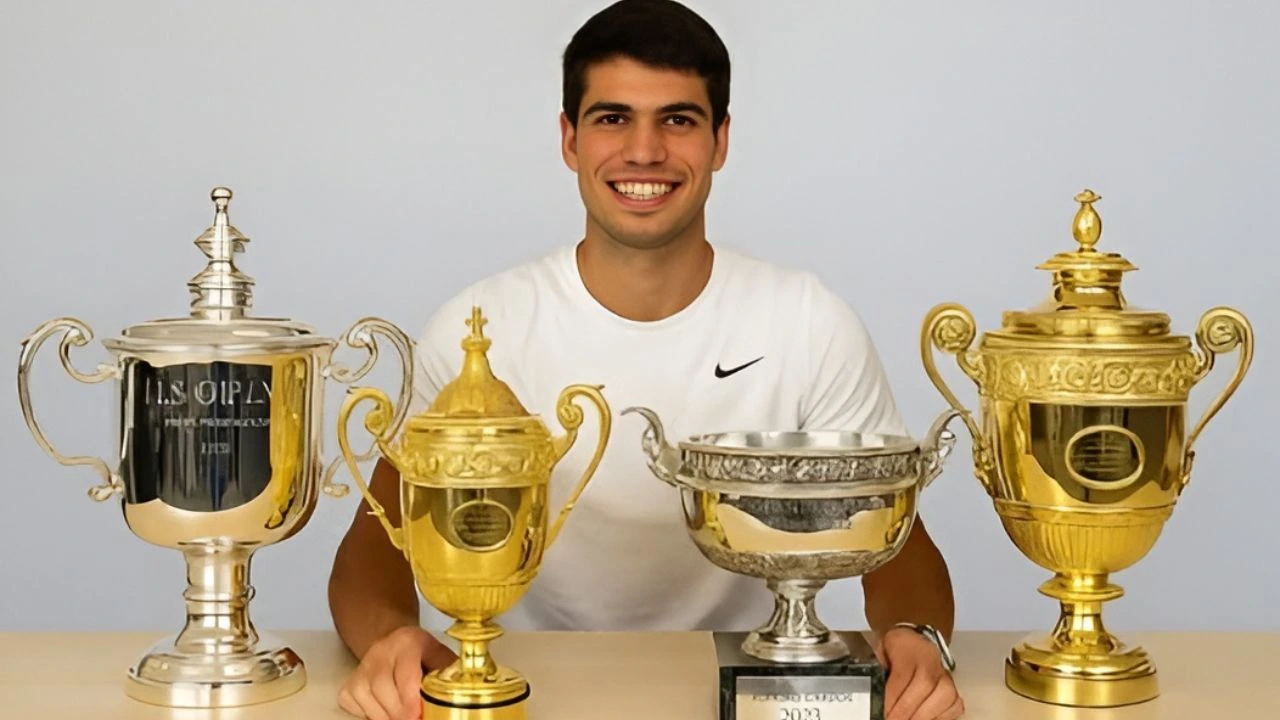
Seven Grand Slam titles. Twenty-six career titles. Over sixty-four million dollars in prize money. The youngest man in tennis history to complete the Career Grand Slam, breaking a record that had stood since 1938. And he is twenty-three. Carlos Alcaraz has not peaked yet. That is the sentence that makes everyone else in the sport slightly uncomfortable and makes the rest of us feel very fortunate to be watching.
The 2026 season and what completing the Career Grand Slam actually means
The Australian Open in February was the missing piece, the one Major that had eluded him across four extraordinary seasons on tour.
He got there at twenty-two years and two hundred and seventy-two days, defeating Novak Djokovic in four sets in Melbourne to become the youngest man in history to win all four Major titles, surpassing Don Budge, who set that record in 1938 and had presumably not anticipated being overtaken by a twenty-two-year-old from Murcia eighty-eight years later.
The achievement puts Carlos Alcaraz in a conversation that previously required a full career to enter. At twenty-three, he is already in it. What followed in Doha, a fifty-minute dismantling of Arthur Fils, six-two six-one, his ninth ATP 500 title, played with the relaxed authority of someone who had just finished the hardest thing on his list and was now doing the easier things, suggested the Melbourne win had not drained him. It had freed him.
The numbers and why they belong in a different decade
Seven Grand Slams across every surface, two US Opens, two Wimbledons, two French Opens, one Australian Open. Eight Masters 1000 titles. A career record of three hundred and two wins from three hundred and seventy matches, an eighty-two percent winning rate that sits in the tier reserved for the genuinely elite.
Prize money exceeding sixty-four million dollars, placing Carlos Alcaraz fourth on the all-time earnings list before he has played a single match in his mid-twenties. These are not the numbers of a player who is building toward something. These are the numbers of a player who has already built it and is now adding floors.
The comparison with the Big Three at the same age is the exercise everyone reaches for, Federer had one Grand Slam at twenty-three, Nadal had six, Djokovic had none. Carlos Alcaraz has seven. The context matters: the Big Three made each other better across two decades of competition, and Carlos Alcaraz has had Djokovic and Sinner pushing him rather than Safin and Hewitt. But the numbers are the numbers, and they are extraordinary by any era's standard.
The wrist and the Roland-Garros question that follows it everywhere
The birthday arrives with an asterisk that is actually a legitimate concern rather than manufactured drama. The right wrist injury that forced his withdrawal from the Madrid Open has since extended to include Rome and Paris, and Paris is the one that hurts most, because Carlos Alcaraz is the two-time defending champion at Roland-Garros, the man who has made the red clay of the Philippe-Chatrier his most comfortable surface in the last two seasons.
A three-peat at the French Open would put him in company so exclusive it is almost theoretical. The race against the recovery timeline is the dominant storyline heading into the clay-court climax, and the cautious approach from his team, no dates, no promises, let the tendon heal on its schedule rather than the tournament calendar's, is the right medical call even if it is the most frustrating possible answer for everyone who wants to see him defend.
Former players who suffered similar injuries, including Feliciano Lopez who has lived this exact scenario, have been clear about what a wrist means to a tennis player, it is not something you negotiate around at eighty percent. You need a hundred and twenty.
What the people who play against Carlos Alcaraz and alongside him actually say
The respects to Carlos Alcaraz from his peers carry a quality that distinguishes them from standard professional courtesy.
Daniil Medvedev, the ATP's most reliable source of genuine observation, noted that Alcaraz's bad mood is a happy mood for ninety-nine percent of the planet, which is both funny and precise.
Felix Auger-Aliassime described the specific quality that makes him compelling to watch, the explosiveness, the emotion, the intensity, all delivered with a smile and a genuine love for the sport that reads as entirely unperformed.
Casper Ruud, who has played against him at the highest level multiple times, said he is sometimes genuinely amazed by the shots Alcaraz hits, which from a world-class professional is not a polite comment but an honest one.
Jack Draper's summary is probably the most complete, great champion, young, humble, kind, genuine, funny, respectful, and ends with the line that says everything that needs to be said: tennis is very lucky to have Carlos.
What Carlos Alcaraz is actually like and why it matters beyond the tennis
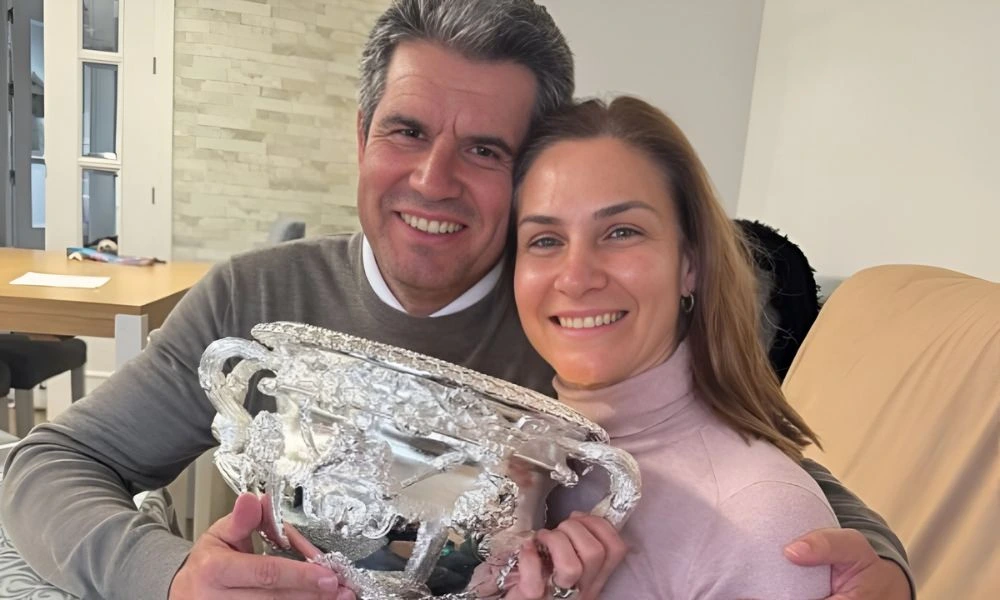
Carlos Alcaraz still lives with his parents in Murcia when he is home. He treats a tournament transport driver the same way he treats a television producer. He says that when he is talking to someone, any someone, he forgets he is a tennis player and thinks of himself as a human being the same as the person in front of him.
These are the kinds of things that sound like management-approved talking points and in his case appear to be simply true, which is the rarest version of a public figure that exists. Grigor Dimitrov talked about his pureness, the ability to wear his heart on his sleeve while simultaneously being a ferocious competitor.
That combination, the genuine warmth and the absolute ruthlessness on a tennis court, is what makes him genuinely interesting rather than just statistically dominant. He is not playing a character.
He is twenty-three, from Murcia, happens to be the best tennis player in a generation, and seems to find the whole thing genuinely wonderful rather than burdensome. Happy birthday, Carlitos. The sport does not deserve you but it is very glad you showed up.
