


Table of Contents
There are cricketers who leave records behind and cricketers who leave questions. Collie Smith, born on this day in 1933 in Kingston, Jamaica, left both, and the questions have never stopped being asked, because nobody will ever know the answer to them.
He was 26 when he died. Twenty-six, with 26 Test matches behind him, a century on debut, a five-for in Delhi, a 306 not out in the Lancashire League, and a reputation that had begun to suggest he might one day stand alongside the very greatest West Indian cricketers his generation produced. Collie Smith never got the chance to find out.
Collie Smith: The cricketer who gave up pace to bowl like his hero
Collie Smith started as a fast bowler. He gave it up as a young man because he wanted to bowl like Jim Laker, the great English off-spinner who had captivated him.
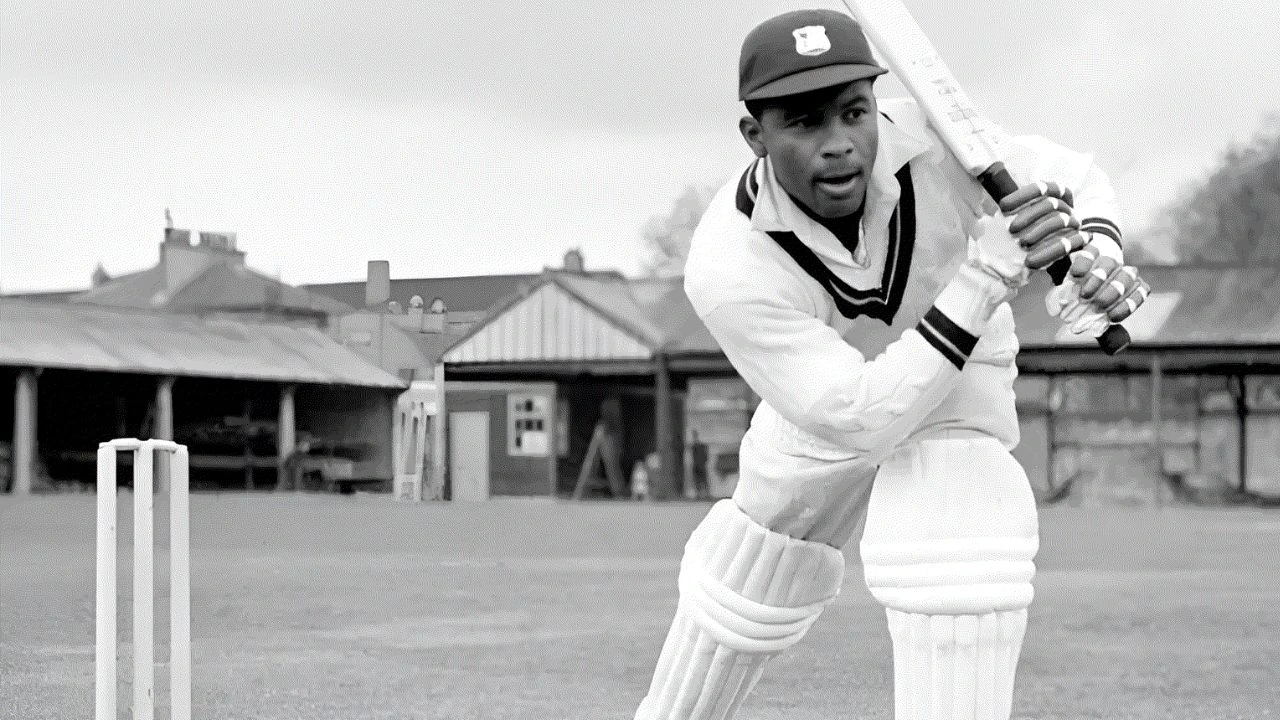
That decision, a teenager remodelling himself around a hero, says something about the kind of person he was. Diligent, curious, willing to start again. In just his third first-class match in 1955 he made 169 against a touring Australian side, and the selectors gave him a Test debut at Sabina Park shortly after.
Collie Smith made 104 in the second innings, one of the few players in history to score a century against Australia on Test debut, and the innings announced not just a player but a statement of intent.
Former WI all-rounder, scored a magical 104 vs Aus on debut in ’54/55. Loved bowling his off spinners & was a magnificent fielder.@WisdenCricket COTY 1957
— Farzan Kawas Arjani (@SACHforever) May 5, 2026
Called Jim by his mates for his love for Jim Laker.
That very tragic car accident 💔
Birth Anniversary of Collie Smith❤️ pic.twitter.com/g93JPwknG5
What followed over the next four years was a career that delivered in bursts and hinted consistently at something even larger ahead. The 1957 tour of England produced 161 at Edgbaston and 168 at Nottingham in the same series.
The 1958-59 tour of India produced Collie Smith's final Test hundred in Delhi alongside his career-best bowling figures of 5 for 90 in the same match. Across 26 Tests he made 1,331 runs at 31.69 and took 48 wickets, numbers that were already respectable and, most observers believed, nowhere near their ceiling.
In the Lancashire League for Burnley that summer he made an unbeaten 306, setting a league record. By September 1959 his reputation had spread well beyond the Caribbean and the numbers were only going in one direction.
The journey that ended on a road in Staffordshire for Collie Smith
It was supposed to be a routine drive. Collie Smith, Garry Sobers and Tom Dewdney, close friends, teammates, men who had shared dressing rooms and long tours together, were travelling from Manchester to London for a charity match.
A fourth man, Roy Gilchrist, had been meant to join them but never arrived. They waited an hour and then set off without him. Sobers wrote later that if Gilchrist had turned up on time, or if they had waited a little longer, none of what followed would have happened.
In the early hours of the morning, on the A34 near Stone in Staffordshire, two blinding headlights appeared. Sobers was at the wheel. He had no time to react. The car hit a ten-ton cattle truck. Sobers came around with a dislocated wrist and a severed nerve in a finger.
Dewdney was unconscious with facial injuries. Smith was lying on the ground. When Sobers asked how he was, Smith answered immediately, "I'm all right, maan, go look at the big boy." Even in the moments after the collision, his first thought was for someone else. It was, those who knew him said, entirely in character.
The spinal injuries Smith had sustained were catastrophic. He slipped into a coma and never came back. Three days later a priest walked into the hospital room where Sobers and Dewdney were recovering and told them what had happened. Collie Smith was dead.
Tom Dewdney and Garry Sobers in hospital in Stoke on Trent following the car crash which left their West Indies' team-mate Collie Smith dead, September 9th 1959. The three were in Sobers' Ford Prefect travelling to London three days earlier when it collided with a cattle truck pic.twitter.com/B9JrK0k8nK
— Historic Cricket Pictures (@PictureSporting) January 23, 2025
O'Neil Gordon "Collie" Smith (5 May 1933 – 9 Sep 1959), Legendary #Jamaica and #WestIndies cricketer, born 93 years ago today, in Trench Town, #Kingston. Died aged 26 from injuries sustained in a car accident at Stoke-on-Kent, England. 60,000 people attended his funeral in… pic.twitter.com/7UqmggikFr
— Wayne Chen (@wcchen) May 5, 2026
Also READ: On This Day In 2002: The night Shoaib Akhtar touched 100mph and changed fast bowling forever
What Jamaica said goodbye to
When his body was returned to Kingston, 60,000 people gathered at his funeral. Not for a head of state or a political figure, for a 26-year-old cricketer, a favourite son, a man with an infectious smile and an unfinished story.
The streets of a city that had watched him grow up came out to say something that could not be said in runs or wickets. On his tombstone at May Pen Cemetery in Jamaica are words chosen carefully: "Keen Cricketer, Unselfish Friend, Worthy Hero, Loyal Disciple, Happy Warrior."
Sobers was charged with careless driving and fined ten pounds. He was devastated by the weight of it, not the fine, but the responsibility. He wrote in the prologue to his autobiography that for a while cricket felt like a distant second to what had happened on that road.
When he finally played again, against England in the first Test of the 1959-60 series, he batted for ten hours and forty-seven minutes and scored 226. He said afterwards that from that point on, he had understood he would have to do the work of two men, his own and the one who should have been beside him.
The road leading to the Sabina Park ground in Kingston is named Collie Smith Drive. It is a permanent reminder of how close brilliance came to being even greater, and how suddenly the brightest journeys can end.
