


Table of Contents
In the long and occasionally bizarre history of professional tennis, there have been many moments where tournament organisers decided they knew better than the players. Most of those moments are forgotten. The Madrid Open 2012 is not one of them.
Thirteen years on, the blue clay experiment remains the most controversial single decision in the modern history of the ATP Tour, the week when one man's vision for modernising tennis collided spectacularly with the reality of the world's best players slipping around a court that felt, by multiple accounts, closer to an ice rink than a clay surface. It lasted one year. It produced some of the most memorable chaos the sport has seen. And it has never been attempted again.
Madrid Open: The man behind the idea and why it made sense on paper
Ion Țiriac is not a man who does things quietly. The Romanian billionaire, former player, and owner of the Madrid Open wanted his tournament to stand out from the other major clay-court events on the calendar, Monte Carlo, Rome, Roland Garros, and he had a theory that blue clay could do it.
The official reasoning was straightforward enough: blue provides a sharper visual contrast against the yellow tennis ball, making it easier for television viewers to track the flight and bounce. Red clay, the argument went, creates a muddier picture on screen.
There was also a branding angle, blue is the colour of the tournament's primary sponsor, Mutua Madrileña and blue has long been associated with the prestige hard-court events at the US Open and Australian Open. The logic, laid out in a boardroom, was not entirely unreasonable. The execution was another matter entirely.
Madrid Open: What went wrong and why the players were furious
To achieve the blue colour for Madrid Open 2012, the clay had to be stripped of its natural iron oxide and chemically dyed. The process, combined with a salt compound used to preserve the surface, created a court that players described with remarkable consistency as simply unplayable. Slippery, unpredictable, and potentially dangerous.
Noval Djokovic said he needed soccer shoes just to stay upright. Rafael Nadal, the greatest clay-court player in history, was blunter, if things did not change, he said, this would be one fewer tournament on his calendar. Both of them lost early, which did nothing to soften the criticism.
Nadal went out in the third round of Madrid Open to Fernando Verdasco, a defeat so uncharacteristic that he later justified his unbeaten record on red clay in 2012 by pointing out, with some reason, that blue clay was a different surface entirely. Djokovic fell in the Madrid Open 2012 quarterfinals to Janko Tipsarevic.
The upsets kept coming, the complaints kept mounting, and by the end of the week it was clear that the experiment had failed, not just as a practical matter but as a diplomatic one, with the sport's two biggest names essentially threatening a boycott if it ever happened again.
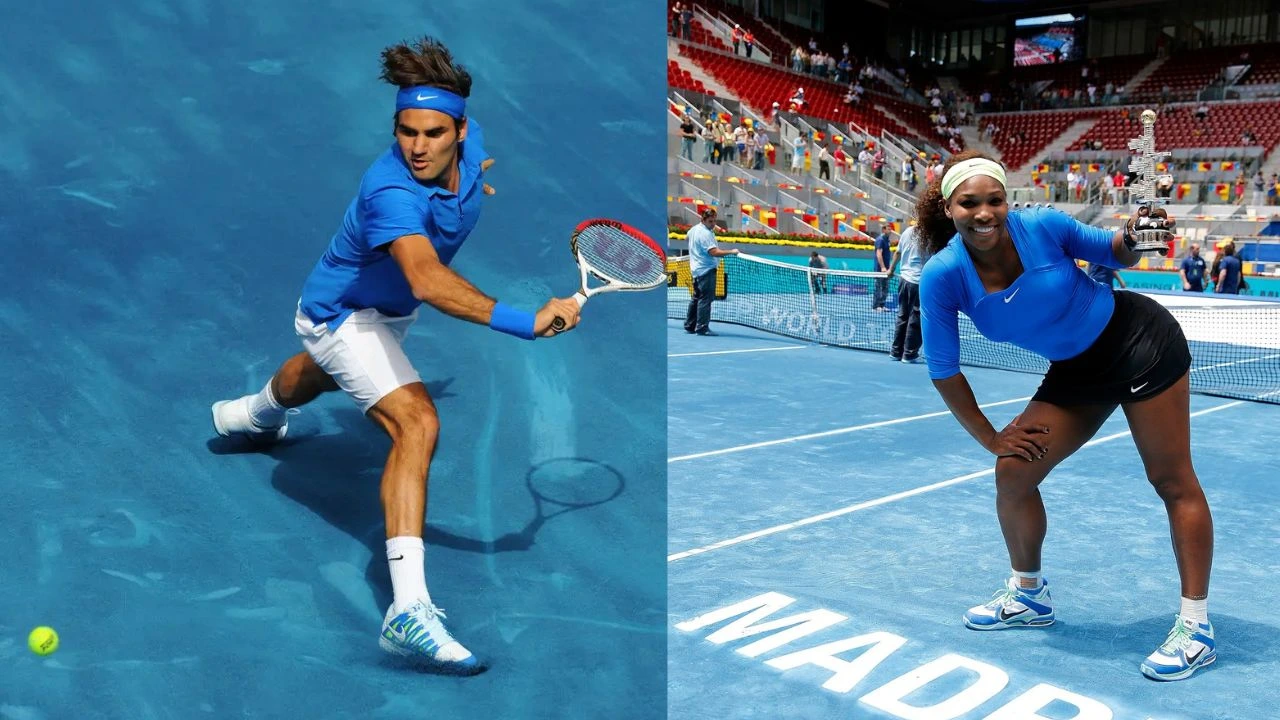
Madrid Open: Roger Federer and Serena Williams write their names into a very unusual record book
Amid the chaos, two players emerged with the distinction of being the only professional tennis players in history to win a title on blue clay, a record that, by definition, can never be broken.
Roger Federer beat Tomas Berdych in the Madrid Open final 3-6, 7-5, 7-5 in a match that tested both men thoroughly, ending a clay-court title drought that had stretched back to the French Open in June 2009. Federer later joked that he was the King of Blue Clay, even while acknowledging that the footing was a genuine problem throughout the week.
Serena Williams won the women's title with characteristic authority, dropping only a handful of games across the week and delivering what remains one of the more quotable lines from that tournament when she observed that the women, unlike the men, were not in the business of complaining about court conditions.
She won. She moved on. Federer's side of the draw had been opened up considerably by the early exits of Nadal and Djokovic, but a title is a title, and blue clay or red, he found a way.
🗓 2012
— wta (@WTA) August 29, 2022
🏟 Madrid Open
📍 Madrid 🇪🇸
Adding a blue-clay title to her trophies on red & green 💙 pic.twitter.com/0XLTNpZeVo
Class: Physics
— Tennis TV (@TennisTV) September 18, 2022
Teacher: Professor Federer@rogerfederer #RForever pic.twitter.com/m2F5HJERaO
Madrid Open: Why it was banned and what we actually learned from it
The ATP moved quickly after Madrid 2012. Acting president Brad Dewett issued a statement confirming that the quality of the courts had not been acceptable and that the experiment was over.
Players had been emphatic, Nadal and Djokovic both made clear they would not return to Madrid if blue clay returned, and the tour had no appetite for that confrontation.
Madrid went back to red clay in 2013 and has stayed there since. In the months after the tournament, further information emerged suggesting that faulty drainage systems, struggling to cope with heavy rain in the days before the event, had compounded the slippery conditions, meaning the blue dye alone may not have been the only villain of the piece.
The full story, as with most things in tennis politics, remains slightly murky. What is clear is that the combination of a chemically altered surface, inadequate drainage, and a playing field that gave defensive baseliners almost no chance to stay upright produced something that the sport's governing bodies had no interest in repeating.
Thirteen years later, no ATP or WTA player has stepped onto a blue clay court in competition. It seems likely that none ever will again.
