


Table of Contents
There are moments in sport that you do not fully understand when they happen. You see the press conference. You hear the words. You register that something significant has occurred. But the true weight of it only arrives later, sometimes months later, sometimes years, when you realise that the before and the after of that moment are actually two different worlds and the world you are now living in started on that specific day.
March 29, 2011 is one of those moments.
I remember watching, on TV, Australia play India in the World Cup quarter-final in Ahmedabad a few days before this announcement. Ricky Ponting scored 104. His team was under enormous pressure, the tournament was slipping away from them, an entire era was ending in slow motion and Ponting walked to the crease and scored a hundred.
A proper Ricky Ponting hundred, the kind he had been scoring in major tournaments for fifteen years, the kind that made you forget for a moment that Australia were actually losing this World Cup. They lost anyway. India beat them. The three-time champions, the team that had not lost a World Cup match in twelve years, went home in the quarter-finals.
And then on March 29 Ricky Ponting stood at the SCG and said "I have resigned as captain of both the Test and one-day Australian teams."
That was it. That was the door closing.
What Ricky Ponting built and why nobody has touched it since
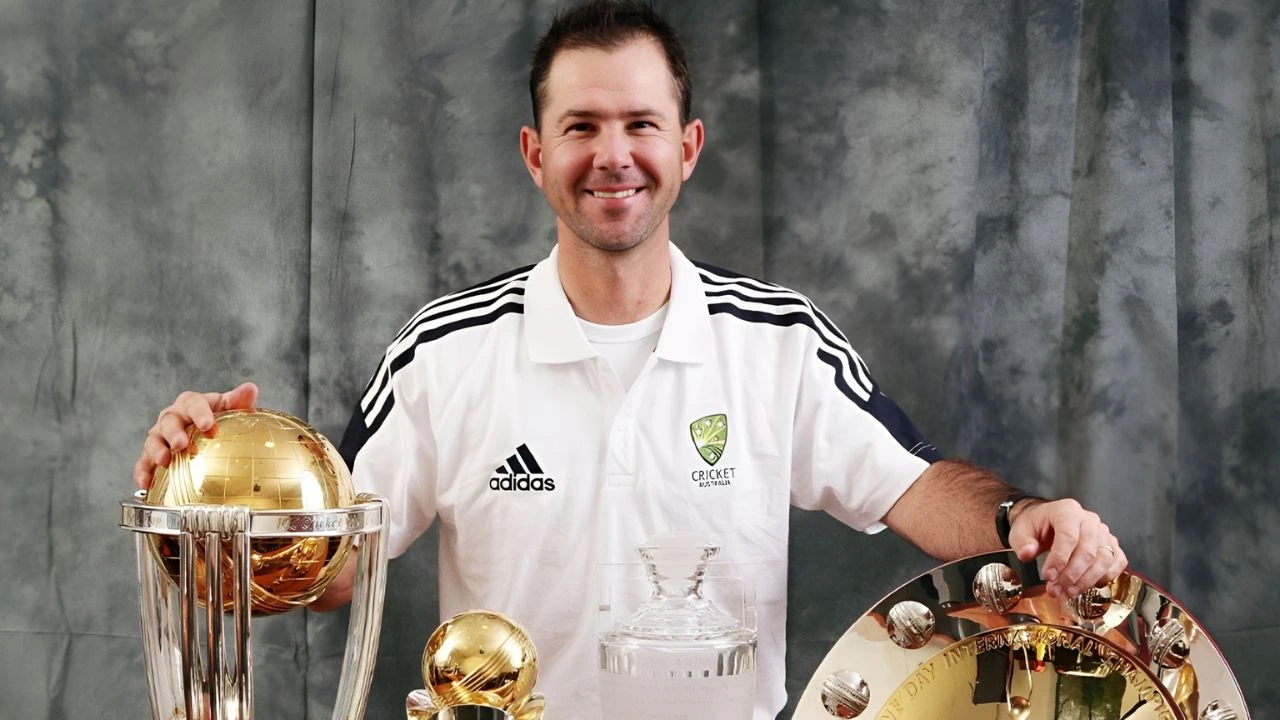
To understand what ended on March 29, 2011 you have to understand what the fifteen years before it looked like from the outside. Ricky Ponting led Australia to 26 consecutive ODI World Cup match victories.
Twenty-six.
From the start of the 2003 through to the 2011 edition, Australia under Ricky Ponting did not lose a single World Cup game. They won in 2003. They won in 2007. They arrived at 2011 as three-time defending champions having not been beaten in the competition in twelve years. That is not a winning streak. That is a different category of thing that does not have a proper name yet.
He led Australia in 77 Tests and won 48 of them, the most wins for any captain in the history of the game. He captained 228 ODIs and won 164 of them.
Ricky Ponting held the Australian Test and one-day captaincy simultaneously from the moment Steve Waugh handed it to him and he held both right up until that Tuesday at the SCG. No other Australian captain has come close to those numbers. No captain from any country has quite replicated the sustained dominance of that era.
And when it ended Ricky Ponting ended it himself. Nobody tapped him on the shoulder. He was clear about that in a way that you believed immediately because it sounded exactly like him. "I'll absolutely go on record here as saying I've had no tap on the shoulder from anybody. This is a decision that's been made wholly and solely by me and people close to me, my family first and foremost."
That is a sentence from a man who has been in charge his entire adult life and is still in charge of the decision to stop being in charge.
The thing about March 29 that makes it different from other retirement days
Plenty of great captains have stepped down. Plenty of eras have ended. The reason March 29, 2011 sits differently from most of them is what he did with the ending. He did not walk away from cricket entirely.
Ricky Ponting made himself available for selection as a batsman in both Tests and ODIs. He backed Michael Clarke publicly and loudly and without any of the complicated ambiguity that sometimes follows a captain stepping aside while staying in the squad.
"I will give my complete support to our new captain and continue to do my best to set the best possible example for my team-mates and emerging cricketers alike."
That is not a man protecting his legacy or lobbying for influence from behind the scenes. That is a man who understood that the best thing he could do for Australian cricket at that moment was to step back completely from the captaincy and let someone else run the show without interference.
Ricky Ponting was 36. He believed he could still bat. He was right, he played Test cricket until 2012 and contributed meaningfully. But the captaincy he let go of completely and immediately and without fuss. For a man of his competitive instincts and his ego that was not a small thing. It was arguably his greatest act of leadership.
Also READ: The day in Chennai when Yuvraj Singh chose his country over his collapsing body
What changed when Ricky Ponting stepped down and why cricket felt different after
The Australia that existed between 1999 and 2011 was a psychological phenomenon as much as a sporting one. Opposition teams went into matches against them carrying a weight that the results did not fully explain. They were not just beaten by Australia.
They were beaten by the idea of Australia, by the accumulated pressure of knowing that this team had not lost a World Cup game in your entire professional career and probably would not lose this one either.
Ricky Ponting was the human embodiment of that idea. The way he walked to the crease. The way he stood at slip. The jaw. The absolute refusal to accept that any situation was beyond the team's capacity to win.
When he stepped down from the captaincy on March 29, 2011 that psychological weight lifted from world cricket almost immediately. Australia's results under Michael Clarke were perfectly respectable for a team in transition.
But the feeling was different. The sense that you were playing not just eleven cricketers but the weight of an unbroken decade of dominance, that went with Ponting's captaincy on that Tuesday at the SCG.
Cricket became a different sport after March 29, 2011. Not worse. In many ways more interesting, more competitive, more genuinely uncertain. But different. The era of knowing how it was going to turn out before it started was over.
And the man who had embodied that certainty more than anyone else looked at the camera at the SCG and said he had thought long and hard about what Australian cricket needed and now was the right time.
Fifteen years later, sitting with a sport that looks nothing like it did when he was captain, you understand what you were watching on that day even if you did not fully understand it then.
The before and the after of March 29, 2011 are genuinely different worlds. He built one of them. And he walked out of it on his own terms, which is the most Ricky Ponting thing he ever did.
