


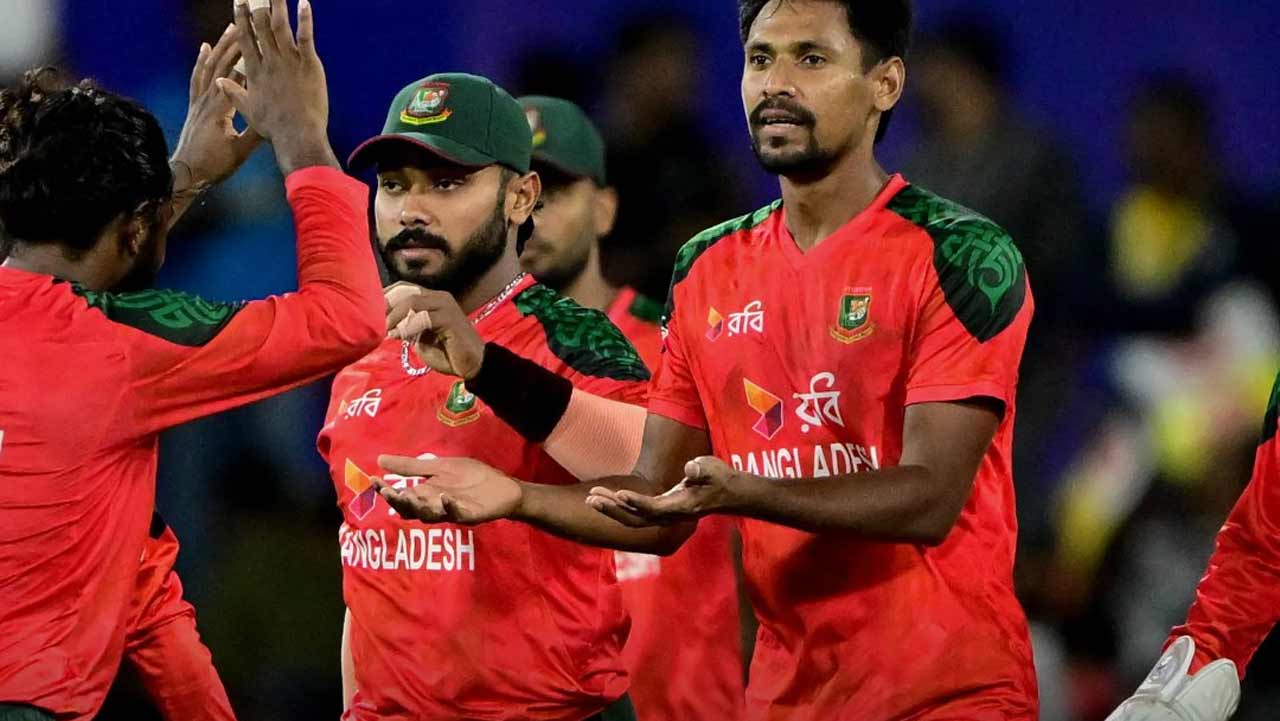
Former ICC Head of Communications Sami-ul-Hasan Burney has criticised the BCCI’s handling of Bangladesh pacer Mustafizur Rahman’s exit from the IPL, suggesting the situation could have been managed more discreetly to prevent the current turmoil surrounding the ICC Men’s T20 World Cup 2026.
Rahman’s release from his contract with Kolkata Knight Riders set off a chain reaction that eventually led to Bangladesh withdrawing from the tournament, citing “security concerns” over playing in India. In an apparent show of solidarity, Pakistan has since announced it will forfeit its group-stage match against India on February 15 following government instructions.
Speaking to PTI, Burney said the BCCI could have avoided escalating tensions by refraining from making public statements about Rahman’s removal without clearly explaining the reasons.
“These things could have been easily avoided if the cricket administrators had been a little more careful and avoided public statements like a Bangladesh player having to be removed from a franchise,” Burney said. “They didn’t need to say it publicly. The BCCI could have privately asked the franchise to release the player, and nobody would have known what happened.”
Burney added that a lapse in judgment turned the January 3 announcement into a trigger point. “Sometimes a statement has implications far beyond what is anticipated, and that’s exactly what happened here,” he explained.
A former journalist with Dawn, Burney spent over a decade at the ICC’s Dubai headquarters and later served as Media Director of the Pakistan Cricket Board (PCB). Drawing from his time at the PCB, he offered insight into the thinking of Chairman Mohsin Naqvi, who also serves as Pakistan’s Interior Minister.
According to Burney, Naqvi views the ICC’s refusal to move Bangladesh’s matches out of India as a case of “shifting goalposts.” He recalled a November 2024 instance when the ICC informed the PCB that the BCCI had cited a lack of Indian government permission to send its team to Pakistan.
“When a similar situation arose in January with Bangladesh, the same principles were not applied,” Burney said. “That’s where Mr Naqvi sees double standards, and that’s what is upsetting the PCB.”
When asked whether Bangladesh’s dispute with India should concern Pakistan, Burney said government decisions are often driven by broader considerations. “We may agree or disagree, but when a government makes a decision, it is looking at something bigger than what you and I are seeing,” he said.
Also Read: BCB receives probe report as high court tightens noose over Jahanara allegations
The ICC has indicated that Pakistan could face punitive measures, including financial penalties and revenue losses amounting to millions of dollars. However, Burney believes the decision was taken after careful consideration.
“These are not easy decisions. I’m sure they consulted experts, examined the legal aspects and assessed the consequences,” he said. “That one match could cost around USD 250 million when everything is accounted for, while Pakistan’s annual cricket revenue is about USD 35.5 million. There’s a huge difference.”
Burney also pointed out that Pakistan has previously endured financial setbacks due to prolonged cricketing isolation. Pakistan haven’t hosted India in a bilateral series for 20 years. They played home matches abroad for nearly a decade between 2009 and 2019 and still managed to win the 2009 T20 World Cup and the 2017 Champions Trophy,” he said.
“So yes, there will be financial implications. But if the PCB survived two decades without bilateral cricket against India, they can sustain this as well,” he concluded.
