


Table of Contents
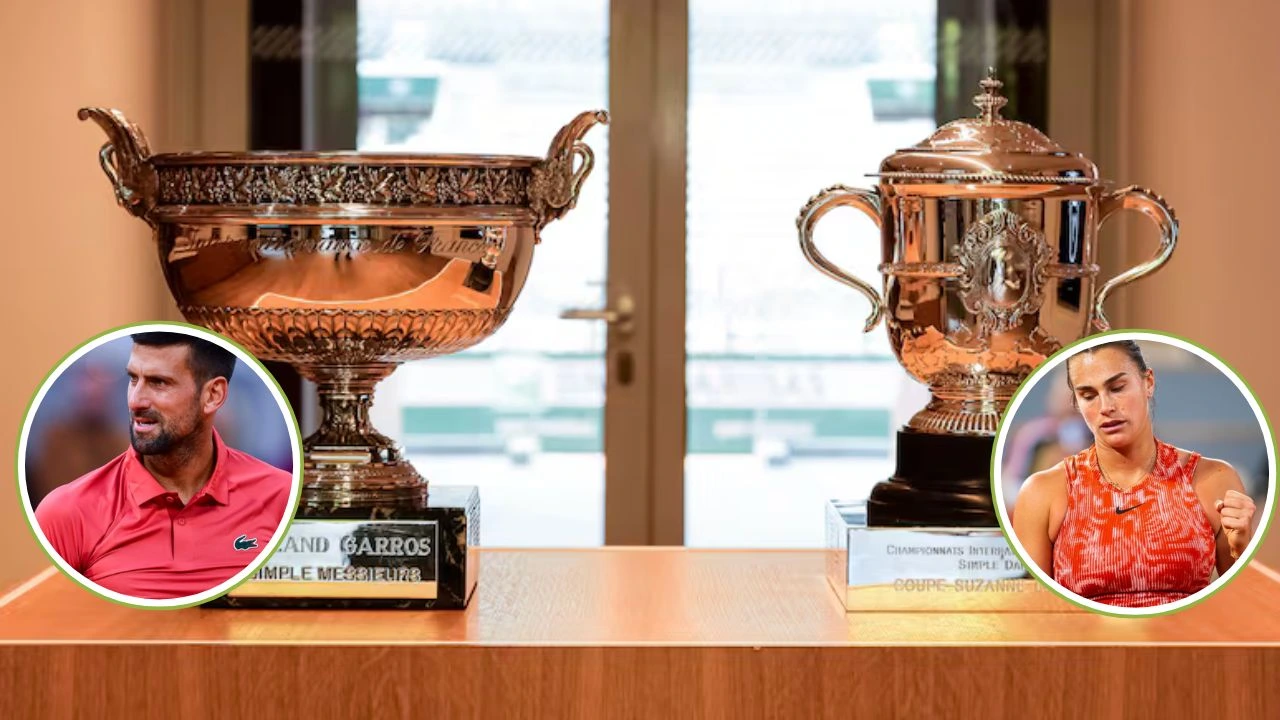
The world's best tennis players including Djokovic have fired a collective warning shot at French Open organisers in the clearest and most united show of player power the sport has seen in years.
A group including Jannik Sinner, Aryna Sabalenka, Coco Gauff and Novak Djokovic, though Djokovic did not sign the most recent statement, have released a joint communique expressing deep disappointment at the level of prize money on offer at Roland Garros and the ongoing failure of Grand Slam organisers to address broader issues around player welfare, pension, health and representation.
The French Open begins on May 24 and the timing of this statement is deliberate, maximum pressure at the moment when the tournament needs its biggest stars most.
French Open: The prize money numbers that have infuriated the players including Djokovic and Sabalenka
French Open organisers announced last month that the Roland Garros prize money pool has increased by approximately 10 percent to a total of 61.7 million euros, men's and women's singles champions will each receive 2.8 million euros, runners-up 1.4 million euros, semi-finalists 750,000 euros and first-round losers 87,000 euros.
On the surface in French Open that sounds like a meaningful increase. The players' statement argues that the surface is precisely the problem. Roland Garros generated 395 million euros in revenue in 2025, a 14 percent year-on-year increase, yet prize money rose by just 5.4 percent, meaning the players' share of tournament revenue actually fell from 15.5 percent in 2024 to an estimated 14.9 percent in 2026.
With revenues projected to exceed 400 million euros this year, the players calculate that prize money as a percentage of revenue will remain below 15 percent, far below the 22 percent they have formally requested to bring the Grand Slams in line with the ATP and WTA Combined 1000 events. The comparison with the US Open, which increased its prize money by 20 percent last year, is one the players have been making repeatedly and with some justification.
French Open 2026: What the players are actually asking for
The French Open prize money dispute is the headline but the players are at pains to stress it is not the only issue and arguably not even the most important one. Their statement calls out three specific failures from the Grand Slam organisations.
First, they say there has been no engagement whatsoever on the welfare proposals they have been putting forward, pension provisions and long-term health arrangements for players whose careers leave physical consequences that extend well beyond their playing days.
Second, there has been no progress on establishing any formal mechanism for player consultation within Grand Slam decision-making, players who generate the sport's entire commercial value have no seat at the table where decisions affecting them are made.
Third, the broader governance structure of tennis's biggest events has not modernised in step with other major international sports. "While other major international sports are modernizing governance, aligning stakeholders, and building long-term value, the Grand Slams remain resistant to change," the statement said, language that is pointed, deliberate and unlikely to be resolved by a press release from the tournament's communications team.
French Open: A dispute that has been building for over a year
This is not the first time these players have spoken. The same group sent a letter to the heads of all four Grand Slam tournaments last year seeking exactly the same things, more prize money, welfare provisions and a genuine voice in decisions that directly affect them. That letter received no substantive response.
The current statement is therefore a public escalation of a private process that has been going nowhere, timed to land in the period when Roland Garros cannot avoid the spotlight. Several players including Americans Ben Shelton and Jessica Pegula are expected to make further public statements at the Italian Open in Rome this week, suggesting the pressure campaign is coordinated and is not going to dissipate quietly before the tournament begins.
French Open organisers did not immediately respond to a request for comment, which, given the circumstances, is itself a kind of answer.
