


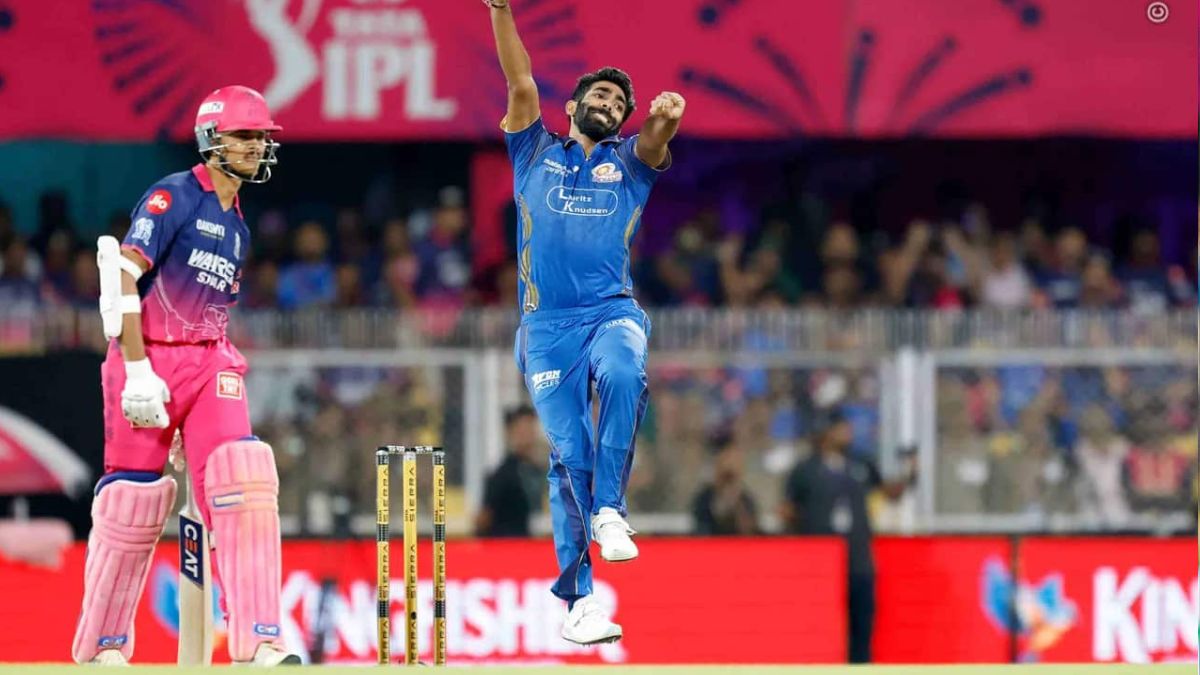
Out in Guwahati, fireworks lit up the sky early, not just from the game but from how fast things spiralled. Rajasthan Royals served a sharp reminder of their edge after a fiery opening stand set a huge target, even under reduced overs. Rain cut time short; intensity did not. Their batters tore through deliveries like paper, building something massive before the break came.
In reply, MI’s lineup flickered almost at once, wickets fell without warning, and plans crumbled silently. Early decisions looked shaky when judged against what unfolded later. Bowling lines held firm, angles stayed tight, leaving little room to breathe. The so-called heavy hitters never settled, failing to spark anything close to momentum. One moment, they were trying to catch up; next, they were buried under rising numbers. Every phase tilted toward Rajasthan, which moved with cold precision, while others hesitated, and won by 27 runs.
Here are six key reasons why MI lost the game:

1. Poor powerplay bowling strategy:
Out on the flat surface at Guwahati, the Mumbai Indians’ pace attack found little help early. Hardik Pandya aside, deliveries kept landing in that predictable zone between full toss and good length. Instead of varying lengths sharply, names such as Deepak Chahar and Trent Boult repeated similar areas too often. Because of this, Rajasthan’s opening pair stayed balanced at the crease. Shot after shot flowed naturally off the bat, thanks to clean horizontal swings. 50 came up before the third over even ended.
2. Failure to contain the RR openers:
A blistering start unfolded when Yashasvi Jaiswal smashed 77 from just 32 balls, alongside 15-year-old Vaibhav Sooryavanshi, who chipped in with 39 off 14. Off the very first exchanges, their 80-run alliance moved so fast it left the Mumbai Indians scrambling before they could settle. With momentum seized in under five overs, the tone tilted sharply, pushing MI onto the back foot right away.
3. Jasprit Bumrah being taken on:
Out of nowhere, Jasprit Bumrah found himself on the back foot. With calm confidence, Sooryavanshi stepped up, clearing the ropes twice in three deliveries from India’s top bowler. That early surge cracked Mumbai’s steady rhythm, shifting how they played their cards later on. Plans changed fast, yet those moves fell flat when tested.
4. Top order collapse in the chase:
With 151 needed off 11 overs and a required rate of 13.72. Mumbai expected quick runs at the top. Yet by the fifth over, only 46 were on the board, and five wickets had fallen. Rohit Sharma made 5, then Suryakumar Yadav added 6; Hardik Pandya scored 9, Ryan Rickelton 8, each gone too soon. These key batters failing so early drained any real chance long before the middle overs began. The game tilted fast, leaving little room to recover.
5. Ineffective use of dimensions and lengths
Faster deliveries thudded into the pitch under Rajasthan’s hands, while Mumbai kept chasing cloud cover long after it vanished. When pace stayed low without result, adjustments came too late, each over heavier than the last. Runs piled not from errors but routine, building slowly like dust before a storm.
6. Scoreboard pressure and RR clinical bowling:
Out there, the numbers told a harsh story: 151 off just 66 balls, pressing hard on the batsmen. From Rajasthan’s side, Sandeep Sharma struck again, removing Rohit Sharma for the sixth time ever in the IPL, his delivery sharp and precise. Alongside him, Ravi Bishnoi worked quietly but with clear purpose. Between them, they shifted lengths, changed pace, held back the flow. With each over, space narrowed. Mumbai found no room to breathe, let alone rebuild after losing early stands.
