


Table of Contents
Roland-Garros 2026 has announced its wild card list and it reads like the FFT sat down with a brief that said, give us the veterans the crowd wants to see one last time, give us the teenagers the sport needs to see for the first time, and fill the space in between with the French regulars who have earned their Paris moment.
The result is a wild card announcement that covers four decades of Tennis in one document, from a 41-year-old Swiss champion to a 17-year-old ranked 1857 in the world, with several genuinely compelling stories sitting between those two extremes.
Stan Wawrinka and Gaël Monfils: The farewell tour nobody wants to end
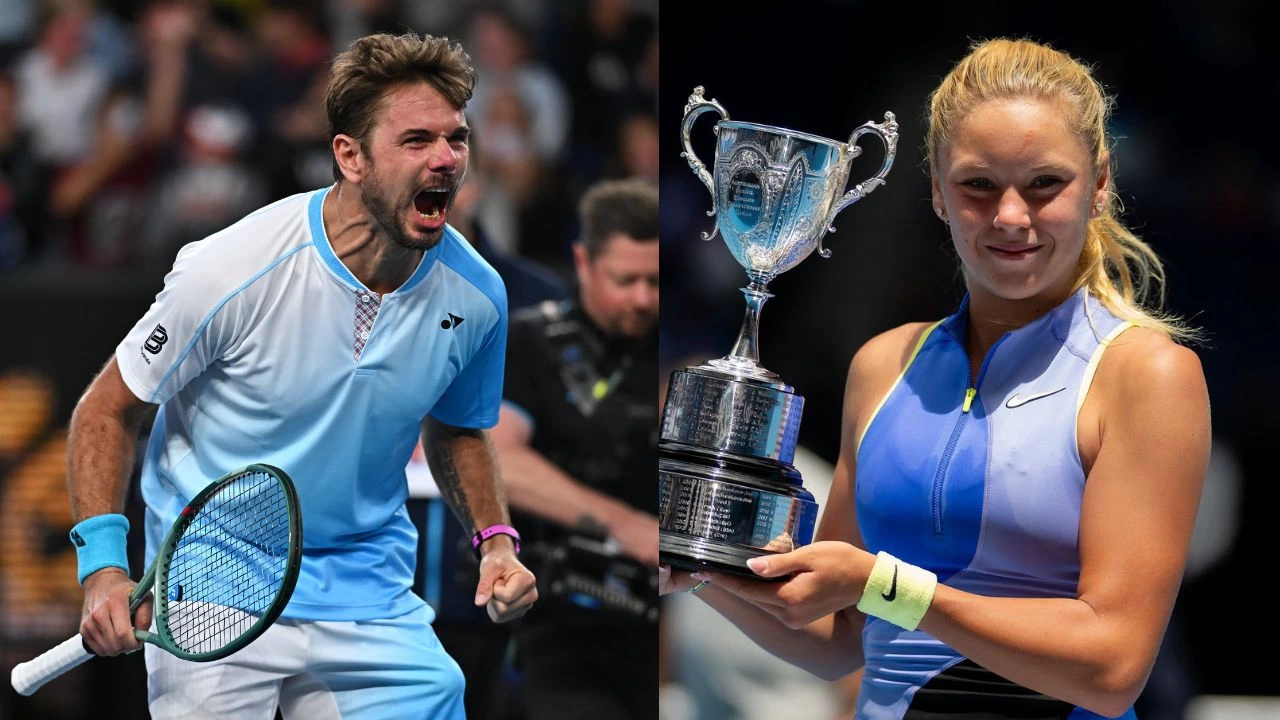
The two names that will sell the most tickets on the wild card list are Stan Wawrinka and Gaël Monfils, and both of them know it. Wawrinka is 41, currently ranked 125, and is the 2015 Roland-Garros champion, the man who produced one of the greatest single-match performances in clay-court history to beat Novak Djokovic in that final with a backhand that still gets replayed when people want to remind themselves what tennis can look like at its most beautiful.
He is walking into Roland-Garros 2026 at 41 with a world ranking of 125, which is either remarkable or poignant depending on how you feel about the passage of time. Probably both. Monfils is 39, ranked 222, has already announced that 2026 will be his final season, and will play in front of the Paris crowd one last time in a tournament that the French public has always treated as a personal festival.
Both wild cards are partly sporting, partly sentimental, and entirely justified. The FFT knows what it is doing when it gives these two men a main draw place. So does everyone watching.
Roland-Garros 2026: The 17-year-old wave that is genuinely exciting
Roland-Garros 2026 has an unusual number of 17-year-olds across its wild card lists and the names on that list are not filler, they are players the sport is already discussing seriously. Ksenia Efremova, the reigning Australian Open girls' champion who goes straight into the women's main draw at ranking 623, is the most prominent.
She defeated a top 200 player in Madrid qualifying last month, which is not something junior champions routinely do immediately after transitioning to the professional circuit. Moïse Kouamé in the men's main draw at ranking 313 is the other standout, a French teenager who has already made headlines at Masters 1000 level and whose wild card feels less like a gift and more like an early introduction to the stage he is going to occupy for the next decade.
Emerson Jones at 17 takes the Tennis Australia main draw place in the women's draw, ranked 129, which means she was probably going to qualify for the main draw eventually anyway, the wild card just accelerates the timeline.
In qualifying, three more 17-year-olds appear, Eleejah Inisan, Tahlia Kokkinis through the Tennis Australia arrangement, and Daphnée Mpetshi Perricard, younger sister of Giovanni who is already establishing himself on the main tour. The youngest person on the entire list is Daniel Jade in the men's qualifying draw, 17 years old, ranked 1857. He is going to Roland-Garros. At 17. Ranked 1857. Someone at the FFT saw something.
Clara Burel's return and what it means
The most quietly significant name on the women's main draw list is Clara Burel, and the significance is not about rankings or recent results because she has neither.
The 25-year-old former world number 42 tore her ACL in a Billie Jean King Cup tie against Turkey in April 2025 and has played two matches since returning, one first-round loss, one retirement. Her ranking has fallen entirely out of the entry list range.
The FFT wild card is her gateway back to Roland-Garros, a tournament where she has reached the third round and shown she belongs on the biggest clay-court stage in the world. Two matches back after a year of rehabilitation is not a form guide. It is a starting point. The wild card treats it as such.
Goffin, Mladenovic and the qualifying veterans
The qualifying lists carry two former names that the Roland-Garros faithful will recognise immediately. David Goffin, 35, three-time quarter-finalist here, is ranked 249 and given a qualifying wild card that reflects both his standing in the sport and the FFT's consistent generosity toward players who have contributed meaningfully to the tournament's history.
Kristina Mladenovic, 32, four-time Roland-Garros doubles champion and 2017 singles quarter-finalist, returns from outside the top 800. Her wild card is, as Tennis Majors noted, part of a consistent pattern, the FFT offers her a route through Paris with a reliability that suggests genuine affection rather than obligation.
The cross-federation arrangements and the French regulars
Beyond the headline names, the standard reciprocal arrangements with Tennis Australia and the USTA distribute six further wild cards. Adam Walton takes the men's main draw Australian place at ranking 103. Nishesh Basavareddy gets the USTA men's spot at 154.
Akasha Urhobo, 19, takes the USTA women's place after a remarkable clay-court run, a 17-4 record since April including WTA main draw victories and an ITF title. The French regulars filling the remaining main draw spots, Titouan Droguet, Hugo Gaston, Arthur Géa in the men's draw, Léolia Jeanjean, Fiona Ferro, and Tiantsoa Rakotomanga Rajaonah in the women's, are players who have spent their seasons on the circuit's second tier and earned a Paris platform through persistence rather than ranking.
Ferro in particular, a former top 50 player who reached the last 16 here in 2020 and has spent recent years grinding back through Challengers and ITF events, is a name worth watching on the clay she has always handled well.
The main draw begins on Sunday May 24. Wawrinka and Monfils will walk onto Chatrier to crowds that know exactly what they are watching. The 17-year-olds will walk on having no idea yet what it is going to feel like. Both of those things are worth showing up for.
Full Roland-Garros 2026 Wildcard List
The 2026 Roland-Garros singles wildcards are here ✅#RolandGarros pic.twitter.com/uKrLjxnLfV
— Roland-Garros (@rolandgarros) May 11, 2026
Women's Roland-Garros 2026 singles main draw
Clara Burel, France, age 25
Ksenia Efremova, France, age 17, No. 623
Fiona Ferro, France, age 29, No. 197
Leolia Jeanjean, France, age 30, No. 127
Emerson Jones, Australia, age 17, No. 129
Tiantsoa Sarah Rakotomanga Rajaonah, France, age 20, No. 159
Alice Tubello, France, age 25, No. 256
Akasha Urhobo, United States, age 19, No. 183
Men's Roland-Garros 2026 singles main draw
Nishesh Basavareddy, United States, age 21, No. 154
Titouan Droguet, France, age 24, No. 109
Hugo Gaston, France, age 25, No. 118
Arthur Gea, France, age 21, No. 143
Moise Kouame, France, age 17, No. 313
Gael Monfils, France, age 39, No. 222
Adam Walton, Australia, age 27, No. 103
Stan Wawrinka, Switzerland, age 41, No. 125
Women's Roland-Garros 2026 singles qualifying rounds
Eleejah Inisan, France, age 17, No. 605
Selena Janicijevic, France, age 23, No. 248
Tahlia Kokkinis, Australia, age 17, No. 485
Manon Leonard, France, age 25, No. 314
Kristina Mladenovic, France, age 32, No. 852
Amandine Monnot, France, age 24, No. 297
Daphnee Mpetshi Perricard, France, age 17, No. 808
Chloe Paquet, France, age 31, No. 277
Margaux Rouvroy, France, age 25, No. 313
Men's Roland-Garros 2026 singles qualifying rounds
Florent Bax, France, age 26, No. 254
Robin Bertrand, France, age 23, No. 278
Sean Cuenin, France, age 22, No. 373
Thomas Faurel, France, age 20, No. 375
Antoine Ghibaudo, France, age 21, No. 287
David Goffin, Belgium, age 35, No. 249
Sascha Gueymard Wayenburg, France, age 22, No. 259
Calvin Hemery, France, age 31, No. 316
Daniel Jade, France, age 17, No. 1857
