


Table of Contents
Stefanos Tsitsipas probably wanted his French Open build-up to be about clay, rhythm, fitness and whether that one-handed backhand still has another Paris run left in it. Instead, tennis has handed Stefanos Tsitsipas something much more awkward: his mother discussing his former relationship in public. That is the strange cruelty of elite sport. You lose matches, your ranking drops, confidence slips and suddenly even your love life becomes part of the tactical breakdown.
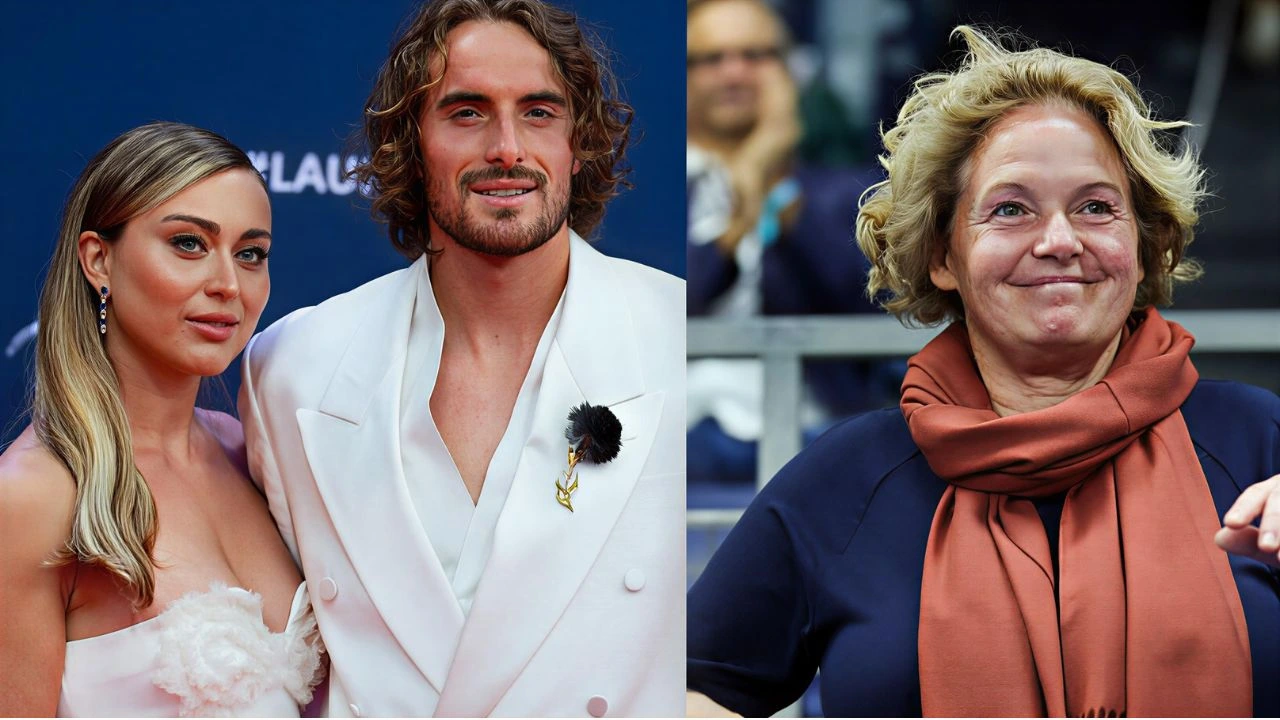
Yulia Salnikova's comments about Paula Badosa have turned Stefanos Tsitsipas' slump into a very personal debate. She did not simply talk about forehands, coaching or injuries. She pointed toward the emotional weight of a relationship that became one of tennis' most public love stories. 'They were a good couple, but it was a burden for him. He was trying too hard,' Salnikova said. Then came the sharper part: 'The constant photos, social media, and all the media attention gradually affected him. Although he said he liked it, internally, it was piling up.'
That is a strong thing for a mother to say, especially when the other person involved is also a professional athlete who has had her own struggles. Paula Badosa was not just 'the girlfriend' in this story. She was a former World No. 2, a top player fighting injuries, pressure and her own career uncertainty. So blaming her alone would be lazy and unfair. But Salnikova's comments do open a real question: did Stefanos Tsitsipas lose some of his Tennis peace when his private life became public entertainment?
🚨 LAS FUERTES DECLARACIONES DE LA MAMÁ DE TSITSIPAS SOBRE SU RELACIÓN CON BADOSA.
— Tiempo De Tenis (@Tiempodetenis1) May 10, 2026
🗣 “La relación fue complicada de principio a fin. Por un lado, ella lo distraía del tenis y, por otro, la ruptura le pegó muy duro. No era una relación normal"
🤔 ¿Opiniones? pic.twitter.com/tfPqiHICkR
Stefanos Tsitsipas and Paula Badosa: The problem was not love, it was the spotlight around it
Stefanos Tsitsipas and Paula Badosa were not a quiet tennis couple. They became a brand. The joint Instagram account, the photos, the fan nickname, the constant attention; everything around them became visible. For fans, it looked sweet and glamorous. For two players trying to survive the most demanding individual sport in the world, it may have been heavier than it looked.
That is where Salnikova’s point becomes interesting, even if uncomfortable. She is not saying love itself damaged Stefanos Tsitsipas. She is saying the performance of love, the always-visible version of it, became a burden. And honestly, that is believable.
Tennis already gives players very little hiding space. Every missed backhand is replayed. Every loss is explained. Every coaching box reaction becomes content. Add a high-profile relationship to that, and suddenly a player is not just managing matches. He is managing a public storyline.
Stefanos Tsitsipas has always seemed like a sensitive and introspective player. He is not a simple smash-and-move-on character. Stefanos Tsitsipas thinks, writes, reflects, sometimes overthinks. That can be beautiful when he is flowing, but dangerous when the results stop coming. A player like that does not need more noise around him. He needs clean air.
And the results have made the conversation louder. This is a player who reached the French Open final in 2021 and the Australian Open final in 2023. Stefanos Tsitsipas was once World No. 3 and looked like one of the men ready to inherit the top of the sport. Now, with his ranking reportedly down at No. 75, every explanation feels tempting.
Paula Badosa should not become the easy villain
This is where the story needs some balance. It is very easy to turn Paula Badosa into the convenient reason for Stefanos Tsitsipa's decline. It is also probably wrong. Tennis form does not collapse because of one person.
Paula Badosa did not make Stefanos Tsitsipas miss returns, lose tactical clarity or struggle in big moments. She also had her own career affected by injuries and pressure. If anything, both players were living through difficult professional phases while their relationship was being watched like a streaming series.
That is why the 'Badosa ruined him' version is too cheap. The more human version is this: two famous athletes entered a relationship that became extremely public, and the attention around it may have made an already difficult period harder. That is not blame. That is context.
Stefanos Tsitsipas himself has added fuel to the discussion. When asked about relationships, he reportedly said: 'Non-tennis girlfriend. Trust me. Even if you don’t want to admit there’s competitiveness, there’s always competitiveness.' That line sounds casual, but it says a lot.
Dating someone from the same sport can bring understanding, but it can also bring comparison. Rankings, results, injuries, attention; everything can quietly enter the relationship, even when nobody wants it to.
Salnikova has now praised Stefanos Tsitsipas' current partner, Kirsten Thoms, in very warm terms. 'I think he has matured from all points of view,' she said. 'She has provided him with a very comfortable emotional life.” She also described Thoms as “a very sweet girl, understands tennis, played for college, and has also built her own career in marketing and representation.'
The most striking detail was almost old-fashioned: 'Their relationships even develop in an epistolary manner. They don’t just exchange messages or texts; they write actual letters. Stefanos dreamed of a relationship like this.'
There is something almost movie-like in that contrast. One relationship lived under flashbulbs and Instagram posts; another described through letters and emotional comfort. It sounds like a tennis version of choosing between a red-carpet romance and a quiet European film where people stare out of windows and write beautifully. But sport is not cinema. The only proof that matters will come on court.
French Open can reveal whether the noise has finally settled
That is why the French Open matters so much for Stefanos Tsitsipas now. Paris is not just another Tennis tournament for him. It is the place where he once came closest to becoming a Grand Slam champion. In 2021, Stefanos Tsitsipas led Novak Djokovic by two sets in the final before losing in five. That match still feels like a turning point that never fully turned. Since then, Stefanos Tsitsipas has had big moments, but not the full breakthrough many expected.
Clay should still suit Stefanos Tsitsipas. His heavy forehand, athletic movement and ability to build points can trouble almost anyone when his mind is clear. But that is the key phrase: when his mind is clear. Right now, the tennis questions are tangled with personal ones.
His mother's comments have put his private life back in headlines. His ranking has made every match feel like evidence. His family's involvement continues to attract attention. Even his past relationship has become part of the pre-French Open noise.
For Stefanos Tsitsipas, the challenge is not only to beat opponents. It is to stop carrying every conversation onto the court. He cannot play Badosa, his mother's remarks, social media, his ranking and his old expectations all at once. Nobody wins that match. He has to reduce the world again: ball, court, opponent, point.
The uncomfortable truth is that Salnikova may be partly right about the burden of publicity, but that still does not make Badosa responsible for Stefanos Tsitsipas' decline. The responsibility now belongs to Stefanos Tsitsipas and his team. He needs stability, tactical direction and emotional boundaries. He needs a camp that protects him from unnecessary drama. Most of all, he needs to rediscover the version of himself that did not look trapped by his own thoughts.
The French Open gives him a stage, but also a mirror. If he plays well, the story changes quickly. Tennis is forgiving that way. Win three matches in Paris and suddenly people stop discussing your old Instagram account. Reach the second week and the conversation becomes about clay-court revival. Make a deep run and everyone starts saying he has found himself again.
But if he falls early, the noise will grow. That is the pressure now. Stefanos Tsitsipas is not just trying to rebuild his ranking. He is trying to reclaim control of his own story.
And maybe that is the real point here. Love did not break Stefanos Tsitsipas. Publicity did not single-handedly ruin him. His mother’s words did not create the slump. But all of it together shows how fragile elite sport can be when the mind gets crowded. A tennis player may look alone on court, but he often walks out carrying family, romance, expectation, memory and fear in the same bag as his rackets.
Ahead of the French Open, Stefanos Tsitsipas needs that bag to feel lighter. Because somewhere under all this noise, there is still a gifted clay-court player who once stood one set away from winning Roland Garros. Now Stefanos Tsitsipas has to prove he can find that player again.
