


Table of Contents
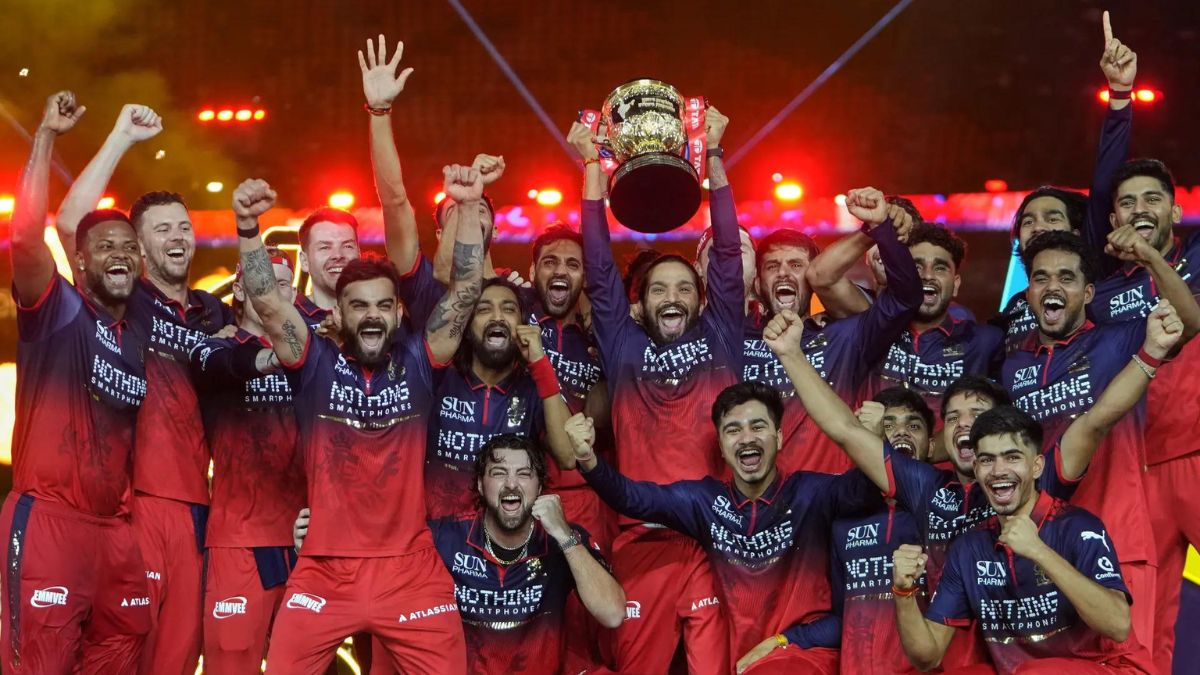
Years passed. Royal Challengers Bengaluru sparkled but never settled. Flashy players filled the lineup, big scores lit up scoreboards, yet losses piled up just the same. A long wait ended in 2025 when victory arrived at last under fireworks and noise. Still, whispers followed: Was this a peak or something longer? Could it grow, or fade like before?
Not a single star carried RCB through. What held them together was balance, depth showing up when needed. Each piece fit, roles filled without fuss. Moments shifted, new faces took charge. Strength came not from bursts but a steady presence across the board.
One thing stands out when you look at the data. In 16 games, RCB brought in 186.81 crore rupees, their earnings landing at 83.53 crore after costs. Ahead of everyone else, they scored 12635.07 on the impact scale; no one came close.
Yet the truth stretches past statistics. Success came through spreading, shifting easily, and having layers beneath.
Rajat Patidar became the centre of the project RCB
A star player often becomes the heartbeat of a winning squad. For RCB, that role belonged to skipper Rajat Patidar.
Out of everyone on the team, Rajat Patidar brought in the most extra value. He generated ₹49.34 crore while initially priced at just ₹11 crore during bidding. That gap - ₹38.34 crore stood as the biggest gain seen across the roster. A steady hand through tough games shaped that outcome. The numbers grew because decisions matched moments.
What made Patidar stand out wasn’t just performance; it was meaning. Other RCB seasons banked everything on one big name; he shifted the weight elsewhere. A different kind of anchor emerged, quiet but steady. Team energy began spreading outward instead of circling one point.
A rush of players followed close behind. One standout was Devdutt Padikkal, whose season brought in ₹17.43 crore profit, among the most efficient returns seen. Then stepped in Krunal Pandya, contributing ₹10.15 crore more. Bhuvneshwar Kumar chipped in with ₹8.06 crore, while Tim David pulled through for ₹7.76 crore. Even Virat Kohli, tagged at a steep price tag early on, ended up well ahead.
Not just a single force drove RCB. Multiple sparks kept them moving. One after another, they found ways to push forward. Each piece played its part differently.
A team built on layers, not dependence
Numbers tell a quiet story of RCB’s clever season build. A steady hand shaped each move behind the scenes. Not luck, planning showed up in every match result. Choices added up without flash or noise. Season flow followed a hidden rhythm few saw coming.
Rajat Patidar, clocking 2335.09 in impact. Close behind came Kohli, landing on 1842.06. Then Bhuvneshwar Kumar showed up at 1503.04. Into that mix stepped Devdutt Padikkal, pushing past 1000. So did Krunal Pandya, adding depth where it counts, both bat and ball, now anchored by steady hands.
What mattered most was that no single person carried the load alone.
Just three players made up nearly half of RCB’s overall contribution. Following those, two more pushed the share past 64 per cent. By the time seven names are included, close to 78 per cent is covered.
Success isn’t just about one thing. It builds through stacked pieces. Each part holds up the next. Strong systems grow like that, what works hides in repetition.
Below all stood a dependable core ready to shift momentum when needed. At the top, Patidar guided alongside Kohli. Closing phases unfolded under Tim David, backed by Venkatesh Iyer. Deep commitment turned RCB from hopefuls into winners.
Different Heroes, Different Nights
One moment stood out when thinking about how full RCB’s journey felt, the shifts in who stepped up as the months passed. Not the start, but the middle showed it best. Responsibility moved quietly at first, then louder. Different people wore it each time. What began with one voice ended with many. The weight changed hands without warning.
One player stood out most in each of 16 games - nine individuals took that role at least once. Dev Padikkal lit up the game when facing Sunrisers Hyderabad. Not long after, a different kind of energy came from Tim David during his turn against the Chennai Super Kings. Meanwhile, runs kept piling up thanks to Patidar whenever he met the Rajasthan Royals. On another front entirely, Phil Salt pulled control away from both the Mumbai Indians and the Delhi Capitals through sheer force. Then there was Rasikh Salam; his moment arrived once Lucknow Super Giants stepped into view.
Victory came through Virat Kohli’s hand during clashes with the Gujarat Titans and the Kolkata Knight Riders, ending strongly in the final. Out front with the ball, Hazlewood pushed his team ahead when wickets mattered most. At tight moments, Kumar found rhythm just in time to shift momentum. Iyer stepped up too, delivering blows that changed outcomes without warning. One leader per game through nine wins shows a pattern, not chance.
Each time RCB ran into a new hurdle, another player stepped up instead.
An elite batting unit that rarely stalled
Bursting with power at the crease, RCB found its edge through steady performances. 36.39 - that's how many runs each wicket costs them on average. A full season saw them cross the scoreboard 3057 times, putting them just behind two others at the top. Nearly every match, they pushed past ten and a half runs each over, one of only a few squads able to keep that pace. Second place came into view thanks mostly to consistency like this.
Yet what set them apart wasn’t luck; it was motion. While others stood still, they kept shifting ground. Not by force, but by habit. Where routines hardened elsewhere, theirs stayed loose. Change came not in bursts, but quietly, like tides. Their pace never paused long enough to be named. Stillness showed up then left, unwelcome. Movement became invisible, which made it last.
Scoreboard stillness hardly ever stuck around when RCB batted. Their dot-ball count dipped to just 29.14 per cent, the weakest in the league by that measure. Movement came easily, runs found gaps, and strike swaps happened without delay.
Stability came through Virat Kohli’s 675 runs that season. Authority wasn’t missing, thanks to Patidar’s presence. Value showed up in Padikkal’s contributions, steady and deep. Aggression sparked early, fueled by Salt’s role at the top. Finishing strength arrived via Tim David, while Venkatesh Iyer made sure it stayed. Out of their combined efforts came a lineup ready for whatever the match threw at it.
Also Read: "You don't have to do everything alone": Virat Kohli praises RCB's complete team effort
The bowling attack that completed the puzzle
Most times through their IPL journey, RCB batters drew more attention than their bowlers, not in 2026.
Bowling strength stood out as key when holding onto the championship. Though often overlooked, it shaped outcomes more than expected throughout the season. Its consistency emerged under pressure moments. Where others faltered, this area held firm. Performance here quietly guided success without drawing attention.
Out of all teams, only one got more wickets than RCB’s 104. A tight 9.41 runs per over kept them near the top in economy. Fewer boundaries leaked compared to most sides helped, too. Their average of deliveries needed per dismissal stood out just as much.
Bhuvneshwreswar Kumar was right there when it mattered most, 28 wickets plus tight spells under eight an over kept RCB steady when things got messy. Rasikh Salam showed up out of thin air, turning heads with every spell he bowled. Not far behind, Josh Hazlewood struck hard whenever needed, even though everyone questioned his price tag early on. Into the mix stepped Krunal Pandya.
Out of that came a bowling lineup tough enough to hold leads, manage run-chases, and stay sharp when moments got tight.
RCB turned sharper because of that flexibility. Not just fun to watch anymore - suddenly harder to beat.
The final was a Summary, not a surprise
Victory parades grab headlines, yet true strength shows up weeks earlier in quiet moments few notice.
Felt inevitable, RCB's win against Gujarat Titans, more proof than surprise after their steady play these past weeks.
Bursting through late, Kohli carved out the knock that sealed the run-chase. Before that, Patidar’s captaincy quietly set the course early on. Through months of play, Bhuvneshwar held tight reins on the bowlers’ line and pace. When moments turned sharp, Padikkal stood tall, then Krunal stepped in without delay. Salt brought speed at the start, while Tim David swung hard mid-way. Rasikh Salam struck at a fragile juncture, another name flashing bright under pressure. Later still, Venkatesh Iyer found timing just when silence would have doomed them.
Victory often leans their way when runs pile up fast. When numbers stay small, they still find paths through. Batting firepower might carry them one day, while tight bowling shuts things down another. Older hands may steer things at times, though new names sometimes step into the spotlight.
What stood out was how they no longer leaned on others. They had become a system.
So it wasn’t just about lifting a trophy when Royal Challengers Bengaluru won IPL 2026. Never before had the team reached so many heights at once. That year stood apart from every other chapter they'd lived through.
Also read: Cricket news in India
