


Table of Contents
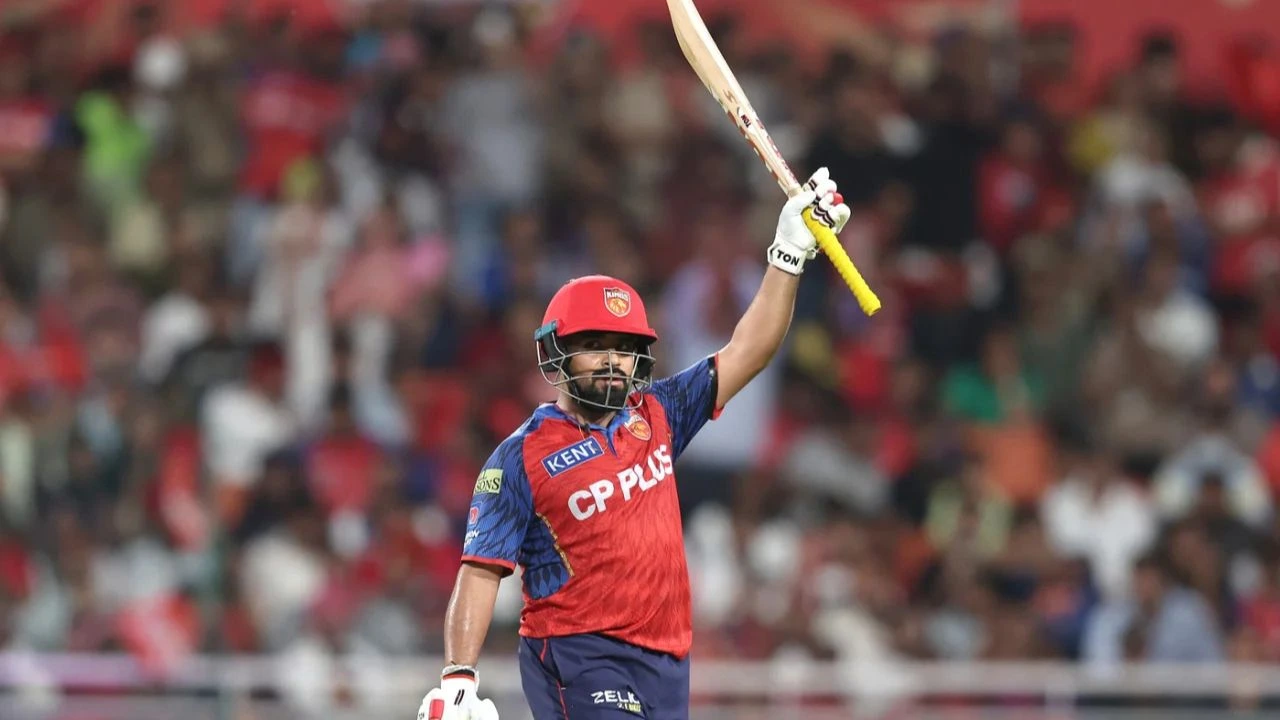
Prabhsimran Singh walked off the field at Mullanpur on Tuesday evening having scored 59 off 44 balls, having been caught in the deep off a slower ball from Yash Raj Punja, and having done something that will take a moment to fully absorb.
He scored his fourth half-century in five innings. And he did all of it in seven innings, one fewer than either of his India rivals have needed to get to where they currently are.
On a night when Punjab Kings needed someone to anchor a chase-worthy total against a Rajasthan Royals side desperate for points, Prabhsimran Singh did exactly that, finishing with 346 runs for the season so far and a case for the Indian T20I gloves that is becoming increasingly difficult to ignore.
The record that puts Prabhsimran Singh above Gayle in Punjab's history
Chris Gayle scored fifty-plus for Punjab eleven times across his seasons in the franchise's colours. It was a number that felt safe, the Universe Boss, the man who redefined what aggressive batting looked like in this format, holding a record for the team he played some of his most destructive cricket for.
Prabhsimran Singh has now scored fifty-plus twelve times for Punjab, moving past Gayle into third on the all-time list for the franchise behind only Shaun Marsh at twenty-one and KL Rahul at twenty-five. The fact that he has done this at twenty-three, with several seasons still ahead of him, gives that number a significance beyond the immediate record.
He is not just passing Gayle, he is building a case to catch Marsh. Fourth fifty-plus score in his last five innings, consistency of the kind that Gayle at his most spectacular could not always sustain, and a strike rate of 172 that tells you this is not accumulation for its own sake.
How Prabhsimran Singh has overtaken Kishan and Samson and what it means
The wicketkeeper-batter race, as per lastest cricket news, in IPL 2026 has been the most significant selection conversation running alongside the tournament all season, and as of Tuesday night at Mullanpur, Prabhsimran Singh leads it clearly.
Three hundred and forty-six runs from seven innings, thirty-four more than Ishan Kishan's 312 from eight, forty-two more than Sanju Samson's 304 from eight. The one-innings advantage is the detail that matters most. In T20 cricket, doing more with fewer opportunities is the cleanest possible argument for selection, and Prabhsimran Singh has been making it game after game.
Kishan's strike rate of 198 is higher, Samson's average of 50.67 is comparable, but neither of them has produced the volume that Prabhsimran Singh has produced with this level of regularity.
Tonight's 59 was not a blitz, it was an anchor innings, six fours and one six, strike rotation alongside boundary-hitting, the kind of innings that shows a batter can adapt to what the game needs rather than simply playing one way regardless of context.
Also READ: Priyansh Arya was 20 lakh away from opening with Virat Kohli for RCB at the Chinnaswamy
Two seasons at the top and why the selectors cannot keep looking away
This is not a hot streak. In 2025, Prabhsimran was the only wicketkeeper-batter in the IPL to breach five hundred runs for the season, 549 runs, finishing eighth overall on the Orange Cap list, ahead of KL Rahul, ahead of any Indian wicketkeeper and even ahead of Jos Buttler in the final reckoning among keepers.
Now in 2026, through seven innings, he is leading the keeper charts again with better efficiency than the previous season. Nearly nine hundred IPL runs across the two seasons combined, powerplay strike rates above 165 in both years, and a consistency that neither Kishan nor Samson has matched over the same period.
The Indian selectors have historically gravitated toward established names when picking their wicketkeeper-batters for T20 internationals, and both Kishan and Samson carry significant experience and reputation.
But reputation does not score runs, and the runs right now are being scored by a twenty-three-year-old from Punjab who is quietly, inning by inning, building a case that cannot be made in any clearer language than the one he is using every time he walks out to bat.
