


Table of Contents
There is a certain kind of immortality that comes with being the first. Not just the first to win, but the first to reach a number nobody has reached before.
Some records define a sport forever
There is a certain kind of immortality that comes with being the first. Not just the first to win, but the first to reach a number that nobody has reached before. Brazil were the first nation to win five FIFA World Cups, earning the "Pentacampeão" identity that no other country has matched since.
The 1972 Miami Dolphins were the first and still only team in NFL history to complete an entire season undefeated, going 17-0 including the playoffs. These are not just records, they are landmarks that define the history of a sport and separate the truly great from everyone else.
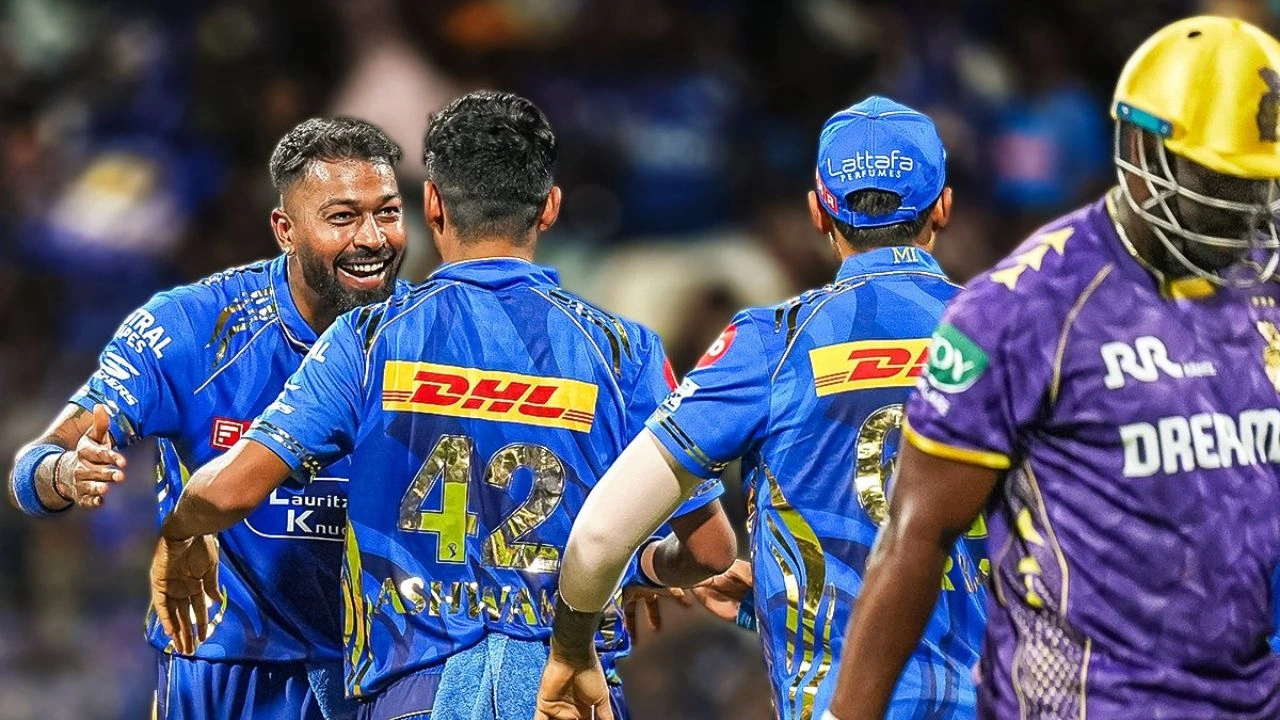
And in IPL 2026, Mumbai Indians are about to join that conversation by becoming the first franchise in history to play 300 T20 matches. On Sunday evening at the Wankhede Stadium, when Mumbai Indians walk out against Kolkata Knight Riders in their IPL 2026 opener, they will play their 300th T20 match, the first franchise team in the history of cricket to reach that landmark.
IPL 2026: How 299 matches became this
The number breaks down simply enough, 277 matches across eighteen IPL seasons and 22 in the Champions League T20 across five editions.
Among IPL franchises Royal Challengers Bengaluru are next with 287 and KKR third with 281, which means Mumbai have played this format more than any other franchise in the competition and more than almost any team anywhere in the world. The milestone sits alongside five IPL titles, a Champions League T20 victory in 2013, and a franchise identity that was not always this certain about itself.
Only Pakistan and Somerset have played 300 or more T20 matches, with 303 each, and both are national or county sides with decades of cricket behind them. Mumbai Indians, a franchise that did not exist until 2008, joins that list today.
Also READ: IPL 2026: What connects Jasprit Bumrah to MI's 13 year opening game drought
What the journey to 300 actually looked like for Mumbai Indians (MI)
When Mumbai Indians began in 2008 they were built on hope and star power. Sachin Tendulkar at the centre of everything, crowds turning up, results coming and going. The initial years were restless in the way that franchises finding their footing tend to be, talent without coherence, promise without consistency.
The shift came almost quietly. In 2013, mid-campaign, Ricky Ponting handed the captaincy to Rohit Sharma, himself still finding his feet in the game. There was no grand declaration, no dramatic overhaul. Just a change, and then a title, and then a sense that something had settled into place.
That year Mumbai did not just win the IPL, they discovered who they were. Everything that followed was built on that discovery. Four more titles came after it across years defined by close games, tight finishes and moments that lived on edges.
The teams above them on the all-time list, Pakistan and Somerset, reached 303 through entirely different journeys, one as a national side playing international cricket across all formats, the other as a county team with a long domestic history.
Mumbai Indians got here as a franchise, in a single competition's ecosystem, by simply showing up and competing across eighteen seasons without missing a beat. Royal Challengers Bengaluru are second among IPL franchises at 287. The gap between first and second is thirteen matches. That tells you something about how consistently Mumbai have been there.
They will arrive at match 300 with a five-year title drought and a squad built around Hardik Pandya's captaincy and the kind of depth that makes them dangerous every season regardless of recent results.
The milestone is a checkpoint in an ongoing journey as much as it is a celebration of what has come before. But checkpoints matter. They tell you how far you have come and they remind you that the story is still being written.
