


Table of Contents
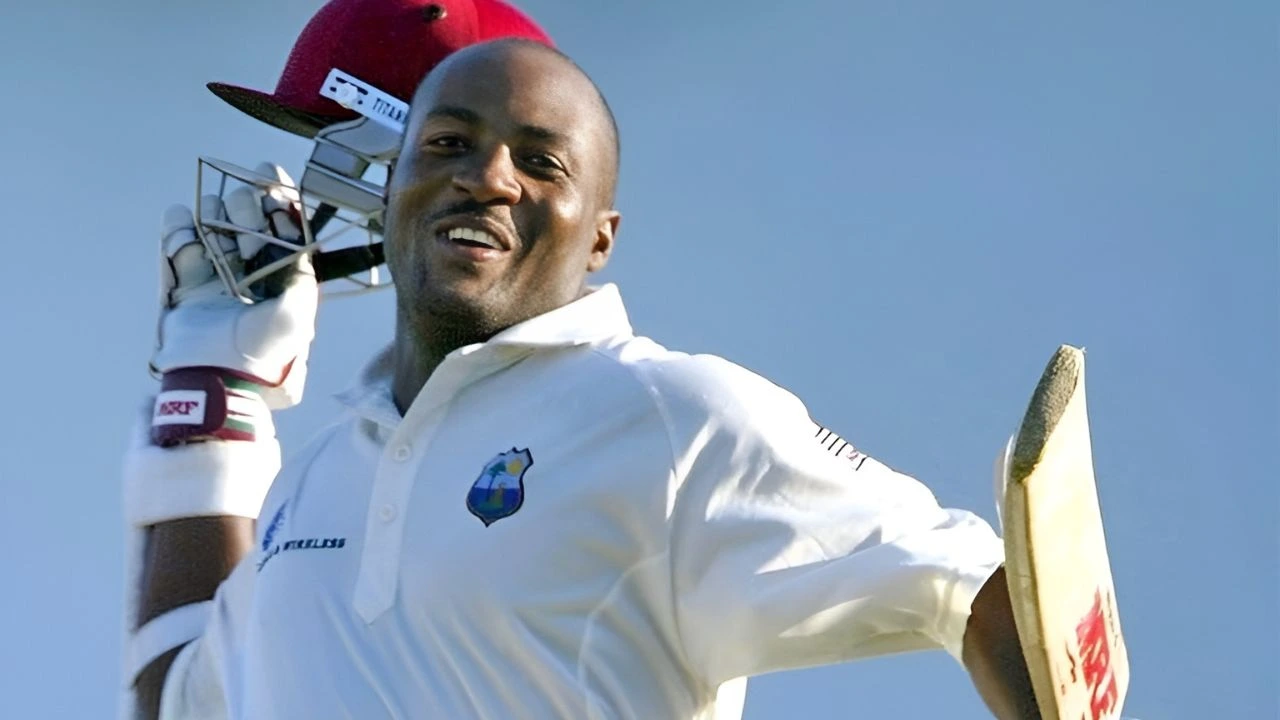
Today is April 12 and twenty two years ago today something happened at the Antigua Recreation Ground that the sport of cricket has spent the two decades since trying to process. Brian Lara scored 400 not out against England in a Test match. Not 399.
Not 401 in a second attempt. Exactly 400. Brian Lara swept Gareth Batty for a single in the 202nd over and the number on the scoreboard became the only quadruple century in the history of Test cricket. It has been there for twenty two years. It is still there. Nobody has come within 65 runs of it.
That last detail is worth sitting with for a moment. The closest anyone has come since 2004 is David Warner's 335 in 2019. Sixty five runs. That is essentially a full T20 innings.
That is the distance between the second best individual score in Test cricket since 2004 and what Brian Lara did on that afternoon in Antigua. The mountain he climbed is not just the highest. It is a different category of mountain entirely.
What Brian Lara was carrying before he even picked up the bat
There is a specific piece of context about this innings that gets lost in the celebration of the record. Before the fourth Test West Indies had lost the first three games of the series to England. They were facing a whitewash.
Brian Lara himself had scored just 100 runs across those three Tests. The questions about his form were serious and coming from people who knew cricket well enough to ask them with authority. A man who had held the world record for the highest individual Test score since 1994 was being asked in public whether he was finished.
He won the toss. West Indies batted. Chris Gayle gave the side a breezy start before falling and Brian Lara walked to the crease after Gayle's dismissal on a pitch that had absolutely nothing in it for the bowlers on a flat Antigua surface.
By the end of Day 1 he had 86 not out and West Indies were 208 for 2. The critics who had questioned his form had spent an entire day watching their question slowly dissolve in the Antigua heat.
Thirteen hours, 400 not out and what that actually means
On Day 2, Brian Lara scored a triple century. West Indies finished on 595 for 5. Day 3 he got to 400 and West Indies declared on 751 for 7. He spent 778 minutes at the crease.
Two minutes short of thirteen hours. In that time Brian Lara hit 43 fours and four sixes and faced 582 deliveries at a strike rate of 68.72 in a Test match which is remarkable for any innings let alone one that lasted nearly three days.
To understand what 778 minutes at the crease in Antigua heat in full batting gear actually costs a human body you have to stop thinking about it as a cricket stat and start thinking about it as a physical event.
Brain Lara was running between the wickets in full gear for the equivalent of several miles. He was maintaining concentration for longer than it takes to fly from London to Tokyo. He reached his first century off 131 balls and hit 15 fours and one six getting there.
By the time Brian Lara passed 300 he had hit 39 fours and three sixes and faced 404 deliveries. And he was not done. Brian Lara had a hundred more runs to score and he knew it because the whole point of this innings was the number at the end of it.
The reclamation and why it is the most extraordinary part of the story
Here is the thing about Brian Lara that separates his relationship with the record from any other cricketer's relationship with any record in the history of the sport. He held it first. He lost it. And then he took it back.
In 1994, Brian Lara scored 375 against England at the same ground in Antigua. The same ground. Ten years later almost to the day. He held that record for nine years before Matthew Hayden scored 380 against Zimbabwe in 2003 and took it from him.
Most cricketers who lose a record of that magnitude accept it as the natural order of things. Brian Lara had a different response. One hundred and eighty-five days after Hayden broke his record Brian Lara scored 400 not out and took it back.
He is the only player in the history of Test cricket to lose the world record for highest individual score and then reclaim it. That fact sits at the centre of this story and it is the most human part of all of it.
Lara said afterward that when he passed 375 he did not quite know how to celebrate. But when he reached 400 he understood he had done something that might never happen again in his lifetime. Twenty two years later that assessment looks understated rather than dramatic.
First player to reclaim the highest individual score record in Tests#OnThisDay in 2004, @BrianLara became the first man to score 400 runs in a Test Match - 400* (582 balls, 43 fours, 4 sixes) against England at St. John's.
— Cricketopia (@CricketopiaCom) April 12, 2026
Ten years after hitting a then Test-record 375 against… pic.twitter.com/Ac7uvbZQ31
What England's captain said and why it was the most honest thing anyone could say
Michael Vaughan was England's captain for that Test. His team had already won the series 3-0. They had the best attack in the world at that point.
They watched Brian Lara bat for nearly thirteen hours on a flat pitch and at the end of it Vaughan said in the press conference "We all set out to achieve greatness, but he is a gifted, gifted player, throughout his innings we tested him with a few things but he was much better than us for those two days,"
"He is one of the all-time great players, he has achieved something that has never been achieved before even with the amount of pressure he had on him before the start of this Test He will go down as one of the greats of the game and it will take some player and some performance to beat his 400." Vaughan concluded.
No qualification. No context about the pitch being flat or the match ending in a draw. Just the simple acknowledgment of what had happened in front of him for three days.
Some critics at the time said the innings of Brian Laea was selfish because the match ended in a draw and West Indies had already lost the series. That criticism exists and it is not entirely without logic. But it misses something important about what Brian Lara was doing. He was not trying to win the match in the conventional sense.
He was trying to do something that had never been done and that might never be done again. And on April 12, 2004 he did it. The number 400 has been at the top of the Test cricket record books for twenty two years. Today is the anniversary of the day it got there. It shows no signs of moving.
