


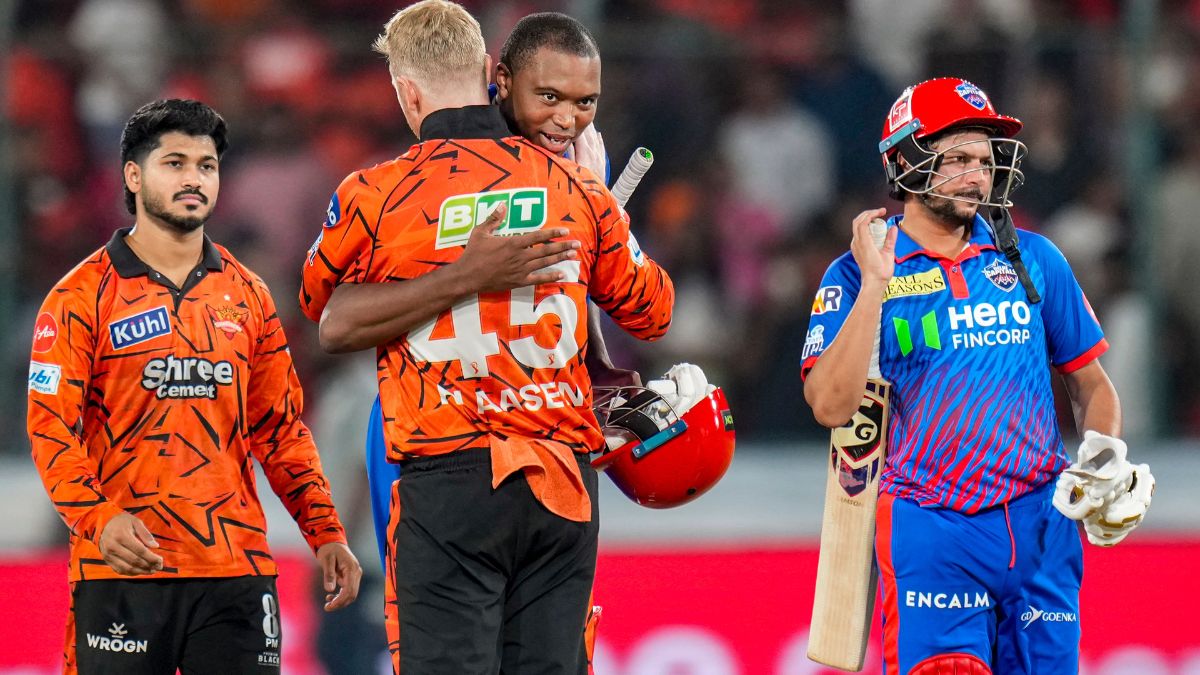
At Rajiv Gandhi stadium, humming loud enough to shake DC’s confidence before they even picked up a bat. Chasing wasn’t an option, not after SRH slammed 242, a number etched deep into the scoreboard by the very first over. Even when DC flickered with brief resistance around the seventh or eighth, it never felt like momentum shifted; too much ground to cover, too few wickets left. The home bowlers moved with sharp precision, cutting off angles, closing doors. A gap opened, that is ot for long. 47 runs said it plainly, this was no contest in the end. Now, Axar Patel watches his team drop one spot back, stuck on five, while those in purple leap ahead, now seated just behind the leaders.
6 reasons why DC lost against SRH:

1. The Abhishek Sharma Masterclass
Abhishek Sharma didn’t merely face deliveries; he dismantled them. Through every over, he stayed put, crafting 135 runs from just 68 balls, a personal peak. First, for any Sunrisers Hyderabad batter, he cracked triple figures versus Delhi. With each boundary, ten flat shots and ten towering clearances, his scoring sprinted close to 200 per hundred. Bowlers from Delhi stood dazed when it ended, their hope of chasing already gone
2. Death Over Carnage: Klaasen’s late blitz
While Abhishek lay it down steadily, Klaasen lit the fuse when he arrived. Hitting hard right after walking in, he made 37 off only 13 balls, speeding past 280 in strike rate. That burst didn’t just lift the score; it changed its shape entirely. Delhi's bowlers during crunch overs looked lost; Mukesh Kumar gave away 53 in his full quota, missing both length and clever changes to slow things.
Also Read: Abhishek, Klaasen dominate Orange Cap; Malinga enters Purple Cap race after SRH vs DC match
3. Powerplay Imbalance
Starting fast was key to chasing 243, yet Delhi’s openers failed to keep pace with what the Sunrisers had shown. Out at eight, Pathum Nissanka didn’t last long, leaving everything on KL Rahul’s shoulders. Even after he scored 37, the required runs per over shot up quickly, touching 14. On the flip, Sunrisers began sharply: Travis Head blasted 37 in just 26 balls while Abhishek held firm beside him. Right away, their aggression stood out compared to DC’s cautious steps.
4. Eshan Malinga’s Destruction
Eshan Malinga snapped the momentum clean in half. With sharp, jagged deliveries and a slingy rhythm all his own, he carved through Delhi's core batters. His best yet, 4/32, spoke louder than noise ever could. The moment Stubbs started leaning into shots, one clean hit after another, Malinga cut him short like a sudden stoplight. Hope flickered once. Then it didn’t.
5. Failure of the Spin Spearhead
That evening, when keeping things tight mattered most, Kuldeep Yadav, usually Delhi’s go-to man, struggled more than usual. Thirty runs vanished in just two overs, thanks to Abhishek and Ishan Kishan pouncing fast. With their best spinner failing to hold the line, the team turned to less experienced options. Nitish Rana stepped up, even though he’d shone earlier with the bat; still, his bowling cost 55 across four overs.
6. The Sakib Hussain Squeeze
When Malinga grabbed the wickets, Sakib Hussain kept tightening the screws. Just 29 off his four overs, tight stuff when most gave away more than ten an over. Midway through the power play, four straight dots from him stalled DC’s rhythm hard. That quiet spell made Delhi’s hitters rush their plans, pushing them into reckless swings at Malinga and Harsh Dubey down the other end.
