


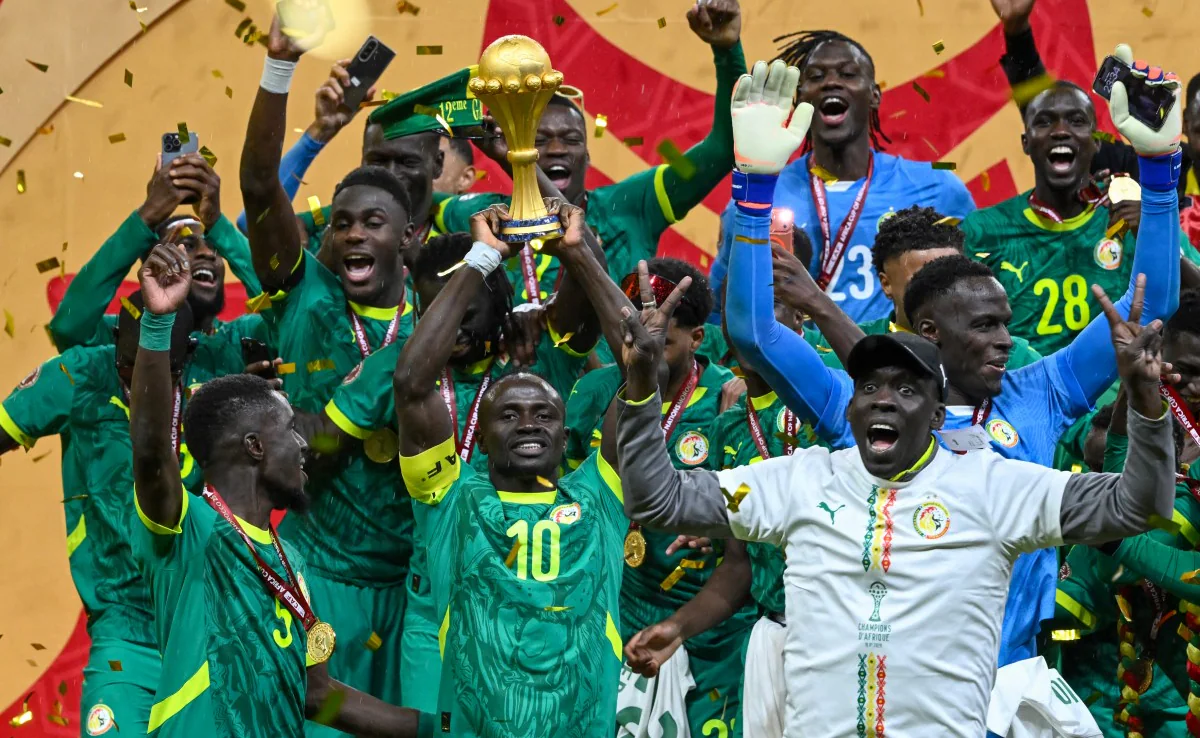
The attempt by Senegal to win back the African Cup of Nations has officially entered the legal highest point of global sport as the Court of Arbitration for Sport (CAS) announced on Wednesday that it has registered the federation's appeal. The Switzerland-based body, however, clarified that no schedule had been established and that there was a possibility that the case over one of the most controversial decisions in African football in recent times was going to be a lengthy and complicated legal tussle.
The conflict is the result of an outrageous decision made by the Confederation of African Football (CAF) last week, which denied Senegal the title they won in a spectacular and riotous final in January. In a historic move, CAF took the championship back to host country Morocco, which caused outrage in the country and serious criticism among football bodies as well as the government. The Senegalese government has not only supported the plea of the federation, but has also demanded an international enquiry into what it termed as suspected corruption in CAF.
A final replay of Senegal vs Morocco in courtrooms, not on grass
The core of the scandal is a series of tense moments in the finale of Rabat. The players organised a 15-minute walkout over a last-minute penalty given to Morocco. The game was resumed as the team came into the field again, and Morocco ended up failing to take the penalty. Senegal proceeded to score in extra time, and this seemed to put the game to a close, which seemed like a tough-fought win.
Also Read: Mohamed Salah to leave Liverpool – A decision that makes sense for player, club and fans
Although the field judgement was in favour of Senegal, an appeals committee of CAF decided against the country and cited a competition law that stipulates the disqualification of any team refusing to play. This sense is in direct conflict with the basic laws of football, which explains that the decision made by the referee in a match is absolute. The clashing values have further complicated the case and made it a legal and a sporting controversy.
CAS admitted that Senegal sought more time to respond with a full appeal brief because CAF has not given any written explanations as to the basis of its decision. This procedural hangar manoeuvre makes it difficult to tell when the case is going to proceed. CAS Director General Matthieu Reeb made it clear that although fans and stakeholders want things to happen, there has to be fairness in the process.
As hearings are still months ahead and the ruling of the case possibly still ahead even more, the saga still puts a dark cloud over African football. What was determined in the pressure of competition will now be evaluated in the rational atmosphere of international arbitration.
