


Table of Contents
Sixty days. That is all it took for one of cricket's more unlikely brotherhoods to fall completely apart. In January 2026 Pakistan were threatening to boycott the T20 World Cup in solidarity with Bangladesh.
Salman Ali Agha stood at the ICC captains briefing and called Bangladesh his brothers. He thanked them for their support and said it was sad they were not playing the World Cup.
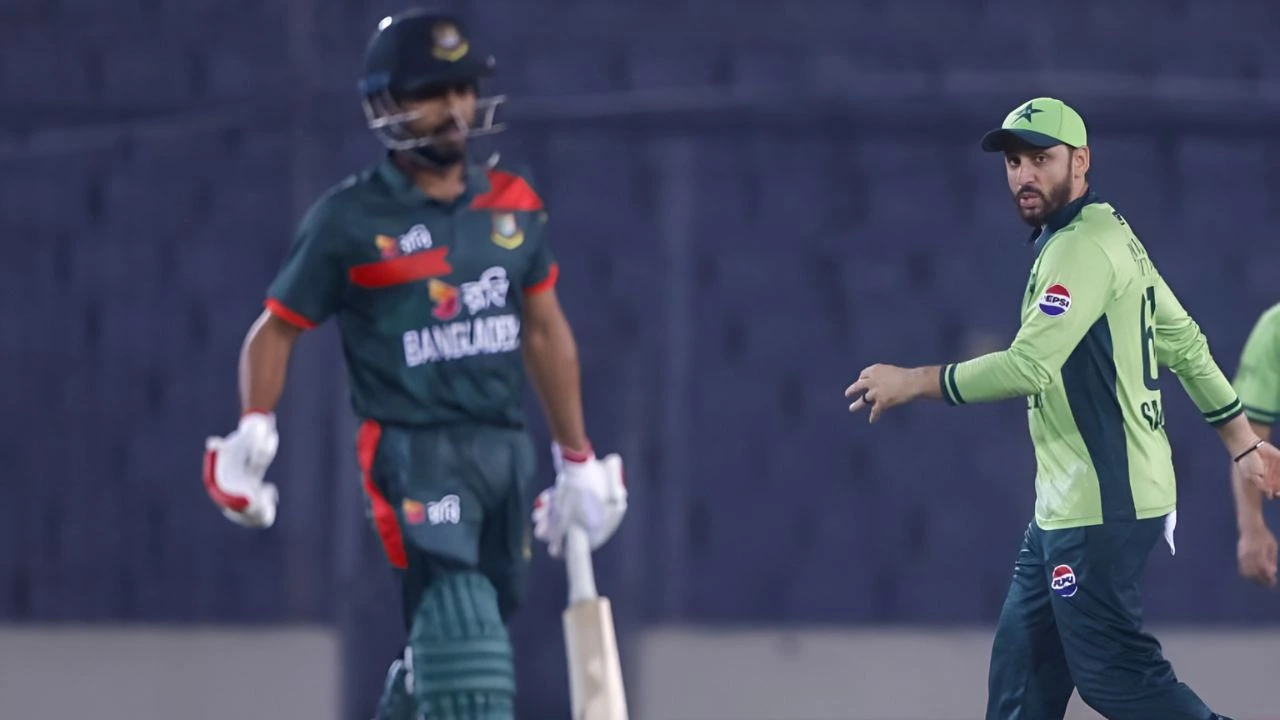
Two months later those same two teams have just finished a three match ODI series that involved a controversial run out, a heated altercation, a bat and helmet being thrown, fines for two players, a disputed DRS review in the final over of the final match and an official complaint filed with the match referee. Bangladesh won the series 2-1. Pakistan are furious. The brothers era is over.
The run out that started everything Pakistan and Bangladesh
The second ODI on March 13 was where the mood changed. Pakistan were batting and building a decent total when Mohammad Rizwan played a soft punch back toward the bowler Mehidy Hasan Miraz.
The ball stopped near the non-striker's end where Salman Ali Agha was standing. Agha stepped out of his crease and bent down to pick the ball up and hand it back to Miraz. It was a small gesture of sportsmanship.
Miraz grabbed the ball before Agha could hand it over and broke the stumps with Agha still outside his crease. The third umpire ruled the ball was live and Agha was out for 64.
Agha was livid. He confronted Miraz, got into a shouting match with Litton Das, and threw his helmet and gloves over the boundary rope when he finally reached the dugout. The match referee reviewed the footage and fined Agha 50 percent of his match fee for the equipment throwing.
Miraz was fined 20 percent for his role in the altercation. The man who had called Bangladesh his brothers two months earlier was walking off a cricket field in Dhaka having been run out for trying to help their bowler pick up the ball. The irony was not lost on anyone.
Pakistan lost that match too. They had been 231 for 3 and building toward something substantial before the dismissal. After it they lost seven wickets for 43 runs and were bowled out for 274. However Bangladesh failed to chased it down and the series was level at 1-1 heading into the decider.
The DRS complaint during 3rd ODI and final over that ended everything
The third ODI on March 15 went down to the last two balls. Salman Ali Agha's side needed 12 runs off two deliveries to win the series. Rishad Hossain bowled one down the leg side to Shaheen Shah Afridi and the on-field umpire Kumar Dharmasena called it a wide. Then Bangladesh reviewed it for lbw. That review is now the subject of an official complaint.
Pakistan's case to match referee Neeyamur Rashid rests on two things. The first is that Bangladesh only took the review after a replay of the delivery had already appeared on the big screen at the ground, which is a violation of ICC protocols that require a captain to review before seeing any replays.
The second is that Bangladesh may have exceeded the 15-second window allowed for a review decision. No timer was shown on the broadcast so the timing cannot be independently confirmed. The review itself was lost by Bangladesh but it did not matter.
The UltraEdge showed a spike as the ball passed the toe of the bat which meant the wide was overturned. Pakistan now needed 12 off one ball. Shaheen Afridi was stumped off the last delivery. Bangladesh won by 11 runs and took the series 2-1.
With two deliveries left and 12 needed, Rishad bowled on leg side, umpire called it a wide, Litton Das asked for review, Shaheen was furious as he knew he touched the ball, decision was overturned and Pakistan now had to score 12 off 1
— The Cricket Express (@TheYorkerBall) March 15, 2026
GAME OVER#BANvPAK #PAKvBAN pic.twitter.com/TLpHzKQx6V
As per Cricbuzz, the Men in Green head coach Mike Hesson met Rashid after the match to formally register the complaint. It is not entirely clear what outcome Pakistan are seeking but sources suggest they want at minimum a public acknowledgment that a procedural error was made.
The match referee met with Hesson and reportedly tried to explain that home team did not gain an unfair advantage. That conversation does not appear to have satisfied the Pakistan management.
Agha top scored for the visitors in the decider with 106. He batted through the innings and gave Pakistan a genuine chance of winning the series. The DRS decision in the final over took that chance away. For a player who had already been through the run out controversy two days earlier it was a particularly bitter way to lose a series.
Sixty days from brothers to official complaints
The shift in the relationship between these two teams over the past two months is worth looking at clearly because it happened quickly and the cricket world has not fully caught up with how complete the change is.
In January 2026 Pakistan backed Bangladesh's position on the T20 World Cup and Agha was the most vocal voice in support of them. In February 2026 Bangladesh were formally excluded from the tournament due to security concerns over travelling to India and Pakistan ultimately decided to play rather than boycott in solidarity.
Bangladesh felt abandoned. The goodwill that had been building quietly disappeared in the space of one decision. Then in March 2026 the two teams met for an ODI series and within three matches had produced a controversial run out that led to a player fine and an equipment throwing incident and a disputed DRS review in the final over of the final game that has now resulted in a formal complaint to the match referee.
Pakistan and Bangladesh started 2026 standing together against what they felt was unfair treatment from the ICC. They ended the series with lawyers and match referees in the middle of their relationship. The series result on the field was 2-1 to Bangladesh. Their first ODI series win against Pakistan in eleven years.
Meanwhile a week ago India lifted the T20 World Cup in Ahmedabad by 96 runs. The two teams who began the year talking about solidarity and brotherhood spent the week after India's triumph filing complaints against each other in Mirpur and that's how sixty days of cricket diplomacy ended up.
