


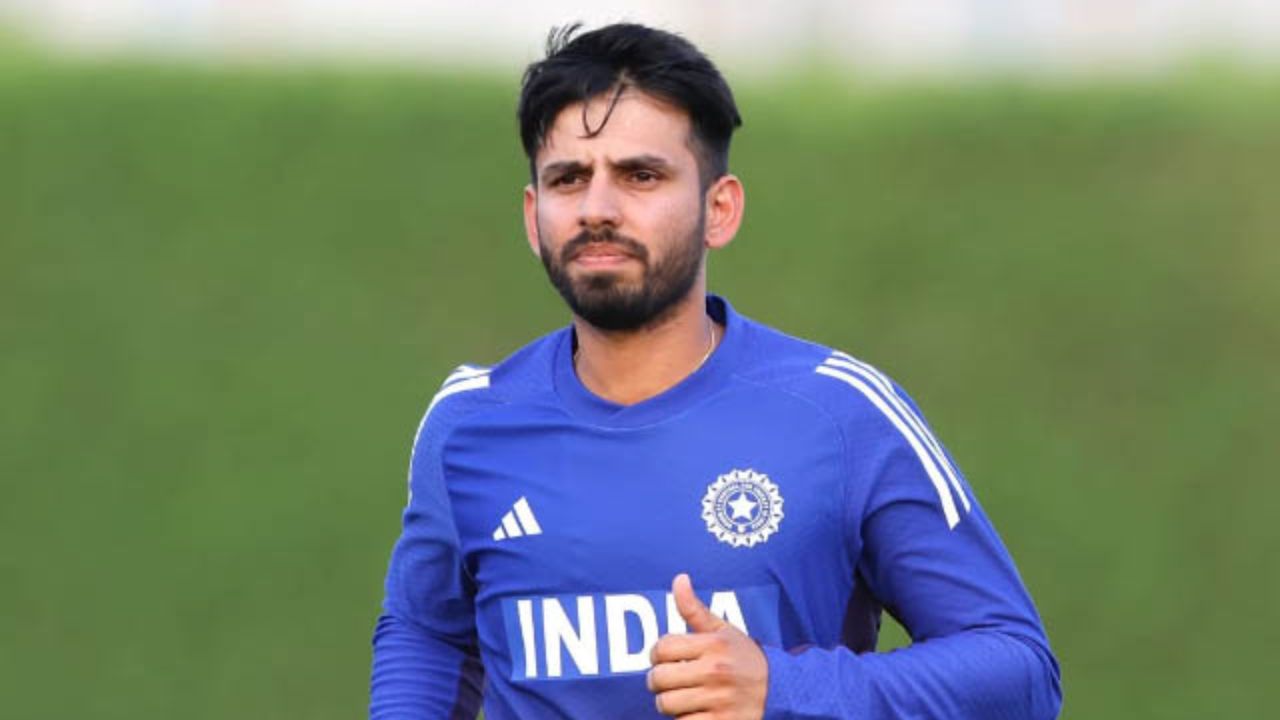
Sanju Samson and Jitesh Sharma bring two very different strengths to India’s T20 setup. Samson offers consistency and fluency in the top order, while Jitesh provides lower-order explosiveness, a skill Samson does not specialise in. Heading into the T20 World Cup 2026, India still lacks a fully settled batting core, and the ongoing wicketkeeper debate reflects that uncertainty.
For the South Africa T20I series, India’s decision to pick Jitesh over Samson drew immediate attention. With Rinku Singh absent and the management leaning toward a clear finisher, Jitesh was preferred in the Cuttack opener, a decision that aligns with Gautam Gambhir’s selection philosophy. He wants a middle order built around all-rounders, leaving only one dedicated finishing role, and that template currently suits Jitesh more than Samson.
Despite the narrative of rivalry, Jitesh approached the topic with maturity after India’s 101-run win. Speaking at the post-match press conference, he described Samson as “like an elder brother”, emphasising that competition does not weaken relationships — it sharpens performance.
“Healthy competition brings out your talent. Sanju bhaiya is a great player — I have to play my best to match him. We both want to play for India, and we learn from each other,” Jitesh said.
Why Jitesh Sharma is ahead for now
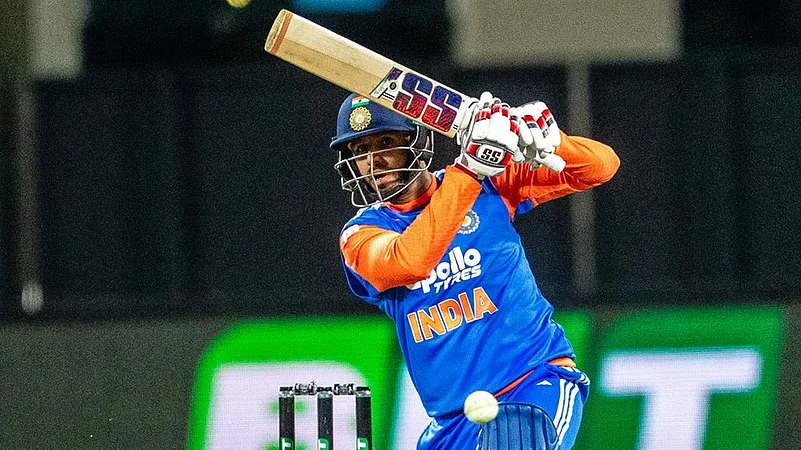
India’s biggest issue isn’t talent, but instability. Under Gambhir, the middle order has seen constant rotation, Axar Patel, Shivam Dube, Tilak Varma and even Harshit Rana have been shifted around, while Suryakumar Yadav’s dip in form has added further fluidity.
Jitesh, however, brings something India rarely produces: a specialist finisher. He isn’t a contender for top-order positions, he thrives at No. 6 or No. 7. His 22 off 13 in Hobart and 10* off 5 on a difficult Cuttack pitch are small but telling impacts. He also claimed four catches that night, nearly equalling MS Dhoni’s T20I record of five dismissals in a match.
Samson, on the other hand, must prove adaptability. With only nine matches left before the World Cup, this may be his final window. If he plays, he must bat in the top four, not float around the middle — India does not need another batter without a fixed role.
Right now, the skillset India needs more urgently is Jitesh’s clarity, aggression, and specialist finishing. Samson is too good to ignore, but Jitesh fits the current system better.
