


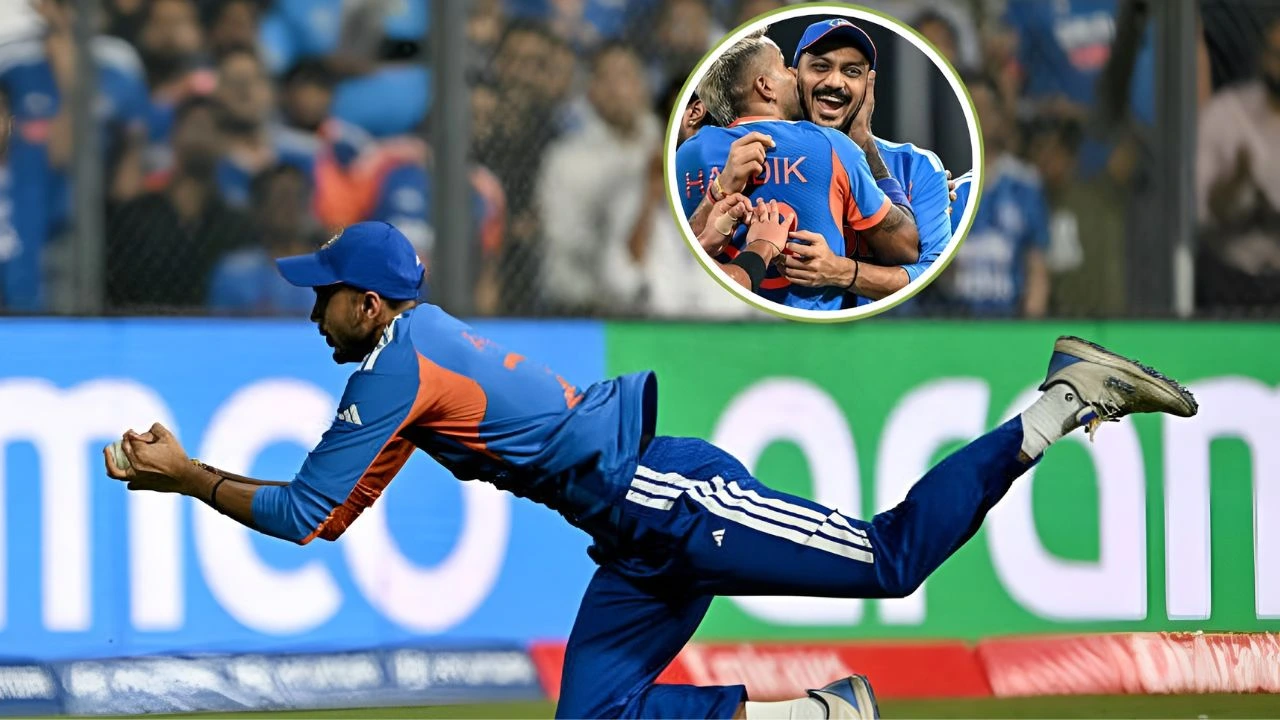
India have qualified for the T20 World Cup 2026 final, and the seven-run win over England at the Wankhede on Wednesday night had everything. Sanju Samson’s 89 laid the groundwork. Jacob Bethell’s century ensured that the contest lasted for as long as India would have wanted. And the bowling stood up when it had to. However, the event that ensured the outcome of the contest, albeit in quiet fashion, came in the fifth over, and it had nothing to do with the ball.
India's entry into the final was based on their batting, bowling and one catch that the old-timers won't forget for a while. For anyone who was around at the Lord’s in 1983, what Axar Patel did in the 5th over wasn't just an important dismissal; it was an exact replica of the most famous catch in Indian cricket history. This bit of brilliance, which came 43 years after the original, ensured that the flight to Ahmedabad for the final on March 8 was booked.
Axar Patel had no right to get there
England needed a massive 254 runs, and they had begun their chase with intent, reaching 38/1 in the 5th over. On the very first ball of Jasprit Bumrah's spell, he tricked the England captain, Harry Brook, with his signature slower ball. Brook, who had scored 7 off 6 balls, looked to hit the ball over the cover boundary, but he only ended up slicing the ball high into the Mumbai night. Axar Patel, who was positioned at cover, had to turn his back to the ball and run almost 24 meters towards the boundary. Running at full tilt, with the ball falling over his shoulder, Axar Patel kept perfect focus and made a full-length forward dive at the last second to catch the ball almost from the grass. It was the crucial second wicket that stalled England's powerplay momentum.
Harry Brook Catch By Bapu Axar Patel ❤️❤️#AxarPatel #INDvsENG pic.twitter.com/3R3fo93p9b
— Gurtej Singh (@GGurtej) March 6, 2026
Kapil Dev did this first at Lord's in 1983
Axar Patel's run was a carbon copy of the legendary catch by Kapil Dev in the World Cup Final of 1983 at Lord’s. On that day, the West Indies were coasting to a small target of 184, with Vivian Richards, who was on 33, looking unplayable. Vivian Richards, who was playing a blinder, flicked a ball from Madan Lal into the air towards mid-wicket, and Kapil Dev, who was backing up from mid-on for over 20 yards, kept his eyes fixed on the ball and took the catch over his shoulder as it was about to fall into the ground. That catch led to the greatest collapse in World Cup history, converting a West Indian win into India’s first World Cup title. Axar Patel's catch in 2026 had the same significance, as it showed that even in the T20 age, a good catch is the ultimate match-winner.
