


Table of Contents
Some of you reading this witnessed 2003. Some of you witnessed 2023. And some of you genuinely unlucky souls got both.
Twenty years of hope sitting between two final defeats, like a cruel joke someone was building toward for a very long time.
Today is March 23, and twenty three years ago at the Wanderers in Johannesburg, a man with a bat that Indian children were absolutely convinced had a spring inside it stood between India and history and refused to move.
This is not really a match report. It is more of a shared memory that still stings.
How a team that nearly got sent home became the team that nearly won the World Cup
India had no business being in that final. The campaign started with a nervy win against the Netherlands in their opening game, where the batting was far from convincing but the result just about went India's way.
Then came the Australia match and everything fell apart. India were bowled out for 125. One hundred and twenty five. Against a full strength Australian side, yes, but still.
The kind of total that makes you quietly turn off the television and pretend you have always been more of a hockey person. Effigies were burned in the streets. Mohammad Kaif's house was vandalized. The team that would go on to play one of the great World Cup finals was being written off before the tournament had properly begun.
Then something clicked.
Sourav Ganguly and John Wright found a switch nobody knew existed, and India won eight consecutive matches to reach the final. Eight.
The Sachin innings against Pakistan in Centurion, with that upper cut six off Shoaib Akhtar over third man, is still the one Indians pull out at dinner parties when they want to make someone who did not watch it feel genuinely jealous.
Zaheer Khan, Javagal Srinath and Ashish Nehra became a pace trio that hunted opposition lineups with something that looked very much like personal grievance.
Sachin finished with 673 runs, a record that stood for twenty years until Kohli decided in 2023 that no record, including the ones belonging to his hero, was safe from him.
Eight wins in a row. The most beloved generation of Indian cricket at the peak of their powers together. And then March 23 happened, and the universe reminded everyone that hope is just heartbreak in its early stages.
The toss, the first over and the five balls that decided everything
Ganguly won the toss and elected to field. The pitch was a batting paradise.
Ponting said afterward he would have batted first regardless of what Ganguly chose, so the toss debate that Indians have been having for twenty three years in chai stalls and family arguments at weddings was ultimately irrelevant.
Australia were batting, and they were going to bat like they owned the place because they did.
Zaheer Khan opened the bowling. Zaheer, who had been brilliant throughout the tournament. Calm, controlled and wicket-taking when India needed it most.
Zaheer then proceeded to bowl a first over with so many wides and no-balls that it went for 15 runs before a proper delivery had been faced.
He was clearly as nervous as the rest of India, which is understandable, but deeply unhelpful when you are the opening bowler in a World Cup final.
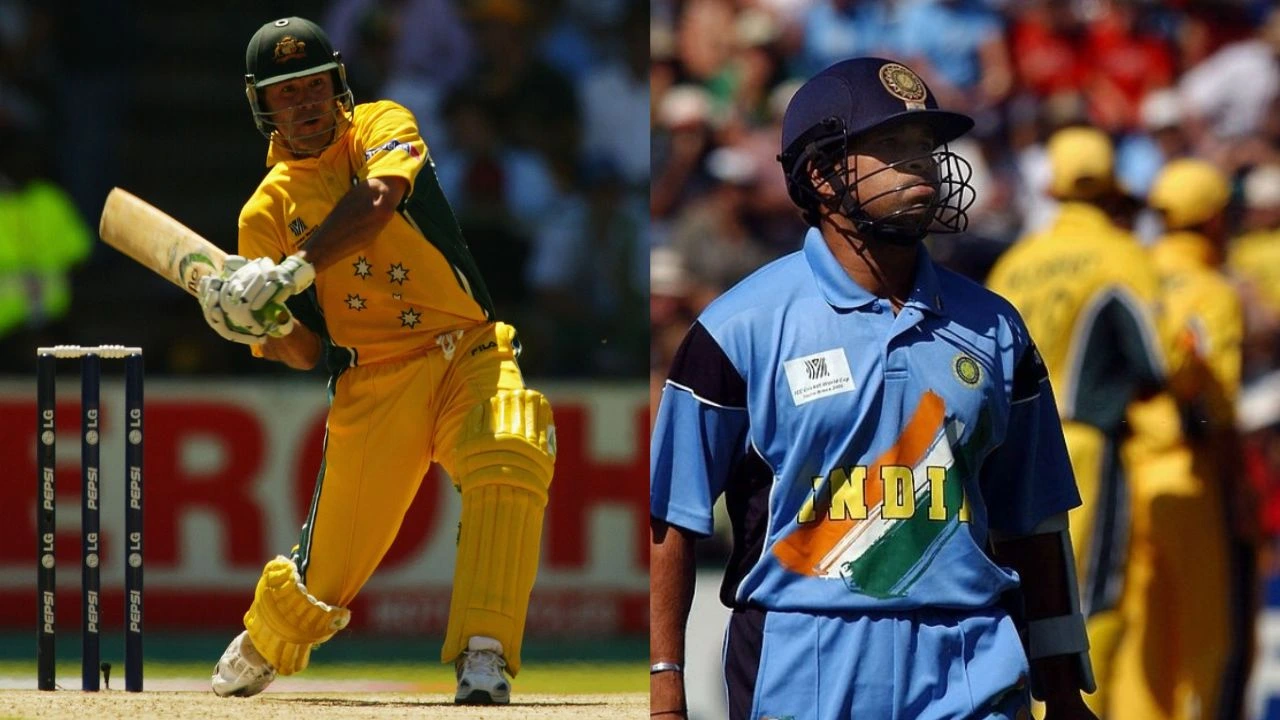
Ponting then walked to the crease and batted like someone who had been told the bowling was going to be easy and found that the reports were accurate. One hundred and forty off 121 balls. Eight sixes.
In the last ten overs alone, Australia scored 109 runs. Damien Martyn, who history has somewhat unfairly filed under supporting act, scored 88 not out with a broken finger, because Australian cricketers of that era apparently viewed injuries as mild inconveniences rather than reasons to stop batting. The two of them added 234 together without being separated. The total was 359 for 2.
In 2003, that number was not a target. It was a statement. No team had ever chased that in a final. Children across India went to bed genuinely believing Ponting had a spring inside his bat, because the alternative explanation, which was that he was simply that good, was too difficult to sit with.
Also READ: IPL’s biggest mystery? The power of the left-hand batters
Five balls of hope and the exact moment India stopped watching on March 23
India needed Sachin. Everyone knew it. Glenn McGrath also knew it, which is presumably why he was given the ball for the first over.
Sachin hit a boundary off the fourth ball. One billion hearts allowed themselves a small and dangerous amount of optimism. The fifth ball came. Sachin tried to pull. The ball grew on him. Caught and bowled, McGrath. Four runs. Done.
That was not just a wicket. That was the moment. Not the 125 run defeat at the end and not even the trophy presentation. That fifth ball in the first over was when a billion people looked at each other and, without saying anything, agreed it was over.
Television sets across India switched off in real time. Sehwag scored 82 off 81 balls, because Sehwag was not capable of looking intimidated by anyone or anything, but even he could not do it alone. Dravid scored 47. India were bowled out for 234. Australia won by 125 runs. Ponting took the trophy. India took twenty three years of what if.
Why ODI World Cup 2003 still sits differently from everything else
The 2023 final hurt because India were favourites and it happened at home. But 2003 is different, because of who was in that Indian team. Sachin. Ganguly. Dravid. Sehwag. Srinath. Zaheer. Yuvraj, just starting out.
This was the team a whole generation of Indian cricket fans grew up watching, and the 2003 World Cup felt like their moment. They had beaten everyone to get there. They deserved it, the way teams sometimes just deserve things and sport ignores completely.
For many of them, it was the last real chance they would get together at that level. Some made it to 2011 and got the ending they deserved. Most did not.
The 2003 final was the last chance for one of the greatest Indian cricket teams ever assembled, and it ended in Johannesburg on a warm afternoon, with Ponting and his allegedly spring-loaded bat and McGrath catching Sachin off his own bowling on the fifth ball of the first over.
Twenty three years later, it still lands the same way. Some things just do not go away. March 23 is one of them.
