


Table of Contents
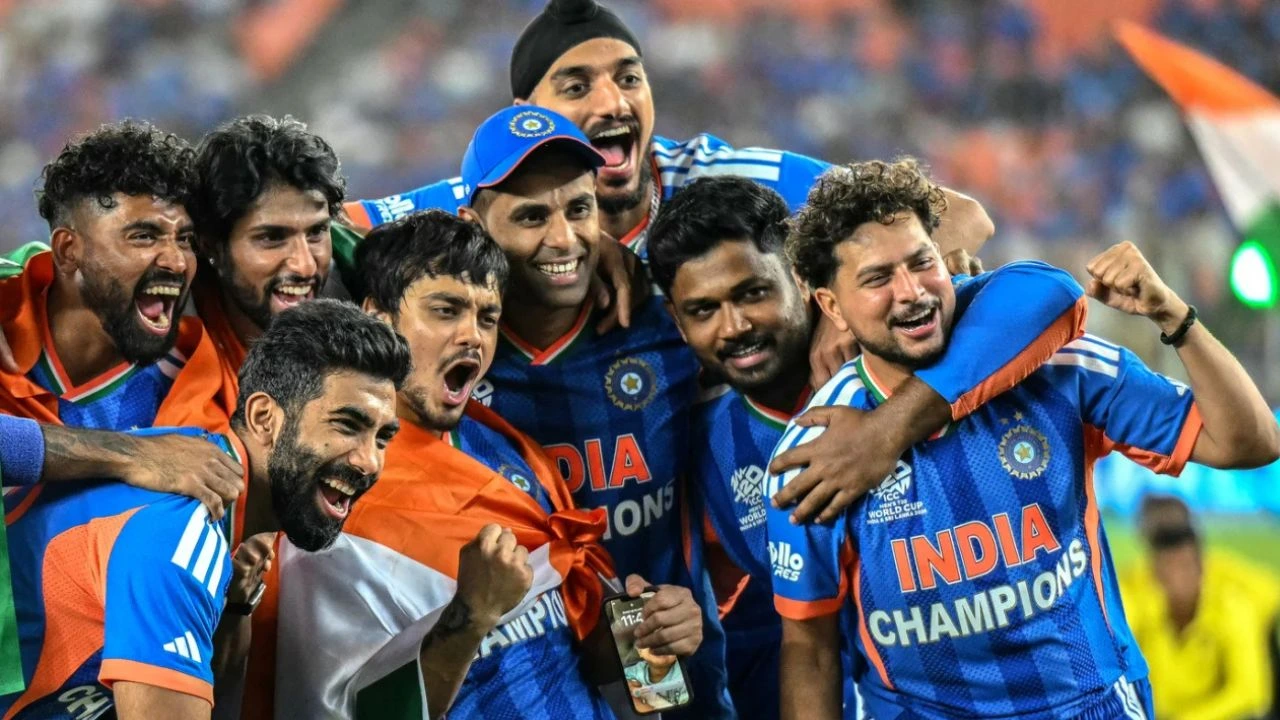
There is a comparison being made more often now and the numbers have started to make it difficult to argue against. India have won the last three ICC tournaments - the T20 World Cup in 2024, the Champions Trophy in 2025 and the T20 World Cup again in 2026. Three titles in a row across different formats against different oppositions in different conditions. It is the kind of run that puts a team in a very specific kind of conversation about what sustained dominance in cricket looks like and which team from the past it most resembles.
The answer most people are arriving at is Australia between 1999 and 2007. And it is not a small comparison.
But before getting into what India have built and how good it is, there is another conversation sitting just underneath it. One that does not get as much attention because it is less comfortable to have. Dominance at this level is impressive for the team producing it and complicated for the sport around it. Australia found that out between 1999 and 2007, and India are starting to create the same set of questions now.
Nobody watches a final they already know the answer to
The beauty of sport is that any team can win on any given day. That unpredictability is what brings people back. When India crossed 200 in Ahmedabad on Sunday night, a large part of the neutral watching world quietly moved on because the result felt settled. A 96-run win margin in a World Cup final is not a contest.
India's 23-1 win-loss record across the last three ICC tournaments tells the same story. Australia, between 1999 and 2007, did not just win. They made the opposition feel like spectators in their own game. India are doing something very close to that now and the margins are getting bigger rather than smaller. When the result of a major final feels like a foregone conclusion, the moment the toss is done, neutral interest starts to drift, and that is not good for a sport that needs the whole world engaged, not just one country.
India's dominance is about more than just Cricket
Unlike Australia's dominance in the 2000s, India's is not just built on talent and team culture. The BCCI's financial position means India can field three different world-class playing elevens at the same time, while most other boards are managing aging players, shrinking budgets, and the challenge of keeping their best cricketers available for international cricket when franchise leagues are offering more money.
Pakistan, Sri Lanka, South Africa and New Zealand are working with resources that are simply not comparable to what India have available. The scheduling and venue choices for major tournaments increasingly reflect India's commercial weight, and when a home final at the Narendra Modi Stadium is part of the picture, the environment tilts before the first ball. It is not a criticism of India's cricket. It is a structural reality of how the game's finances work in 2026 and it makes the champion feel unbeatable in ways that go beyond what happens on the pitch.
When the gap is this big even the best cricket from the opposition is not enough
Not-so-powerful teams got their moments in the T20 World Cup 2026. Italy and Zimbabwe had runs that gave the group stages some colour and unpredictability. But the path from those performances to actually winning a trophy feels impossible when India are in the draw. Afghanistan played well and still lost heavily. New Zealand produced Finn Allen's 33-ball century in the semi-final and still lost the final by 96 runs.
If the gap is wide enough that even excellent cricket from the opposition is not enough, then the growth the ICC is trying to encourage around the world becomes very hard to sustain.
The other thing prolonged dominance does is change the mindset of the teams trying to compete. New Zealand have started to carry the chokers label in the way South Africa used to and England before them. It has nothing to do with their quality and everything to do with consistently finishing behind a team that is simply better resourced and more consistent than almost anyone else.
Teams start playing with a fear of failure rather than a genuine belief that they can win and one-sided finals follow. Those finals are commercially successful in India and largely forgettable everywhere else.
Australia's dominance between 1999 and 2007 was brilliant and eventually it ended and the competition that followed was better for the game. India's Triple Crown is a real achievement and the cricket has been outstanding. But the wider game needs the gap to close. If it does not, the comparison with Ricky Ponting's Australia stops being a compliment and starts being a warning about what happens to a sport when one team wins everything for too long.
