


Table of Contents
There is a decision that captains make at the toss that can define the result before a ball has been bowled. Mitchell Santner won the toss in the T20 World Cup final in Ahmedabad on Sunday night and chose to field. The dew factor, the pitch, the second innings advantage of knowing exactly what you need, the reasoning made sense on paper, and Santner would have had plenty of data and advice behind the call. It looked like a reasonable decision by New Zealand at the time.
India posted 255 for five batting first and New Zealand were bowled out for 159. The hosts won by a massive 96 runs, and the toss decision was the first thing people started talking about when it was all over.
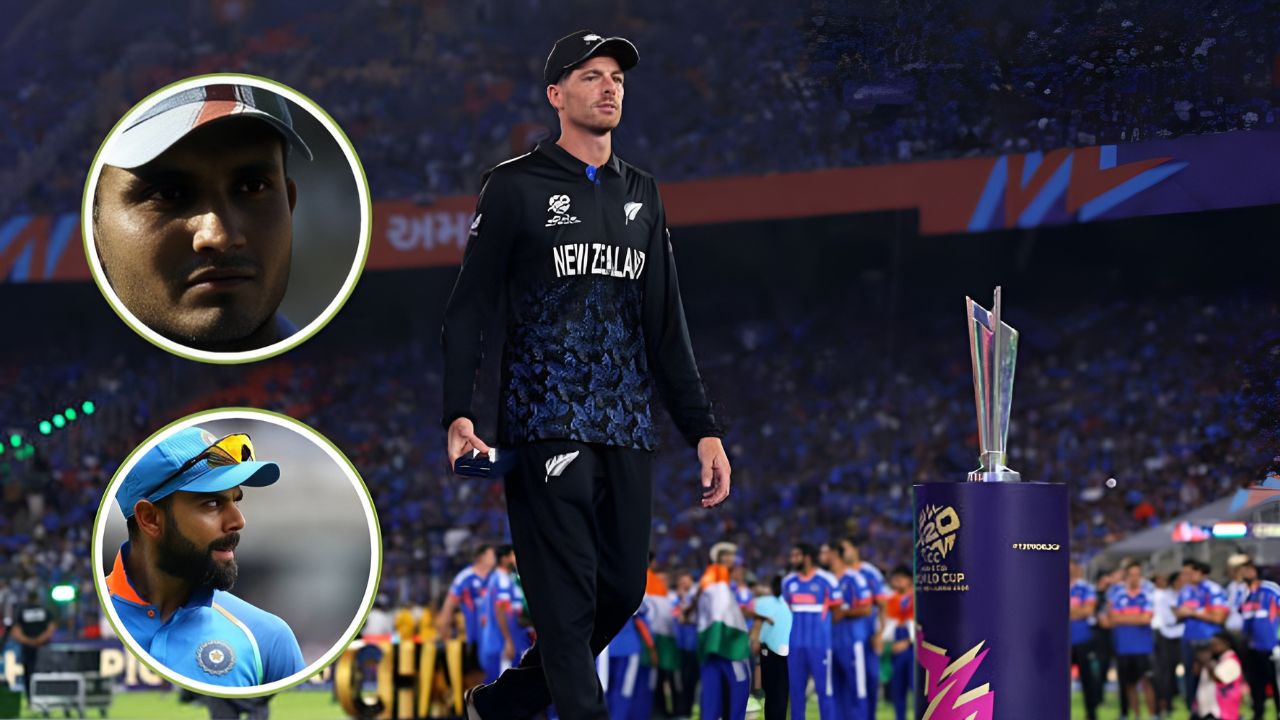
Because Mitchell Santner is not the first captain to win a toss in a major ICC final, choose to field, and regret it before the night was done. Two others made the same call as Santner at the same stage of two other tournaments, and both lost in ways that hurt for a very long time afterward. The names are Sourav Ganguly in 2003 and Virat Kohli in 2017, and the decisions they made at the toss became part of the story of both finals in a way that never quite faded.
Sourav Ganguly at the Wanderers in 2003
Sourav Ganguly won the toss in the 2003 ODI World Cup final at the Wanderers in Johannesburg on March 23 and chose to field. What made this decision harder to understand was what had happened earlier in the tournament.
In the league game against Australia, India had batted first and were bowled out for 125. That result had stayed with the team, and when the final came around, and Ganguly won the toss, the thinking was clear. The bowling attack was too good to face first up. Better to know the target and chase it down. It was a reasonable train of thought.
The problem was that Australia's batting was just as dangerous as their bowling and the Wanderers pitch had nothing in it for bowlers. Australia batted first, and Adam Gilchrist opened with one of the most destructive innings a World Cup final has seen. He made 57 off 48 balls and set the tone for everything that followed. Ricky Ponting made 140 not out off 121 balls.
Australia posted 359 for 2, and by the time India came out to bat, the target felt completely out of reach. India were bowled out for 234. Australia won by 125 runs. The decision at the toss had a logic to it, given what had happened in the league stage. India had seen what Australia's bowlers could do batting first and did not want to face that again. But in trying to avoid one problem, they walked straight into a bigger one, and the Wanderers' total of 359 was one that no Indian team of that era was ever going to chase down.
Also READ: ‘Bharosa karoge?’: The question that sparked Ishan Kishan’s World cup heroics
Virat Kohli at The Oval in 2017
Virat Kohli won the toss in the 2017 Champions Trophy final at The Oval in London on June 18 and chose to field. But what made this toss decision particularly interesting was what had been happening inside the Indian camp in the days leading up to it. The relationship between Kohli and head coach Anil Kumble had been deteriorating throughout the tournament and by the time the final arrived the tension between them was an open secret.
There were reports that Kohli and Kumble were not on the same page about the toss decision itself, and that there was disagreement within management about whether to bat or bowl first if the toss was won. Kumble resigned from his position as head coach shortly after the tournament ended and the Champions Trophy final was the last game they worked together on.
Pakistan batted first and posted 338 for 4. Fakhar Zaman made 114 at the top and the total was well beyond what India had prepared to chase. When India batted the chase fell apart almost immediately. They were bowled out for 158. Pakistan won by 180 runs and the toss decision, made in whatever circumstances it was made, became the first question everyone asked when the tournament was over.
Mitchell Santner at the Narendra Modi Stadium in 2026
Mitchell Santner won the toss in the T20 World Cup final in Ahmedabad on Sunday night and chose to field. Santner's New Zealand had shown throughout this tournament that they could chase. Finn Allen had hit the fastest century in T20 World Cup history in the semi-final. The dew in the second innings at the Narendra Modi Stadium was a known factor and the logic of batting second with a clear target in front of you is well established in T20 cricket.
India batted first. Sanju Samson made 89 off 46 balls, and the platform he built in the powerplay set the tone for everything that followed. India posted 255 for 5, and by the time New Zealand came out to chase the total, it felt exactly like the kind of number that the decision to field first was supposed to avoid. As a result, Mitchell Santner-led New Zealand were bowled out for 159.
Three ICC finals: Ganguly in 2003, Kohli in 2017, Mitchell Santner in 2026. Three captains who won the toss and chose to chase the glory never reached the target. The sample size is small and cricket does not follow patterns this cleanly every time. But when the pattern shows up in a World Cup final toss decision and produces the same result three times across 23 years, it is worth paying attention to.
India bat first in the finals and something about that combination has proved very difficult to overcome. Mitchell Santner found that out on Sunday night, and Ganguly and Kohli found it out long before him.
