


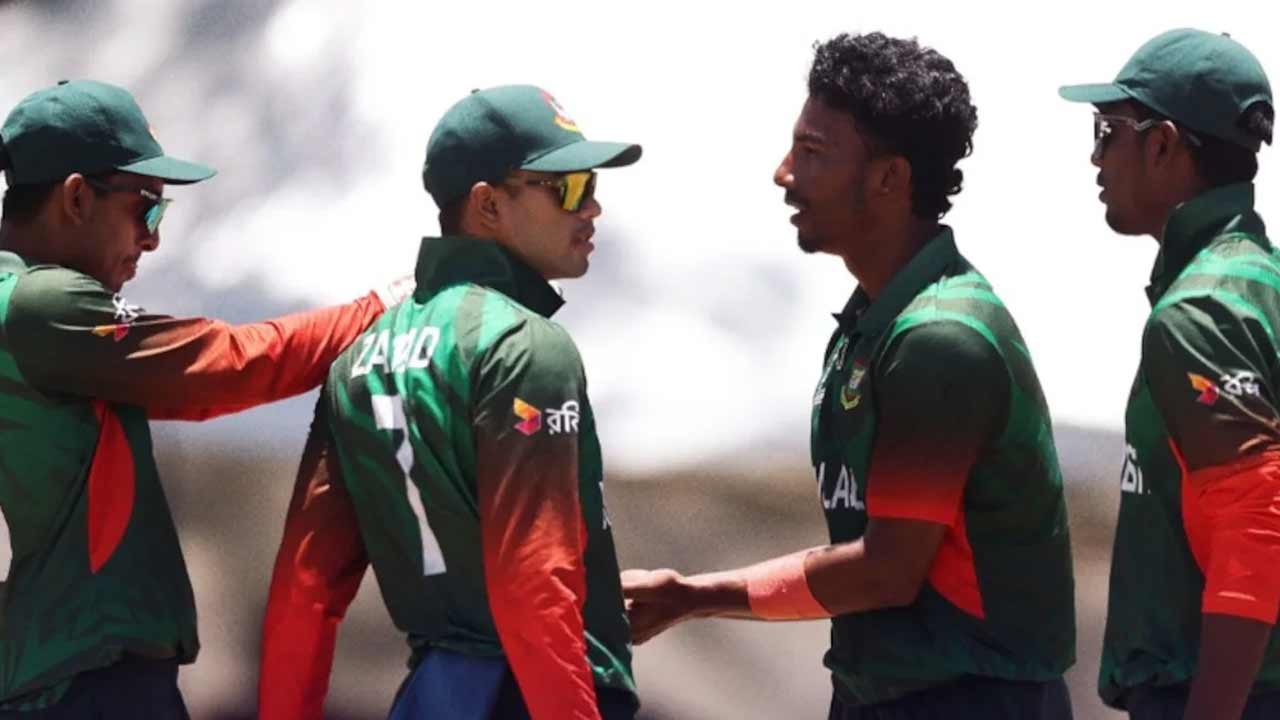
The 2026 T20 World Cup has plunged deeper into uncertainty after Pakistan announced it would boycott its marquee clash against India on 15 February. In an effort to defuse the growing crisis, Bangladesh Cricket Board (BCB) president Aminul Islam Bulbul has travelled to Lahore for high-level talks with Pakistan Cricket Board (PCB) officials.
Also Read: ‘We do our homework’: USA’s Van Schalkwyk on rattling India
The standoff traces back to Bangladesh’s refusal, backed by its interim government, to send its team to India for group-stage matches, citing security concerns. The BCB formally requested that their fixtures be shifted to Sri Lanka, the tournament’s co-host. However, the International Cricket Council (ICC) rejected the proposal following an independent security assessment that found no specific threat.
After Bangladesh failed to confirm participation by the ICC’s late-January deadline, the governing body removed them from the tournament and slotted Scotland into Group C instead.
Pakistan steps in with a boycott threat
In a dramatic escalation, the Pakistan government and PCB have publicly backed Bangladesh’s stance. Prime Minister Shehbaz Sharif confirmed that Pakistan’s team has been instructed not to take the field against India in their scheduled February 15 encounter in Colombo.
PCB chairman Mohsin Naqvi termed Bangladesh’s exclusion “unjust” and “politically motivated,” arguing that no cricket board should be compelled to play in a country where it feels unsafe.
According to NDTV sources, Bulbul’s meeting with Naqvi is aimed at breaking the current impasse. Both boards are expected to present a united position before engaging with ICC officials later today.
With the India–Pakistan clash, the tournament’s biggest commercial attraction, just days away, the ICC is under mounting pressure to find a solution that preserves both competitive balance and the event’s credibility.
The ICC has already warned the PCB against proceeding with the boycott, indicating that severe sanctions could follow. These may include heavy financial penalties, forfeiture of points, suspension of PCB membership, and even the loss of future hosting rights for global tournaments.
