


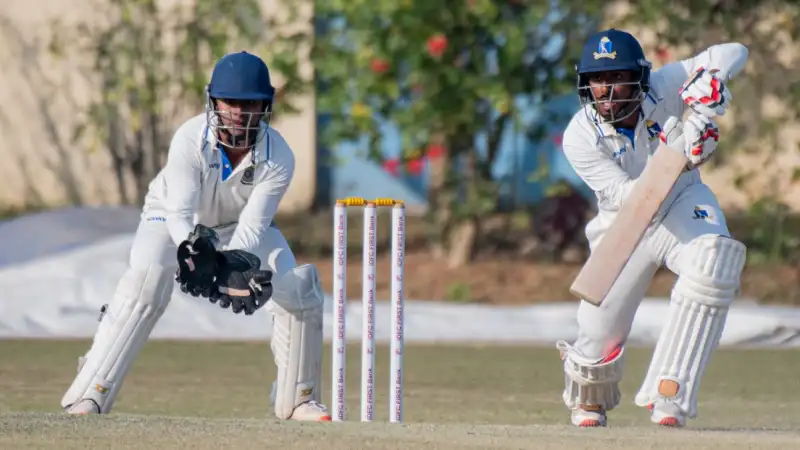
Karnataka cricket team stormed into the Ranji Trophy final for the first time in 11 years, advancing on the basis of a commanding first-innings lead after their semifinal against Uttarakhand cricket team ended in a draw on Thursday.
Karnataka will now take on Jammu and Kashmir cricket team in the title clash at Hubballi from February 24.
Resuming the final day at 299 for six, Karnataka lost their remaining wickets quickly to be bowled out for 323, but their massive first-innings cushion gave them an overall lead of 826 runs — more than enough to secure a place in the summit clash.
Uttarakhand, however, showed grit in their second innings. Avneesh Sudha (66), Sachin Rawat (53 not out) and Abhay Negi (57 not out) struck fighting half-centuries to deny Karnataka an outright victory. The visitors finished at 260 for six, with Negi and Rawat frustrating the hosts through a resilient 104-run stand for the seventh wicket.
Also Read: Australia draw level after Voll-Mooney masterclass
Karnataka had sensed a chance to wrap up the contest when they reduced Uttarakhand to 156 for six midway through the second session. But the resistance that followed forced both captains to shake hands around 30 minutes after tea.
The former champions will now chase their ninth Ranji Trophy crown — and their first since the 2014-15 season under R Vinay Kumar. During that golden phase, Karnataka achieved the rare feat of emulating Mumbai by winning all three major domestic titles — the Ranji Trophy, Irani Cup and Vijay Hazare Trophy — in consecutive seasons.
Back then, Robin Uthappa topped the run charts with 912 runs, while Vinay Kumar and Mumbai’s Shardul Thakur shared the distinction of being the leading wicket-takers with 48 scalps each.
From that dominant era, KL Rahul, Karun Nair, Mayank Agarwal and Shreyas Gopal remain part of the current Karnataka setup.
For Jammu and Kashmir, the final presents a historic opportunity. They will be chasing their maiden Ranji Trophy title, having reached the summit clash for the first time in nearly six decades.
