


Table of Contents
NEW DELHI: Amid the still-smouldering embers of a standoff that blurred the lines between cricket and politics like never before, India will bank on middle-order solidity and a fully fit Abhishek Sharma to continue their dominance over Pakistan when the two arch-rivals meet in the T20 World Cup’s marquee clash here on Sunday.
A temporary ‘peace season’ has set in after Pakistan reversed its boycott stance and agreed to take the field against India at the Premadasa Stadium.
The breakthrough followed weeks of intense discussions involving the International Cricket Council, Bangladesh and Sri Lanka. Virtually the whole of South Asia seemed invested in ensuring the contest took place — weather permitting — given its unmatched ability to draw millions of eyeballs and massive commercial value.
The chain of events, triggered by the BCCI-instructed release of Bangladesh pacer Mustafizur Rahman from the Kolkata Knight Riders roster, snowballed into a cross-border flashpoint before finally settling down, at least for now.
Players from both camps have attempted to dial down the hype, describing the fixture as just another game on the calendar. Whether that truly reflects their inner thoughts is debatable, but neither side would want to face the storm that a defeat in this atmosphere could unleash.
To avoid that, they will need to block out the noise and focus on the aspects they can control.
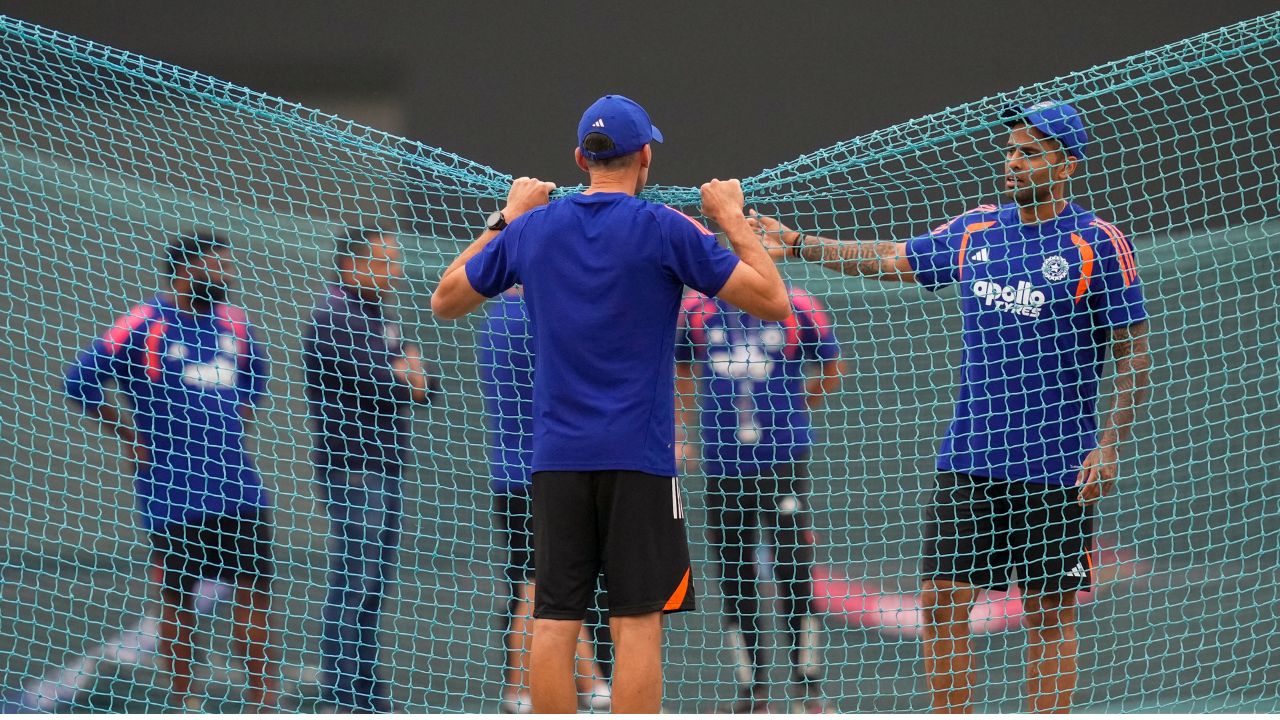
Abhishek bats at nets
For India, concerns begin with Abhishek, who missed the Namibia match due to a stomach infection that required hospitalisation.
Encouragingly, the left-hander spent considerable time batting in the nets on Saturday evening, suggesting he has regained match fitness.
"If you guys want, we will play Abhishek," skipper Suryakumar Yadav quipped with a smile when asked about his availability.
All signs point to the Punjab batter replacing Sanju Samson at the top alongside an in-form Ishan Kishan. The nature of the surface may also prompt the team management to consider bringing in left-arm wrist spinner Kuldeep Yadav.
However, accommodating Kuldeep would mean sacrificing a batter, and Rinku Singh could be the unlucky one to miss out. The move is tempting given Kuldeep’s past success against Babar Azam, including his 4 for 30 in the Asia Cup final in Dubai — his most recent outing against Pakistan.
Middle-order stutter
In the build-up to the World Cup, India’s batting line-up resembled a bulldozer tearing downhill, flattening everything in its path. But their first two games in the tournament have exposed a slight vulnerability — the tendency to lose wickets in clusters.
India were reduced to 77 for six against the USA in Mumbai, while they slipped late against Namibia, losing five wickets for four runs in the death overs. That collapse was overshadowed by a 200-plus total and a commanding 93-run win in New Delhi. On both occasions, they were rescued by Suryakumar, Ishan Kishan and Hardik Pandya.
Still, winning a long tournament demands collective consistency rather than repeated reliance on individual brilliance. With four points already secured, there is no panic yet, but India would prefer not to test their luck against a Pakistan side capable of capitalising on lapses.
The Pak threat
Following the hybrid model adopted last year, Pakistan have been based in Colombo, giving them a clearer understanding of local conditions. The RPICS surface has tended to slow down, and the 2009 champions boast five capable spin options — Usman Tariq, Saim Ayub, Abrar Ahmed, Shadab Khan and Mohammad Nawaz.
Tariq’s distinctive side-arm action has already sparked conversations, and his duel with India’s adaptable batting unit promises to be an intriguing subplot.
"When you get an out of syllabus question, you try to solve it," Suryakumar remarked when asked about handling unconventional bowling.
Pakistan’s batting unit, led by the ever-dangerous Sahibzada Farhan — who appeared to handle Jasprit Bumrah effectively in last year’s Asia Cup — along with Ayub and all-rounder Faheem Ashraf, has the firepower to shift momentum quickly.
While the Netherlands and the USA offered resistance, Pakistan are yet to encounter a bowling attack of India’s calibre. From Bumrah to Varun Chakravarthy, India possess proven match-winners, and even pace all-rounder Shivam Dube has grown significantly as a bowler. That depth gives the defending champions flexibility in shaping their combinations.
Ultimately though, this contest is about maintaining mental balance and rising above the multiple pressures — both external and internal — that surround it.
Chance of rain?
The Sri Lanka Department of Meteorology has warned of a developing low-pressure area over the Bay of Bengal, raising the possibility of up to a 70 per cent chance of rain in the Khettarama region on Sunday evening.
Teams:
India: Suryakumar Yadav (c), Abhishek Sharma, Tilak Varma, Sanju Samson, Shivam Dube, Ishan Kishan, Hardik Pandya, Arshdeep Singh, Jasprit Bumrah, Varun Chakaravarthy, Kuldeep Yadav, Axar Patel, Washington Sundar, Rinku Singh.
Pakistan: Salman Ali Agha (c), Abrar Ahmed, Babar Azam, Faheem Ashraf, Fakhar Zaman, Khawaja Nafay, Mohammad Nawaz, Mohammad Salman Mirza, Naseem Shah, Sahibzada Farhan, Saim Ayub, Shaheen Shah Afridi, Shadab Khan, Usman Khan, Usman Tariq.
Match starts at 7 pm IST
(With PTI Inputs)
