


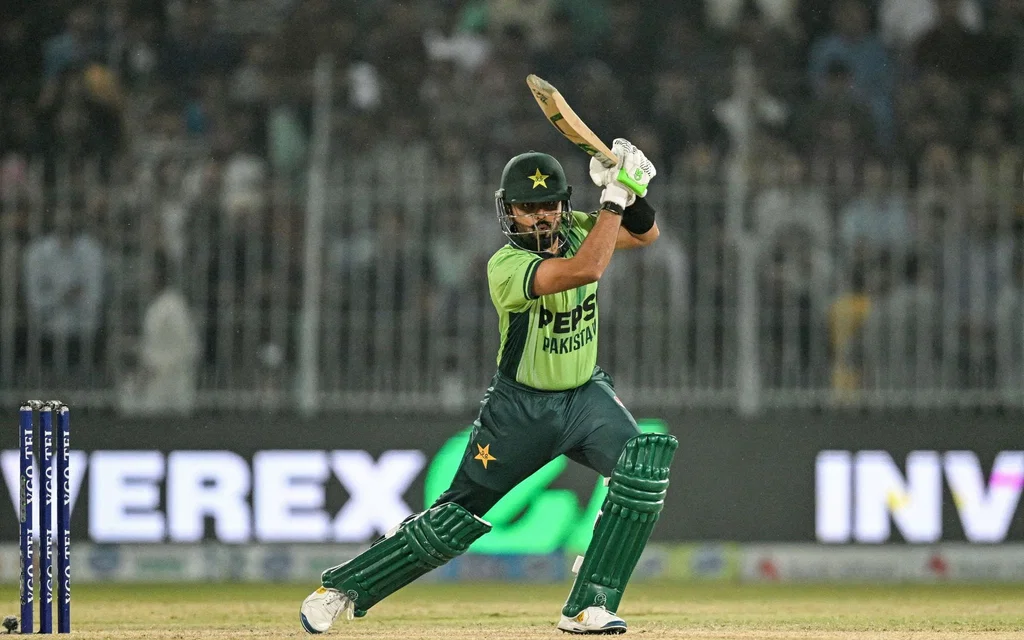
Pakistan batter Babar Azam continues to face scrutiny over his strike rate in T20 Internationals, with the debate intensifying during the ICC Men's T20 World Cup.
Babar began the tournament with 15 against the Netherlands, followed by a 46-run effort against the USA, before managing just five against India. Pakistan subsequently pushed him down the batting order, and he did not get a chance to bat in their final Group A fixture against Namibia. Khawaja Nafay occupied the number four slot, a position earlier held by Babar, while Shadab Khan batted at five.
Also Read: IND vs SA, Super 8: India’s batting rethink faces ultimate test against Proteas firepower
After the match, Pakistan head coach Mike Hesson cited Babar’s powerplay strike rate as the reason behind the move.
“I think he’s well aware that his strike rate in the power play in T20 World Cups is less than 100. Clearly, that’s not a role we feel we need here. We see him as a fine player through the middle overs, especially if we’re in a bit of trouble. As we saw against the USA, once he gets set, he can lift his strike rate. We brought him back post the Asia Cup for a specific role to provide batsmanship through the middle, and he certainly offers that,” Hesson said.
However, former Pakistan captain Mohammad Hafeez criticised Hesson’s comments, questioning Babar’s place and defined role in the side.
“He (Hesson) made a statement on Babar Azam that I didn’t understand,” Hafeez said on the show Game On Hai.
“He said Babar is not a powerplay batter because his strike rate is around 100. I read that statement 15 times but couldn’t understand it. Maybe you can explain. He said Babar can’t bat in the first six overs because his strike rate is low, and nor can he bat after the 10th over. Then why is he playing?” Hafeez remarked.
Meanwhile, Pakistan’s opening Super Eight clash against New Zealand in Colombo was washed out due to persistent rain at the R Premadasa Stadium.
