


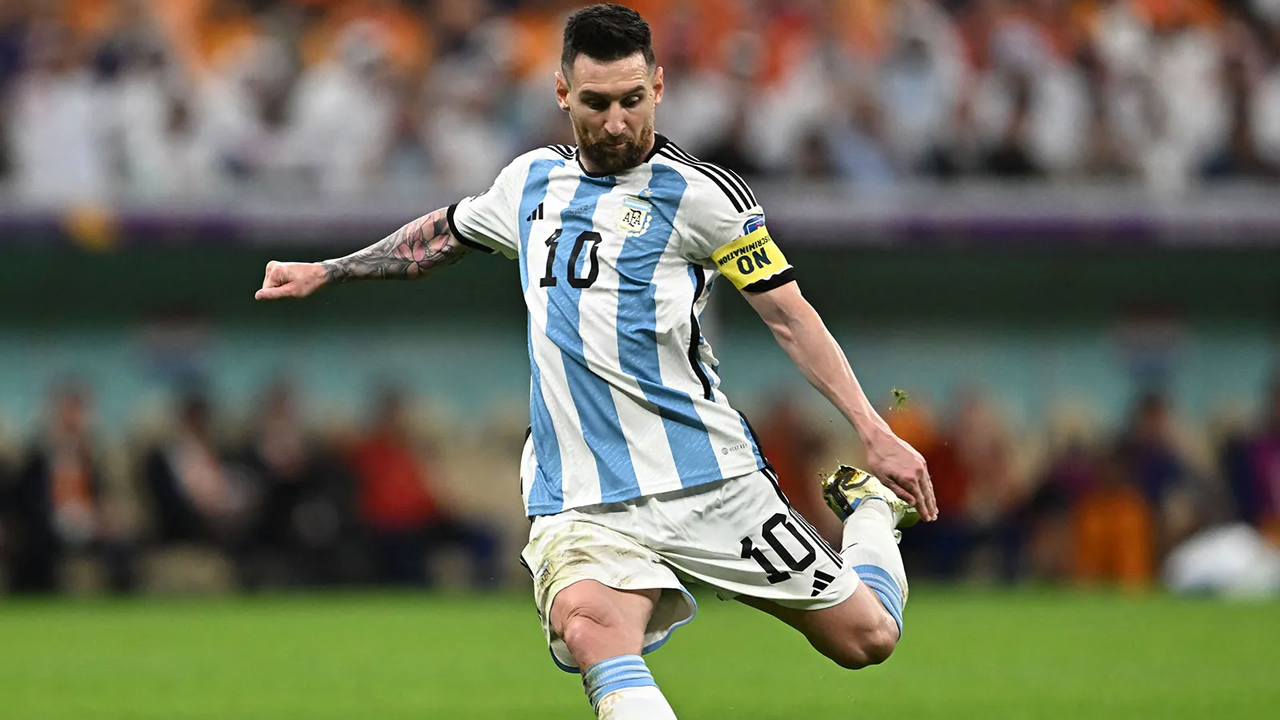
Indian men’s football team captain Sandesh Jhingan on Wednesday raised serious questions over the lavish spending on Lionel Messi’s high-profile ‘GOAT Tour’, suggesting the extravagance has forced him to reflect on whether there is any genuine intent to invest in Indian football, which currently finds itself at a standstill.
Also Read: What Messi really took away from his India tour
Messi’s three-day visit triggered unprecedented public frenzy, with massive crowds flocking to events in Kolkata, Hyderabad, Mumbai and New Delhi, highlighting the country’s deep-rooted love for the sport.
‘We love football, but not our own football’
In a candid Instagram post, Jhingan expressed concern over the stark contrast between the money poured into the exhibition tour and the fragile state of Indian football. “It feels as though we are close to shutting everything down because there is no willingness to invest in football within India, yet crores were spent on this tour,” he wrote.
The India skipper said the overwhelming response to Messi’s appearances, alongside stars such as Rodrigo de Paul and Luis Suarez, revealed uncomfortable truths about national priorities. “What troubles me, however, is that at a time when our own football ecosystem is in jeopardy, arguably facing one of its most difficult phases, we stand on the brink of having no active domestic football ahead of us,” Jhingan said.
The 30-year-old centre-back admitted that the disparity was difficult for those playing the game at home to ignore. “What this tells me is that we do love the sport, but perhaps not enough to support our own players,” he added.
While the tour drew packed stadiums and premium-ticket crowds across cities, many felt it was reduced to a glorified, selfie-driven exhibition catering largely to the country’s elite. The Kolkata leg, held at Salt Lake Stadium, descended into chaos as spectators, many of whom had paid steep prices, alleged they were unable to get a clear view of Messi, who spent barely 20 minutes on the field while being surrounded by officials, including state minister Aroop Biswas.
The event eventually spiralled into disorder, leading to the arrest of organiser Shatadru Datta.
Reflecting on the frenzy after it subsided, Jhingan said he felt compelled to speak. “Now that the euphoria of the past few days has settled, I wanted to share my thoughts,” he wrote. “It genuinely made me happy to see that our country loves football, that stadiums can be filled to capacity, and that people are willing to spend lakhs to witness the sport.”
However, the stark contrast with the current reality of Indian football left him deeply unsettled. Domestic football has effectively ground to a halt, with no official broadcast partner in place and both the Indian Super League (ISL) and I-League yet to begin.
Accepting criticism directed at the national team, Jhingan said performances cannot be viewed in isolation from the ecosystem that shapes them. “I am aware of the criticism that comes our way, and I take responsibility for results,” he wrote. “But football does not exist in isolation. Structure, stability and belief profoundly influence what ultimately happens on the pitch.”
Despite the frustration, Jhingan struck a note of cautious optimism. “We have had good days before. And we can have them again,” he wrote, adding, “Honestly, I find myself questioning many things now.”
(By PTI Inputs)
