


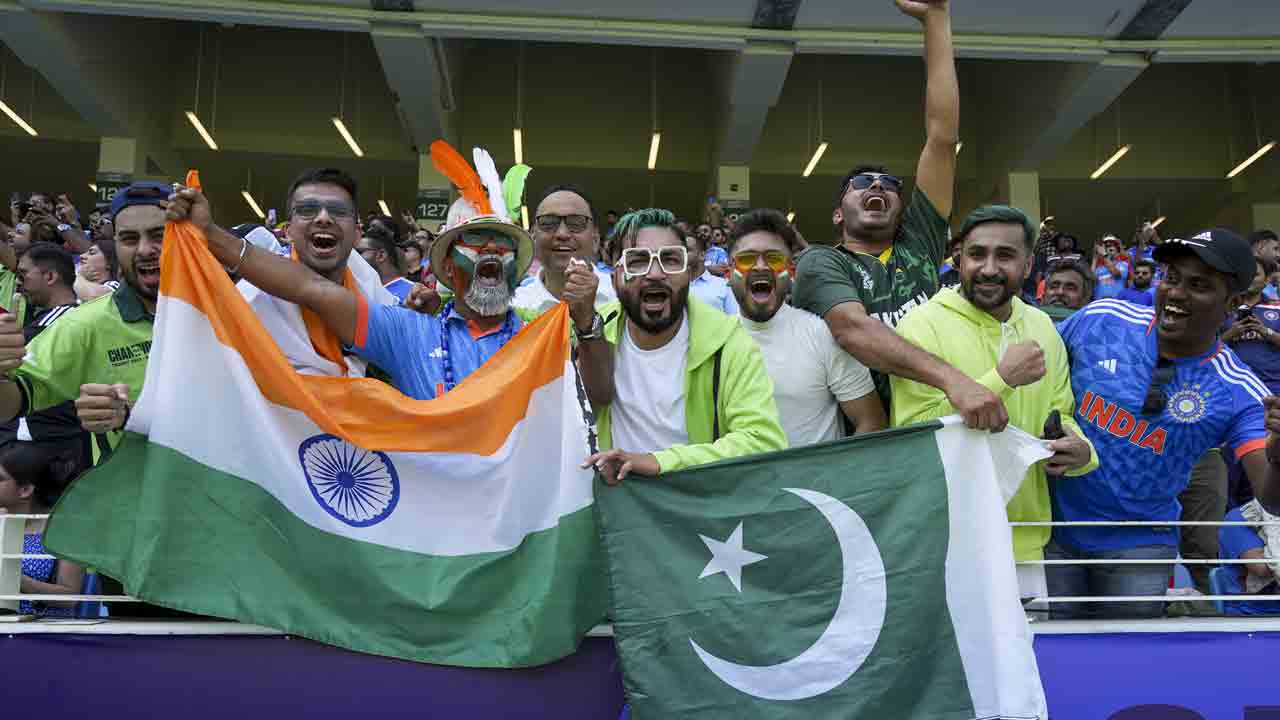
NEW DELHI: Pakistan on Sunday declared it will boycott its much-anticipated men's T20 World Cup group-stage clash against India, a decision expected to trigger major fallout, despite the government having approved the national team's participation in the remainder of the tournament, which begins on February 7.
"The Government of the Islamic Republic of Pakistan grants approval to the Pakistan Cricket Team to participate in the ICC World T20 2026, however, the Pakistan Cricket Team shall not take the field in the match scheduled on 15th February 2026 against India," the government posted on social media.
‘ICC should take action’: Sunil Gavaskar slams Pakistan over India match boycott
The move, announced via a formal government release, is widely viewed as a political gesture following Bangladesh's exclusion from the competition after the ICC rejected its plea to relocate matches from India to Sri Lanka citing security concerns.
The ICC responded by raising objections to the Pakistan government's stance and cautioned that opting out of the fixture could invite disciplinary action and possible sanctions.
Here, we take a look at the sequence of events that led Pakistan to boycott the match against India:
January 3: The BCCI directed Kolkata Knight Riders (KKR) to release Mustafizur Rahman, whom the franchise had signed at the IPL mini-auction. The move came amid worsening ties between India and Bangladesh following reports of atrocities against the Hindu minority in Bangladesh.
January 6: Bangladesh ordered an immediate ban on the broadcast of the IPL in the country. The Bangladesh Cricket Board (BCB) also stated that if even one player was deemed a "security risk," the safety of the entire squad could be compromised.
January 12: The BCB formally approached the ICC, requesting that its T20 World Cup matches be shifted from India to Sri Lanka. It proposed a "hybrid model," similar to the one used during the 2023 Asia Cup.
January 21: The ICC Board voted against relocating Bangladesh's fixtures. The 14–2 vote saw Pakistan as the only member backing Bangladesh. The ICC reiterated that an independent security review found "no credible threat" to players in India and issued Bangladesh a 24-hour deadline to confirm its travel plans.
January 22: During a meeting in Dhaka involving the national team, BCB officials, and Youth and Sports Adviser Asif Nazrul, Bangladesh stood firm on its stance and resolved not to travel to India for the T20 World Cup.
January 24: Following Bangladesh's refusal to play its T20 World Cup matches in India, the ICC officially replaced them with Scotland in Group C.
January 24: In the aftermath of Bangladesh's exclusion from the tournament, PCB chairman Mohsin Naqvi stated that a final call on Pakistan's participation would be made after consultations with the Pakistan government.
"Our stance [on World Cup participation] will be what the government of Pakistan instructs me," he said. "The Prime Minister is not in Pakistan right now. When he returns, I'll be able to give you our final decision. It's the government's decision. We obey them, not the ICC."
January 26: Naqvi met with Pakistan Prime Minister Shehbaz Sharif to discuss the situation. "Had a productive meeting with the Prime Minister ... Shehbaz Sharif," Naqvi tweeted. "Briefed him on the ICC matter, and he directed that we resolve it while keeping all options on the table. It was agreed that the final decision [on participation] will be taken either on Friday or next Monday."
February 1: PCB chairman Mohsin Naqvi held his second meeting in a week with Pakistan Prime Minister Nawaz Sharif in Lahore, after which the government approved the national team's participation in the T20 World Cup but barred it from facing arch-rivals and co-hosts India in the February 15 fixture.
