


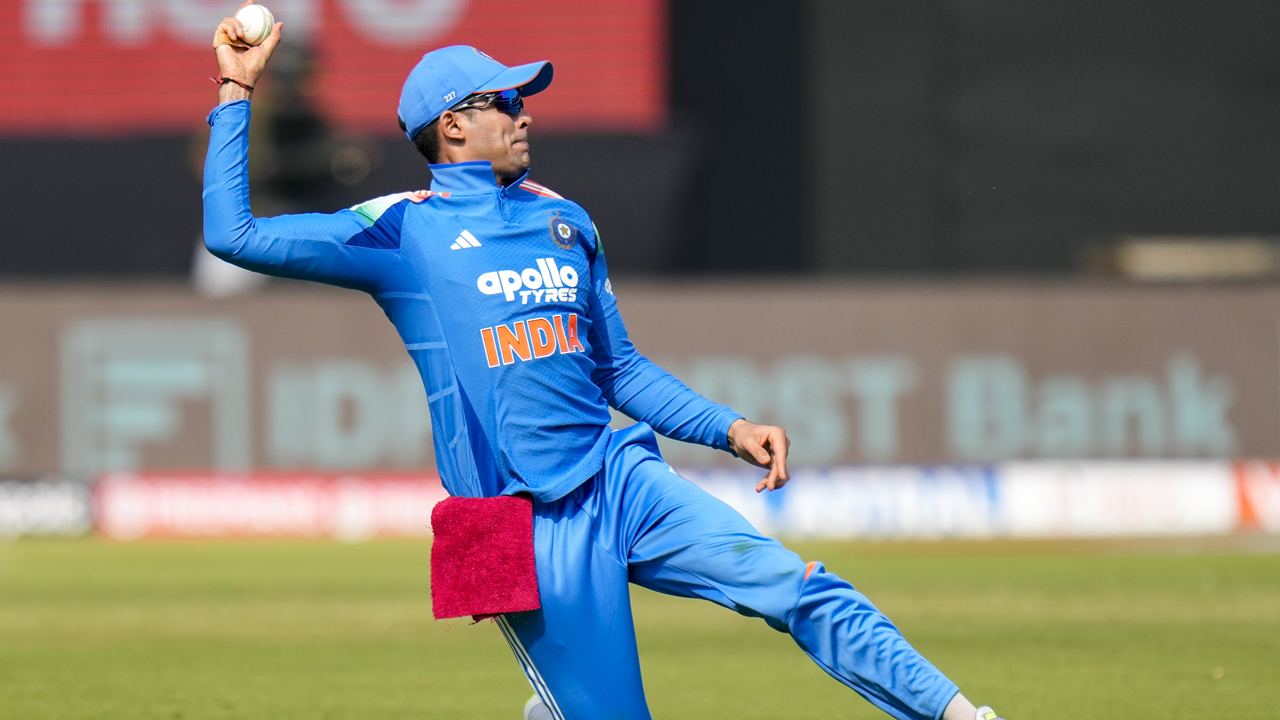
NEW DELHI: India's first-ever bilateral ODI series defeat at home to New Zealand was more than just a statistical upset - it was a moment of stark clarity. Skipper Shubman Gill did not seek excuses in the margin of defeat or the absence of key players.
Speaking after the series-deciding loss in Indore on Sunday, the India captain openly highlighted the patterns and gaps that, in his words, "made the difference between the two teams."
"For me, it wasn't that we didn't bat well. It was that we didn't bat long enough. When batsmen are getting starts and they're not able to convert those starts, especially in high-scoring matches, it becomes very difficult. At least two batters need to go on and play that long innings," said Gill after the 41-run defeat at Holkar Stadium.
After ODI series loss, Shubman Gill makes a telling comment on Rohit Sharma's form
"That was the difference between them and us."
India's struggle to convert promising starts into match-winning innings was a recurring issue throughout the series, including in Indore, where Virat Kohli's century briefly reignited hope.
Gill repeatedly drew attention to the contrast between India's approach and New Zealand's clinical execution.
"Whenever their batsmen got set, they scored long. That's the difference. Even in the first two matches, I got set, but I wasn't able to convert it into 100, 120 or 130, and that's something we need to get better at as a batting unit."
The discussion naturally shifted to Ravindra Jadeja, whose performances with both bat and ball have declined over the past two to three years.
Win or lose, class remains: Virat Kohli's gesture wins hearts in Indore
Gill was quick to put the all-rounder's struggles into context, rather than viewing them in isolation.
"Jaddu bhai was looking in good touch with the bat. But it wasn't just him. I don't think any of our batsmen were able to consistently convert the starts we were getting. On pitches like these, if you don't make those starts count, you're always chasing the game."
Gill also acknowledged that Jadeja's wicket-taking impact - once a cornerstone of India's ODI dominance - hasn't been the same recently.
"The way he has been bowling in the past couple of years, he has always been a strike option for us. It's unfortunate he couldn't pick as many wickets as he would have liked, but that happens in series like these. You learn from it and you grow."
India's fielding lapses emerged as another decisive factor, especially as overseas teams continue to narrow the gap in Indian conditions. Gill admitted that missed chances shifted momentum at critical moments.
"We dropped some catches at very important stages of the game. On wickets like these, bowlers are trying to force chances, and when those catches don't stick, it's not easy. No one drops a catch intentionally, but it's one area we really have to improve."
While Rohit Sharma's modest returns across the series -- 61 runs -- drew scrutiny, Gill backed his senior opener's intent and approach.
"He has been in very good form. You won't always be able to convert the starts you get. As a batsman, you always want to make it into hundreds, but that doesn't happen every time. That's impossible. What's important is that the intent and rhythm are there."
Harshit Rana is a great prospect for future
Amid the disappointment, Gill highlighted a positive that could shape India's future ODI balance - the rise of Harshit Rana as a lower-order batting option.
"Batting at number eight is a very important position for us. All the top teams in the world bat really deep. We want to give opportunities to players who can strengthen that depth, and Harshit is someone who is constantly improving his batting."
Gill went further, underlining why Rana excites the team management.
"You don't get too many bowlers who can consistently bowl at 140-plus with the height that he has," he said.
"And the way he is batting right now, he keeps getting better. In the future, he can be a very good prospect for us."
With the World Cup still some distance away, Gill believes the defeat offers clarity rather than crisis.
"The way we want to play, we haven't been able to do it consistently in this series," he admitted.
"But we have time. As long as all the players are aware of what we need to work on, hopefully in the next one or two series we can fix those areas and perform the way we want to."
(With PTI Inputs)
