



When England promoted Brydon Carse to No. 3, it raised eyebrows even by their own adventurous standards. On a surface offering sharp sideways movement, with pressure mounting on Ben Stokes’ side to deliver a result, England chose boldness over caution. That gamble, risky on paper, played a quiet but crucial role in ending their long wait for a Test victory on Australian soil and intriguingly, it echoed a vision once laid out by the late Shane Warne.
Years earlier, Warne had floated a radical idea on social media during an England Test: disrupt the bowlers by injecting aggression into the top order during a tricky chase. He even suggested using fast bowlers up the order, not recklessly, but with calculated intent to knock captains out of rigid field settings and bowling plans. At the time, the thought felt extreme. At the MCG, it felt almost prophetic.
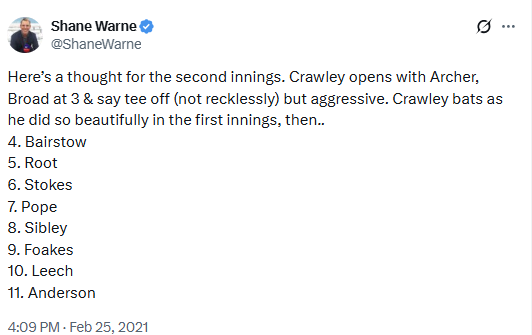
At Melbourne, England faced a chase that demanded imagination. Rather than retreat into safety-first batting, they opted to shift the game’s tempo. Sending Carse in early was a deliberate attempt to unsettle Australia’s bowlers and force tactical adjustments, even if it came at the cost of an early wicket.
Carse’s stay was brief, but its impact lingered. The move pushed fielders back, disrupted lengths, and allowed England to score freely in the early stages of the chase. That intent filtered through the line-up, with calm contributions across the order guiding England to 178 for six and sealing a dramatic four-wicket win inside two days.
England may not have consciously followed Warne’s script, but by embracing unpredictability and controlled aggression, they ended up validating one of his most unconventional ideas. In a game often governed by tradition, England found success by daring to think differently just as Warne always believed cricket should.
Also Read: Tim David injury casts shadow over Australia’s T20 World Cup plans
