


NEW DELHI: Not long after Rahul Dravid signed off from his remarkable and rewarding stint as India's head coach, Rohit Sharma poured his heart out with a touching post on Instagram. The Indian skipper shared a simple yet powerful message, with one line in particular neatly summing up the deep mutual respect and strong connection that shaped their coach-captain journey.
"My wife (Ritika Sajdeh) refers to you as my 'work wife' and I'm lucky to get to call you that too."
Those who know Rohit Sharma well will tell you that he never speaks lightly or without thought. When he likened the captain–coach bond to a marriage - one built on shared beliefs and moving in the same direction - he meant every word.
Numbers don't lie
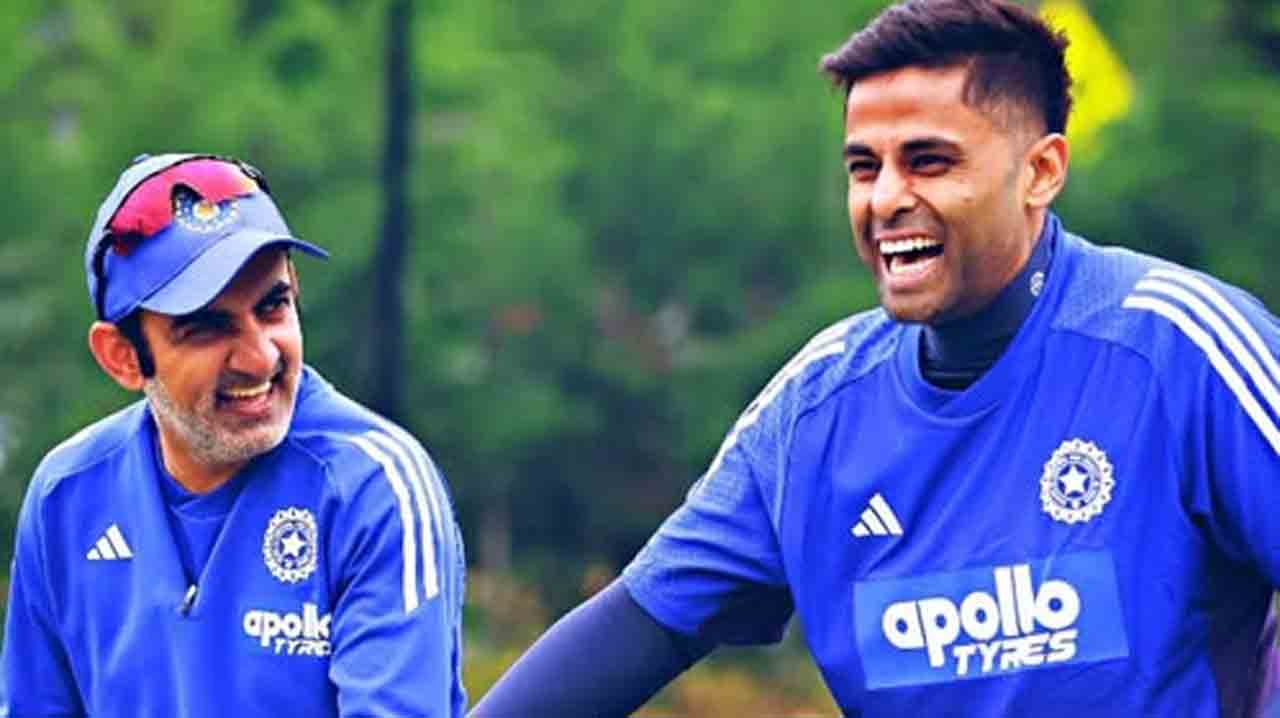
With India set to begin their T20 World Cup title defence in less than 72 hours, it is hard not to draw parallels with the current partnership between Suryakumar Yadav and head coach Gautam Gambhir. So far, their collaboration has been nothing short of impressive, at least on paper, delivering a staggering 31 wins from 39 matches and an eye-catching winning percentage of 79.48.
From Shastri to Gambhir
In Indian cricket, the script has usually been clear: the captain leads from the front, while the coach plays a largely supporting role. Even someone as larger-than-life and tactically sharp as Ravi Shastri never blurred that line, often stressing that it was Virat Kohli's team and that the captain was the ultimate decision-maker.
The same dynamic defined earlier partnerships too. John Wright backed Sourav Ganguly, Gary Kirsten empowered MS Dhoni, and Rahul Dravid worked in sync with Rohit Sharma - but in every case, the authority on the field rested with the skipper. The coach advised, the captain commanded.
What makes the current phase stand out is how different it feels. For the first time since the Chappell–Dravid chapter, Indian cricket seems to have a coach–captain pairing where the coach’s voice carries unusual weight, with strategic calls increasingly shaped from the dugout rather than solely from the middle.
Captain no longer the boss?
Perhaps, T20 has evolved the quickest in terms of changes in template and that has warranted a more hands on football-manager style coaching, something that suits Gambhir's temperament.
And to give Gambhir's plans the shape it required, one needed Surya 2.0, a man sure of his skills and aware of his capabilities to execute them to the 'T'. But in the past one year, there have been more examples than one to suggest that Gambhir is the planner and Surya is the executioner.
Obviously, there is a sweet history between the two as Surya the player first came into national limelight when he played the finisher's role for KKR under Gambhir's captaincy and his now famous acronym 'SKY' was actually given to him by the current head coach.
The Gambhir takeover
And in Indian cricket, it is an open secret that in 2024, the then newly-appointed head coach did have a huge say in Surya pipping Hardik Pandya to the post of T20 captaincy.
Another example was when Shubman Gill was straightaway made the vice-captain for the Asia Cup in Dubai.
Those who had tracked the developments in Indian cricket can vouch that pushing Sanju Samson down the order, perhaps, was the last item on skipper's agenda. Obviously, both chairman of selectors Ajit Agarkar and Gambhir had a role in that decision making.
In both cases, Surya's calm demeanour and restrained take impressed one and all and it has stayed like that throughout this journey.
Similarities between Gambhir and Surya
As personalities -- Gambhir and Surya are like chalk and cheese and often that augurs well for the team.
Gambhir hails from an uber-rich business family that lived in central Delhi's old Rajendra Nagar while Surya hails from a middle-class family in Mumbai's Chembur.
But despite the slightly different socio-economic set-up and difference as persons, a lot of similarities can be traced between them.
In the case of Surya, despite his raw talent, the brashness of a beginner was the reason he fell foul with the state cricket establishment.
In the case of Gambhir, he never really had close friends. He was always, come, do your work and go home sort of a personality -- always intense and well aware that he wasn't as blessed as a Virender Sehwag, needing to work doubly harder to stake a claim in the team.
But even the left-hander has had his run-ins with state management.
A partnership forged in conviction
Both Surya and Gambhir are nationalists to the core and wear that aspect of their character on their sleeves.
If Gambhir would tell Nitish Reddy about fighting on 22 yards is akin to "taking a bullet for the country" with intensity dripping through every part of his facial contour, Surya would casually chew the gum, not shake hands with Pakistan skipper Salman Ali Agha and tell a reporter from across the border that calling Indo-Pak matches a "rivalry" has become passe.
If the duo had any interest in football history, one such manager-captain duo was Tele Santana and Socrates, the architects of the best Brazilian team (1982) never to win the trophy despite dazzling the football lovers with their extraordinary skills.
But it is Carlos Alberto-Mario Zagallo's team and Luiz Felippe Scolari-Dunga combination that the world remembers because of bringing the trophy home.
The Gambhir-Surya partnership has been a heady cocktail and their shared philosophy of changing the grammar of T20 batting head-on will certainly have its pride of place when the history of the shortest format cricket chronicled.
But till then, it might sound harsh but the truth is that they will be judged by one tournament -- the T20 World Cup 2026.
(With PTI Inputs)
