


Table of Contents
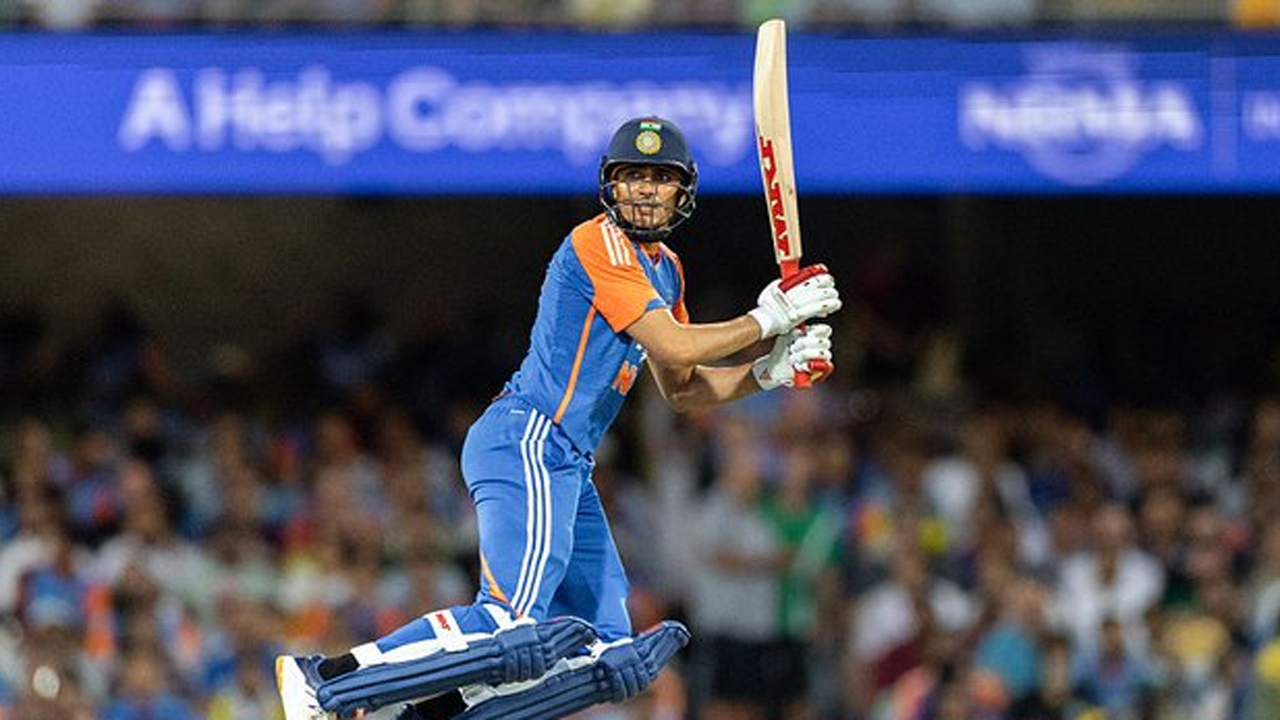
NEW DELHI: To be or not to be could well capture the dilemma in Shubman Gill’s mind as he jumps across formats, adjusting from an unorthodox setup to a more classical technique that still hasn’t produced the impact he wants in T20 Internationals.
Gill, who delivered a defining Test series as captain against England with a colossal 754 runs, has struggled to translate that dominance into the shortest format.
He has also walked into a role previously occupied by a well settled Sanju Samson, who struck three international hundreds last season.
But with India eyeing long term leadership options and searching for its next major face after Virat Kohli and Rohit Sharma, Gill’s elevation to vice captain was always on the cards.
The real challenge is the relentless schedule that leaves almost no breathing space and a 26 year old who likes to stay constantly involved, making it tough to recalibrate his technique as he switches between Tests and T20Is, with ODIs offering a slightly smoother transition.
Gill’s T20 numbers under the scanner
Gill’s T20I returns in 2025 have been modest, especially when compared to the explosive rise of his opening partner Abhishek Sharma.
In 13 T20Is this year, Gill has made 263 runs off 183 balls at a strike rate above 143, hitting only four sixes — just two of them in the Powerplay.
Abhishek, meanwhile, has lit up the format with 773 runs from 397 balls in 18 matches at a strike rate of 188.5, smashing 48 sixes — almost three every game.
Gill’s approach has yet to fully match India’s modern T20 blueprint of sustained aggression, often described as playing with total freedom.
A classical stance that’s affecting his range?
PTI spoke to a former NCA coach with IPL experience to assess the technical shift.
"When Gill burst into the international scene in 2019 till the last Border Gavaskar Trophy, if one revisits most of his flamboyant knocks in white ball cricket, one is likely to witness that his bat is angled towards third slip or gull from where it is coming down and meeting the ball," the former India player and also an Level 3 coach told PTI on conditions of anonymity.
"A stance like that always helps to play shots square off the wicket, especially the horiziontal bat shot like pull and Gill is as good a puller as one would find in world cricket," he said.
The flip side, especially in Tests, is that this stance leaves him open to incoming deliveries that crash into the pads or burst through the gate.
The technical tweak before England
A relentless worker, Gill revamped his setup before the England series, playing closer to his body with a straighter bat path, instead of allowing the bat to drop from the third slip or gully area.
"Playing straight is a virtue that always pays dividends in Test cricket as a straight bat path enables you to play inside the 'V'. So the scoring shots will include the straight shots, cover drives, off drives and on drives. But with that stance, you cannot easily play the pull shot or the slashes over point. It is not impossible but difficult as then your body alignment also changes."
Why T20 powerplays demand a different skill
In T20 cricket, even in the Powerplay, pacers operating above 135 kilometres per hour tend to hit the back-of-a-length area around 8 metres. To counter that early pressure, Gill may need to return to his horizontal bat options, and switching between these methods becomes as much a mental challenge as a technical one.
With only nine T20Is left before the World Cup, Gautam Gambhir will be keen to see one of his most important batters find his rhythm again.
(With PTI Inputs)
