


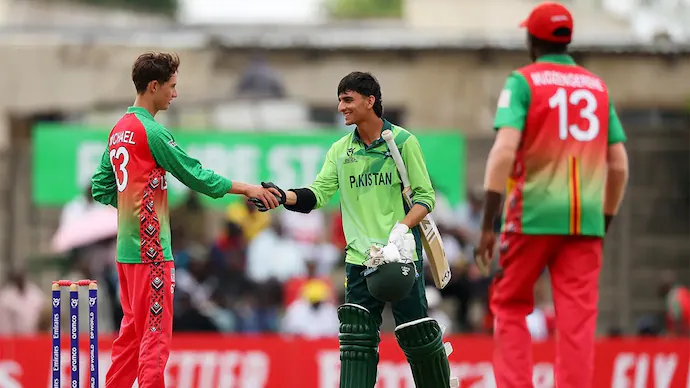
Pakistan’s Under-19 team found itself at the centre of controversy during the Men’s U19 World Cup in Harare after appearing to deliberately slow down their run chase against Zimbabwe, sparking debate over tactics, ethics and the spirit of the game.
In their final Group C match, Pakistan dismissed Zimbabwe for a modest 128 and began the chase in dominant fashion. Openers Sameer Minhas and Ahmed Hussain batted with ease, guiding Pakistan to 74 for 2 inside 12 overs. With the required run rate comfortably under control, the contest appeared headed for a routine finish.
However, Pakistan’s approach noticeably changed midway through the innings. By the end of 26 overs, they were 120 for 2, a position that ensured Zimbabwe would finish ahead of Scotland in the group standings. Minhas then struck two sixes off the first two balls of the 27th over to seal the chase, as Pakistan reached 132 for 2 in 26.2 overs and won by eight wickets.
The apparent slowdown was not due to pitch conditions or pressure, but a calculated move tied to the tournament’s format. Under U19 World Cup rules, teams progressing to the Super Six stage carry forward results only against fellow qualifiers. Since Zimbabwe finished ahead of Scotland, Pakistan’s match against Zimbabwe, not Scotland, counted towards points and net run rate in the next round.
Despite an eight-wicket defeat to Pakistan in their final group match, Zimbabwe’s excellent work in the field sees them progress to the Super Six stage, edging past Scotland on net run rate.
— Zimbabwe Cricket (@ZimCricketv) January 22, 2026
Match Details 👉 https://t.co/VgTCCMiEsZ#ZIMvPAK #U19WorldCup #FutureStars pic.twitter.com/Rtcl8D4s3k
By ensuring Zimbabwe qualified, Pakistan benefited from having a stronger carried-forward net run rate, having beaten Zimbabwe more comprehensively than Scotland. The tactical adjustment, therefore, improved Pakistan’s position heading into the Super Sixes.
The move divided opinion. Supporters praised Pakistan’s awareness of tournament mechanics, with former Zimbabwe captain Andy Flower describing the approach as “cunning but justifiable.”
“They first made sure they weren’t going to lose, and then slowed down to ensure Zimbabwe went through. Some may question the ethics, but I personally don’t,” Flower told ESPNcricinfo.
Critics, however, argued that deliberately influencing standings through controlled scoring undermines competitive integrity. While Pakistan still won comfortably, many felt the timing of the slowdown pointed to intent rather than coincidence. Although ICC regulations prohibit deliberate manipulation of match situations, proving intent in such cases remains a significant challenge.
Also Read: Bangladesh set to suffer staggering losses after T20 World Cup withdrawal
