


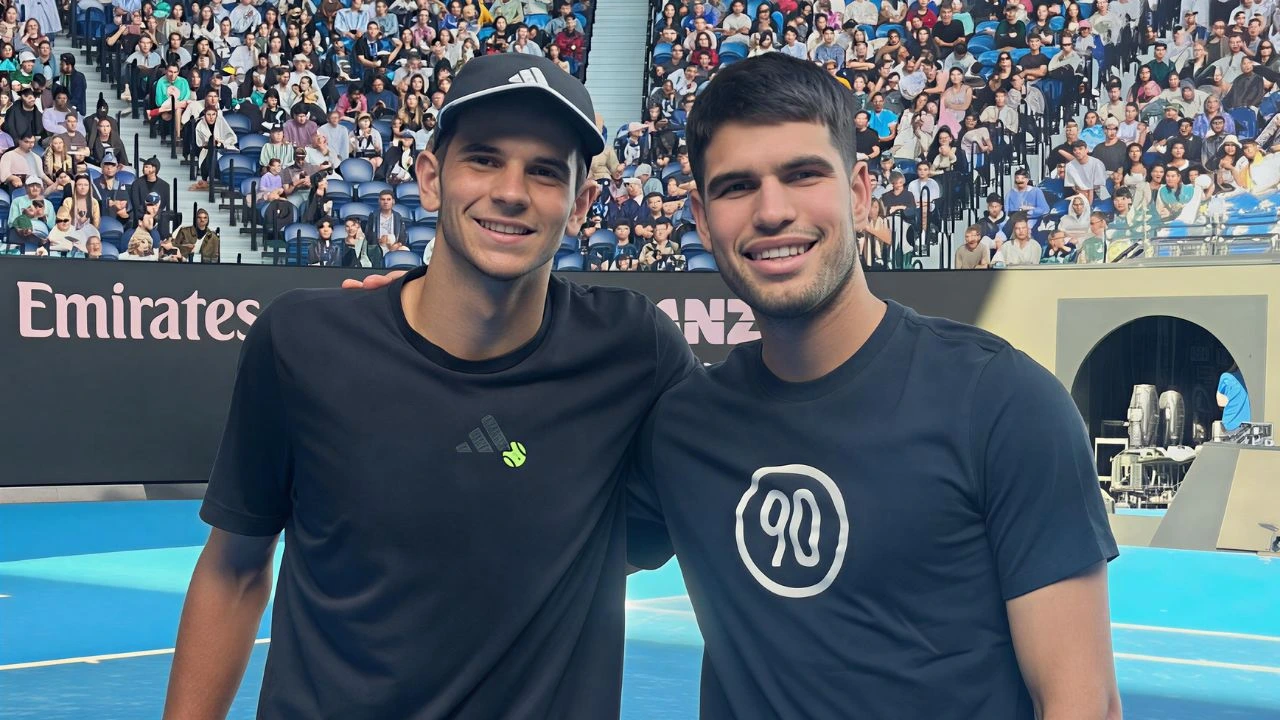
Spain used to send ships across oceans. Now it sends teenagers to Paris with heavy forehands, scary legs and a suspiciously healthy relationship with suffering. Somewhere in the country, I imagine there is a tennis academy where the first lesson is not 'how to hit a forehand' but 'how to enjoy being miserable at 5-5 in the fifth.' Other nations raise players. Spain raises people who look at a four-hour baseline war and say, 'Nice warm-up.'
French Open 2026: 19-year old Rafael Jódar from Spain
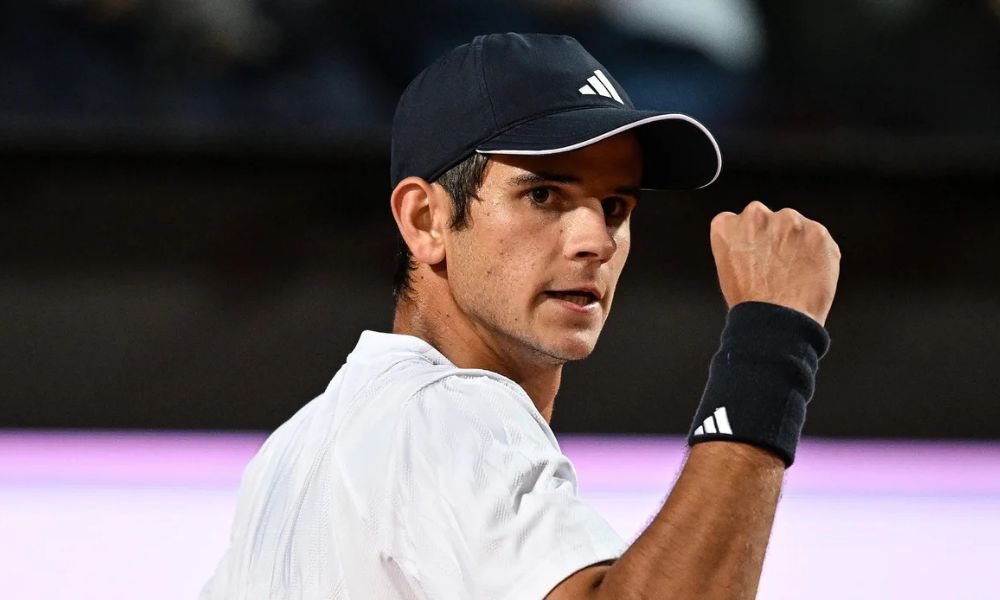
And here we are again. Rafael Nadal retired, Carlos Alcaraz took over, and before the rest of tennis could even breathe properly, Spain has produced another one: Rafael Jódar, 19 years old, from Madrid, seeded at Roland Garros, and already being handed the most dangerous nickname in sport: the new Rafa. Honestly, Spain needs to relax. Some countries are still trying to find one Grand Slam contender. Spain is casually refreshing the page and adding another.
A year ago, Jódar from Spain was around No. 700 in the world and finishing his freshman year at the University of Virginia. That is the kind of ranking where your coach still reminds you to book your own practice court.
Then he won Challenger titles, turned pro, won his first ATP main-draw match at the Australian Open, and shot up the rankings so quickly that even the ATP website probably had to check if it was a typo. Now he is seeded at the French Open. Most teenagers change hairstyles in a year. Jódar changed his entire tennis postcode.
João Fonseca, Brazil’s own 19-year-old future-star factory product, was also once committed to Virginia. Imagine that team actually happening. Jódar and Fonseca on the same college roster. Some poor opponent from a normal university walking in with a protein bar and optimism, only to discover he has been scheduled against the future of men’s tennis. That would not have been a college match. That would have been an ATP qualifying draw wearing a campus hoodie.
French Open 2026: Spain's Tennis factory is still open
The reason Jódar feels like such a big deal is that Spain has been doing this for more than 30 years. This is not a lucky purple patch. This is a national habit. Sergi Bruguera won back-to-back French Opens in 1993 and 1994. Since then, Spanish men's tennis has kept producing champions, finalists, grinders, artists, fighters and people who look deeply offended by the idea of losing a long rally.
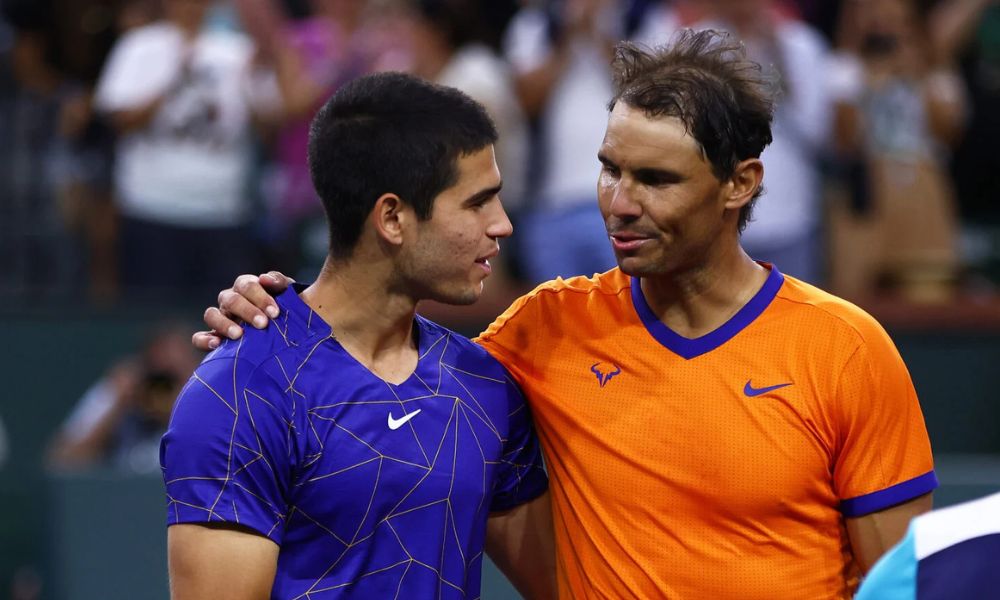
Then came Nadal, of course, with 22 Grand Slam titles and 14 Roland Garros crowns, which is not a record so much as a monument with a backhand. Most countries would produce one Nadal and then shut the academy for 50 years out of exhaustion. Spain produced Nadal, watched him win his last major at the 2022 French Open, and then three months later saw Carlos Alcaraz win the US Open. That is not passing the torch. That is Spain refusing to let the torch cool down.
The only real comparison is Sweden in the 1970s and 80s, when Björn Borg, Mats Wilander and Stefan Edberg made Sweden look like a small country with a tennis cheat code. Sweden had ABBA, Saab and Grand Slam champions. Very efficient nation. But Sweden's run eventually ended. Spain's somehow keeps going, like a clay-court subscription nobody knows how to cancel.
The old joke was that Spanish players were clay specialists. That label was always lazy. Nadal from Spain proved it at Wimbledon 2008, when he beat Federer on grass in a match that still feels like tennis' version of a holy text. Alcaraz then came along already comfortable on everything: hard court, grass, clay, maybe even airport carpet if needed.
Jódar is another step in that direction. He is not built like the old clay grinder. He is tall, aggressive, flat-hitting, and looks like he wants to take time away, not spend four hours discussing spin height with your backhand.
French Open 2026: The secret ingredient is suffering, sadly
Spain's tennis story starts with clay, and clay is not a surface so much as a moral education. You cannot fake patience on clay. The ball comes back. Then it comes back again. Then it comes back one more time, just to see if you have unresolved emotional issues. Growing up on clay teaches players that one good shot is not enough. You need a plan, legs, lungs, balance, and the willingness to keep playing points after your body has started sending legal notices.
The roots often go back to Manolo Santana, Spain's first male Grand Slam champion, and the clay-court boom that followed. Thousands of courts, more coaches, more kids sliding, more players learning that tennis is less about comfort and more about refusing to leave the argument. Later, coaches like Pato Alvarez and Lluis Bruguera helped shape the Spanish method in Barcelona. Movement, footwork, balance, racket speed, consistency, defence, conditioning, weapons, and the big one: suffering.
That word matters. Nadal once said you have to learn to live with suffering and even enjoy it. Alcaraz has said something similar about finding joy in suffering. This is why Spanish tennis sounds less like coaching and more like a very intense philosophy class. Other countries say, 'Hit through the ball.' Spain says, 'Accept the pain, my child, and then hit crosscourt.'
Nadal was the perfect product of that school. His forehand, often measured above 3,200 RPM, did not just spin. It bullied. It jumped, kicked, dragged opponents wide and made them hit backhands from locations usually reserved for ball kids. His defence was not defence. It was a trap with shoes. You thought you had won the point, then Nadal appeared three metres behind the baseline, returned something impossible, and suddenly you were the one apologising to your coach.
Alcaraz took that suffering and added fireworks. Nadal was a furnace. Alcaraz is a power cut followed by a laser show. He has the Spanish legs, but he also has the instinct to attack early, flatten the ball, rush the net, hit drop shots from nowhere and make opponents look like they are chasing a rumour. Under Juan Carlos Ferrero, he became the modern Spanish player: still tough, still brave, still willing to suffer, but also creative enough to end points before everyone needs medical attention.
Also READ: French Open 2026 draw out as Sinner and Djokovic stay apart while Sabalenka and Gauff land together
French Open 2026: Jódar is not Nadal 2.0, which is the best part
Now comes Jódar, and this is where the story gets interesting. Calling him the 'new Rafa' is tempting because his name is Rafael, he is Spanish, and he grew up inspired by Nadal. But Jódar is not Nadal 2.0. He is not trying to drown opponents in topspin until their legs forget their purpose.
He is 1.91m, or 6ft 3in, which already makes him different from the classic Spanish mould. Nadal and Alcaraz are explosive, compact, low-to-the-ground athletes. Jódar has long levers, a bigger serve, flatter strokes and a hard-court-first edge. He won the 2024 US Open boys’ title, spent time at Virginia, and sharpened his game on faster American courts. That matters. He does not feel like a clay player who learned hard courts. He feels like a modern power player with Spanish suffering installed as factory software.
His 2026 rise has been wild. He won his first ATP title in Marrakech, reached the semifinals in Barcelona, and made serious noise in Madrid and Rome. He has already forced people to stop saying 'promising teenager' and start saying 'dangerous seed.' That is a big jump. Tennis usually gives young players hype first and reality later. Jódar has brought enough reality to make the hype feel less silly.
Of course, this does not mean he is definitely the next Nadal or Alcaraz. Tennis is full of teenagers who were once the next somebody and ended up becoming the answer to a difficult pub quiz. But Jódar's game has substance. He serves big. He hits clean. He competes. He carries himself like someone who does not find the stage too large. That matters in Paris, where the stage has eaten plenty of talented players and asked for dessert.
The most Spanish thing about him is not his forehand or his passport. It is the way he talks about Nadal. He does not sound like someone trying to copy him. He sounds like someone who understood the lesson: do not give up, stay in the match, accept what the day gives you, keep fighting. That is the real Spanish inheritance. Not the lasso forehand. Not the sleeveless shirt. The refusal to emotionally leave the court before the match is over.
French Open 2026: A new Spanish problem for everyone else
The funny thing about Spain is that it keeps evolving without losing the annoying part. Nadal was heavy topspin, endurance and clay mastery. Alcaraz is speed, variety and all-court violence. Jódar is height, serve, flat power and hard-court confidence. The style changes, but the soul stays the same. You still have to suffer to beat them. Spain has simply added more ways to make you suffer.
Other countries have tried to borrow the Spanish method. Andy Murray trained in Barcelona as a teenager and has credited Spain with shaping his toughness. Jose Higueras took the clay-court attitude to the United States and helped players like Michael Chang and Jim Courier. Chang won the 1989 French Open. Courier became part of America's last great men’s era. So yes, the Spanish method travels. But copying Spain is like copying someone’s gym routine without copying their pain tolerance. You can do the drills. You still need the madness.
The sport has helped too. Courts have slowed down. Grass is not as fast as it once was. Hard courts are more forgiving. Serve-and-volley fans may need a chair and a glass of water, but modern tennis rewards movement, defence, fitness and point construction. Basically, the tennis world accidentally became more Spanish while trying to become more global. Very convenient for Spain. Very irritating for everyone else.
French Open 2026
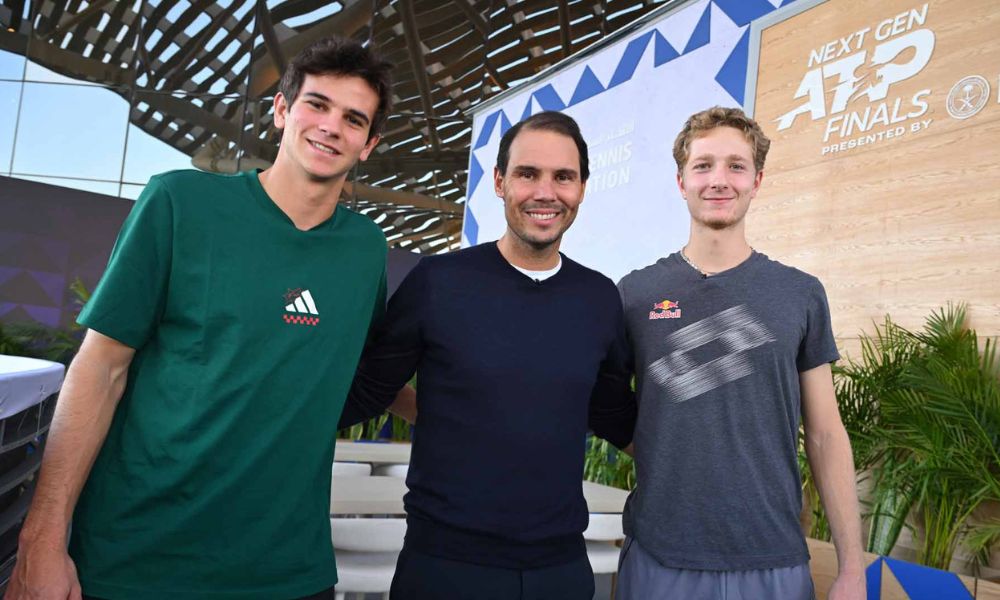
Alcaraz is out with a wrist injury. Nadal's shadow still lives there, because how could it not? Fourteen titles do not leave a shadow; they build permanent weather. Alcaraz would have been the natural heir this year, but with him missing, Jódar suddenly carries more attention than any teenager should reasonably have to carry. He enters as a seed, opens against Aleksandar Kovacevic, and becomes one of the most fascinating stories of the tournament.
Not because he is expected to win it now. That would be unfair. But because he represents a new question: what does Spanish tennis look like after Nadal and Alcaraz? The answer might be taller, flatter, faster, more aggressive, still stubborn, still suffering, still deeply irritating to play.
And behind him, Martin Landaluce is also rising, because apparently Spain's tennis department has no interest in letting other countries relax.
So yes, Spain is at it again. Medieval Spain built castles. Modern Spain builds tennis players who treat pain like a roommate. Other countries wait for golden generations. Spain seems to keep a drawer full of them. Nadal gave them the myth. Alcaraz gave them electricity. Jódar might give them the next mutation.
The old Spanish school taught players how to suffer. The new Spanish school teaches opponents how to suffer too.
